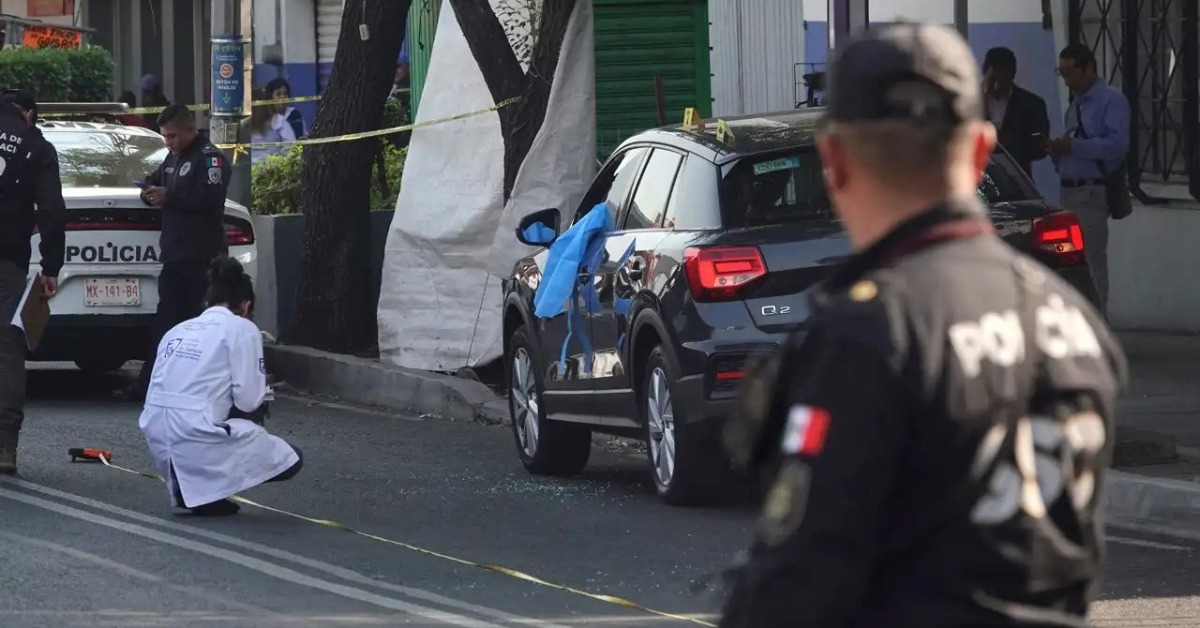
Families had waited three months for a break. Before dawn today, Mexico City authorities said they finally had one: 13 people detained in the killing of two senior government staffers whose daylight slaying jarred the capital in May. Officials said three of the detainees allegedly executed the attack; the rest helped plan and support it. The City’s security cabinet framed the case as a coordinated hit by a cell that has now been dismantled.
13 arrested in killing of two city government workers
The victims, Ximena Guzmán Cuevas, the mayor’s secretary, and José Muñoz Vega, a senior adviser, were shot dead the morning of May 20, 2025, while stopped in traffic on Calzada de Tlalpan, a central corridor through the city. The ambush happened in broad daylight, in one of Mexico City’s busiest areas.
In a brief statement at City Hall, Mayor Clara Brugada said the operation followed weeks of joint work between the local prosecutor’s office, the capital’s police, and federal agencies. She credited the arrests to inter-agency coordination and stressed that investigators would present more details later today.
What investigators say happened
From the outset, prosecutors described the murders as a direct, planned attack. Security video showed a gunman approach the stopped vehicle and fire multiple times at close range before fleeing with an accomplice. Forensic counts later indicated eight shots at Guzmán and four at Muñoz, a pattern consistent with a targeted execution.
Authorities now say the 13 detainees include three alleged triggermen or immediate participants and ten people who handled logistics—the kind of background work that lets a hit team surveil a target, coordinate vehicles, and time an escape. The arrests were made overnight in an inter-institutional sweep.
Why this case rattled the city
Attacks on senior civil servants in Mexico City are not common, and the victims were not public-facing politicians. Both worked out of view, handling high-trust tasks inside the mayor’s office. That’s part of why the killings landed with such force—and why investigators quietly worked parallel lines, from vehicle tracing to cell mapping, before moving in today.
As details emerged in May, officials said the team behind the ambush had stalked the corridor in the days before the shooting, suggesting methodical preparation. They also noted quick vehicle switches and an escape into the State of Mexico—classic hallmarks of a trained crew.
What comes next
Prosecutors are expected to provide names, roles, and the legal basis for the arrests at an afternoon briefing. At this stage, all detainees remain presumed innocent until a judge reviews the evidence and decides on indictments and pre-trial measures. Officials say the investigation remains open for any remaining suspects.
The mayor has promised the case will be pushed “to its last consequences,” and today’s sweep suggests investigators believe they’ve struck the operational core of the cell. Whether the group acted on contract or for a broader organization is a question prosecutors have not yet answered publicly.
The human cost behind the headlines
Colleagues describe an office that had to keep working with empty desks and unanswered phones. The city moved on—meetings kept, streets repaired, briefings held—but the shock never entirely dulled. Today’s arrests may offer the first measure of relief. Real closure, though, will depend on what a judge sees in the files and whether a credible motive emerges in court.