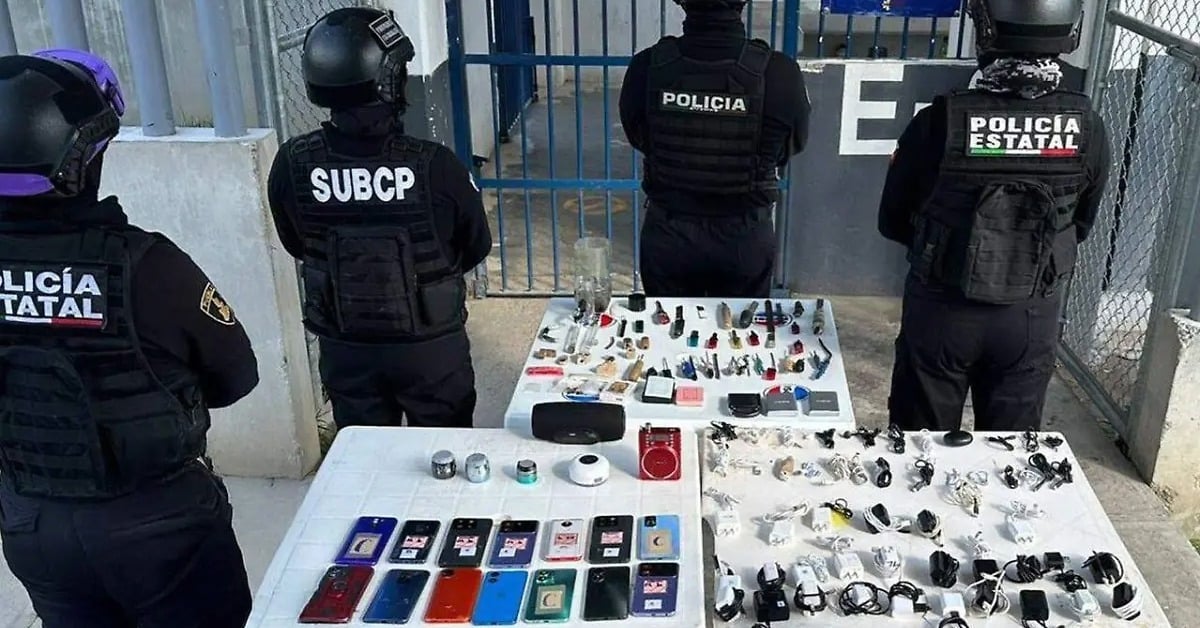
Puebla’s effort to cut off extortion from behind bars is now showing its first complex numbers. State authorities say they have seized 162 cell phones across six prisons during a month-and-a-half of sweeps, part of a broader push to stop scam calls and “cobro de piso” threats that target shop owners and families. The searches were backed by federal forces and included inspections of health and custody conditions within the facilities. The message is simple: fewer phones in cells, fewer victims on the outside.
162 cell phones seized in Puebla prisons
State police custodians, with support from the Navy, Army, and National Guard, ran coordinated inspections between July 6 and August 28. The operations covered the penitentiaries of Puebla, Tepexi de Rodríguez, Tehuacán, Tecamachalco, Huauchinango, and Acatlán de Osorio. Officials say the tally—162 phones—comes alongside drugs, sharp objects, and other banned items taken off the tiers. The campaign is framed inside Mexico’s National Anti-Extortion Strategy and is being led locally by Public Security Secretary Vice Adm. Francisco Sánchez.
Why phone seizures matter to victims
Extortion in Puebla is driven in part by calls placed from inside prisons. Authorities have been blunt about this pattern this summer, noting that while Puebla is not among the worst states for extortion, the problem concentrates in a handful of municipalities and often targets market vendors and small businesses. Cutting off phone access is a direct way to disrupt the calls that generate fear and easy money. It also signals tighter control in a system where outside items still find their way past visits and corrupt channels.
The checks are widening—and revealing gaps
The latest sweep is not a one-off. In recent weeks, state police reported successive reviews in specific prisons—San Miguel in the capital, Tecamachalco, and others—turning up phones, blades, and suspected narcotics. Those actions show momentum but also expose long-standing weaknesses. The security ministry itself has acknowledged the need for better technology to block contraband during visits and reduce human error. That gap matters: if every search still yields devices, the cell supply chain remains intact.
What the law says about blocking signals
Mexico’s telecom regulator established technical rules years ago to enable prisons to block cellular signals lawfully. The IFT’s Disposición Técnica IFT-010-2016 and the economy ministry’s NOM-220-SCFI-2017 spell out how jammers and related equipment must work inside penitentiaries. In practice, coverage can be uneven and expensive to maintain, which is why many states lean on frequent physical searches as a second line of defense. Puebla’s current push combines both approaches: tactical sweeps are now underway, and a stated plan to invest in tech upgrades is in place for the next budget cycle.
What comes next
Officials say they will continue the inspections, gather diagnostics on each facility, and keep medical and human rights checks informed. The short-term metric is phones seized. The more accurate metric is the number of calls that never reach a target. If this crackdown is sustained—paired with absolute signal control and tighter intake procedures—Puebla’s extortion numbers should reflect it in the coming months. For families and shopkeepers who dread unknown numbers, that would be the change that counts.