
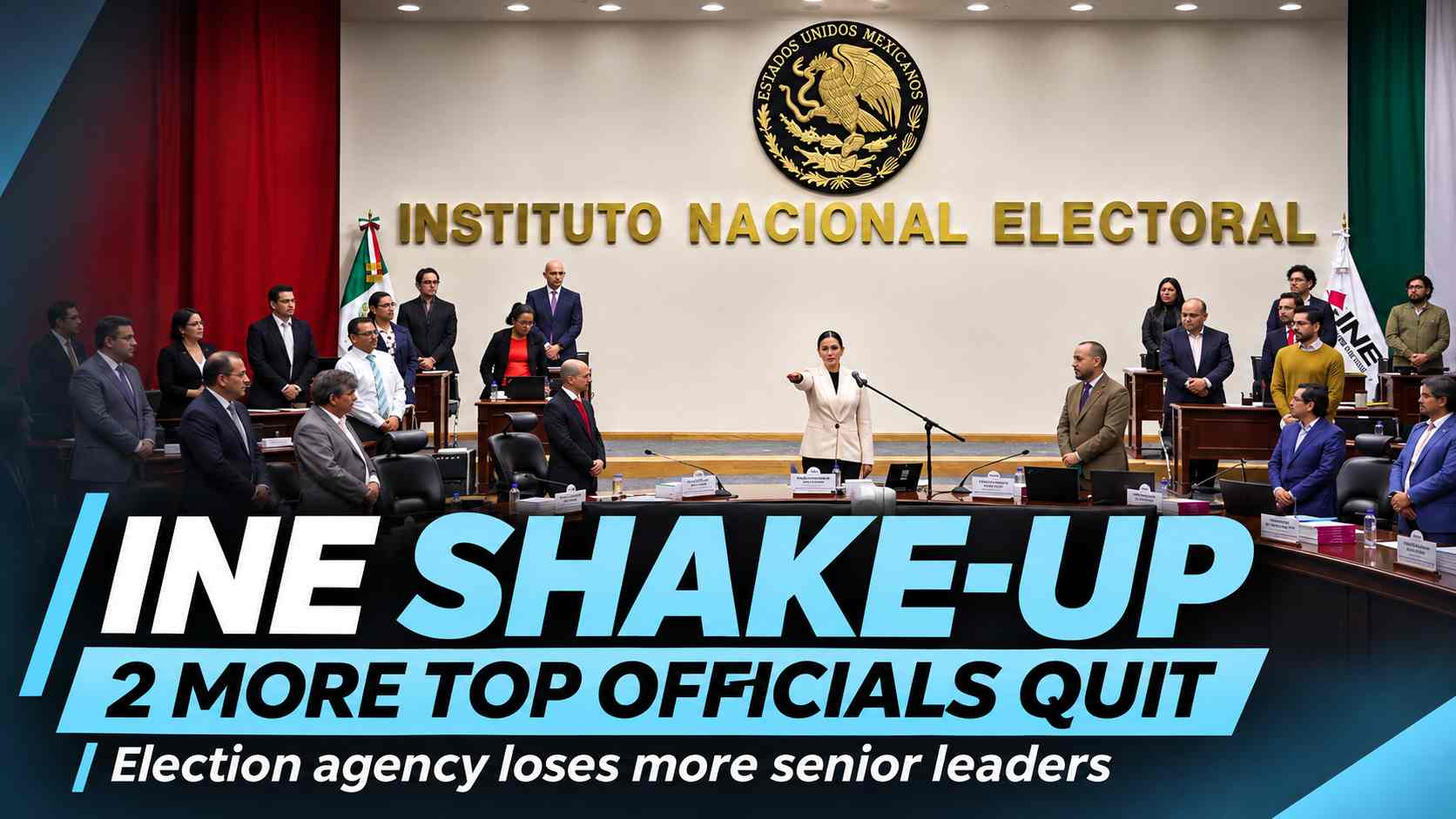
Mexico’s INE confirms two senior resignations amid a leadership shake-up, with the 2027 election process already underway.
Mexico City, Mexico, November 18, 2026 – Mexico’s national election authority has lost two more senior officials, including the person responsible for overseeing political campaign finances, as the agency continues a major leadership shake-up ahead of the 2027 elections.
The Instituto Nacional Electoral (INE) confirmed the resignations Tuesday, identifying Mario Alberto Alejo García, head of the Unidad Técnica de Fiscalización (UTF), and Anahí Silva Tosca, director of the Dirección Ejecutiva de Asuntos Jurídicos (DEAJ), as the latest officials to leave their positions.
Both resignations took effect November 16. The INE did not explain why they stepped down or immediately announce their replacements.
Their departures leave two important departments without permanent directors at a particularly difficult time for the agency.
The UTF oversees the money flowing into and out of political parties and election campaigns. Its work includes reviewing financial reports, examining campaign expenses, and identifying possible violations of Mexico’s political financing rules.
The legal department handles the INE’s legal affairs, including advice, representation, and matters arising from disputes over the agency’s decisions.
These aren’t positions that can simply be left unattended during an election year.
The INE says employees in both departments will continue their work without interruption, following the established calendar for the 2026-2027 federal electoral process. The agency’s governing council is reviewing its leadership structure and expects to announce new appointments.
The resignations are part of a much larger series of departures that began after former INE president Guadalupe Taddei Zavala left office in October.
Taddei announced her intention to resign on October 25, saying she would formally submit her resignation to the Chamber of Deputies the following day.
Her departure came amid allegations of irregularities and possible conflicts of interest involving contracts awarded during her administration. Those allegations prompted calls for investigations and a closer examination of the agency’s internal management.
Taddei did not acknowledge wrongdoing in her resignation statement. She said the institution’s stability and independence needed to come before individual interests and called for any allegations to be examined through the appropriate legal procedures.
The INE subsequently appointed Blanca Yassahara Cruz García as provisional president, placing her in charge while the Chamber of Deputies works toward selecting a permanent replacement.
The leadership changes have been extensive.
On November 3, the INE reported 30 resignations across its organization. Seventeen came from the former president’s office, including her chief of staff. Other departures involved senior directors, administrative personnel, and staff working in electoral operations.
That figure was an official count at the beginning of November. Additional resignations have been reported since then, although the agency has not issued a new comprehensive total incorporating all subsequent departures.
The circumstances surrounding Alejo García’s appointment add another layer to the latest changes.
He took charge of the UTF in April 2026, following a direct appointment by Taddei under legal provisions that gave the INE presidency greater authority over senior staffing decisions.
Three electoral councilors, Carla Humphrey, Arturo Castillo, and Martín Faz, challenged his appointment, arguing that he lacked the five years of executive-level experience in financial oversight required for the position.
The disagreement reached Mexico’s Tribunal Electoral del Poder Judicial de la Federación (TEPJF).
In a June 10 ruling, the court upheld Alejo García’s appointment, determining that his previous professional responsibilities satisfied the legal requirements.
That decision resolved the challenge to his appointment, but it did not end the broader disagreement over how senior positions at the INE should be filled.
Alejo García had previously worked as an adviser to electoral councilor Jorge Montaño Ventura. Silva Tosca also took office in April during Taddei’s administration. Their connections to that leadership group have received renewed attention as the INE reviews appointments made under the former president.
Neither the INE’s resignation announcement nor the confirmed personnel changes establish wrongdoing by either departing official.
The current administration has been moving toward a more collective approach to filling senior positions, involving the ten electoral councilors in decisions that previously rested more heavily with the presidency.
On the same day the two resignations became public, the INE announced five interim leadership appointments in other departments.
Those appointments cover the Servicio Profesional Electoral Nacional, the Registro Federal de Electores, information technology, gender equality, and electoral disciplinary proceedings.
The new appointments were intended to keep the agency functioning while its organizational review continues. They did not fill the newly vacant positions in Fiscalización and Asuntos Jurídicos.
For voters, the timing matters because Mexico’s next major election is already in preparation.
The country will elect a new federal Chamber of Deputies in 2027, while many states will also hold elections for governors, local legislatures, and municipal governments.
That includes Jalisco.
According to the INE’s official Jalisco election calendar, voters in the state will choose representatives for all 125 municipal governments, including Puerto Vallarta, along with 38 members of the state Congress.
The election is scheduled for June 6, 2027.
Preparations are already underway, with the INE coordinating federal election responsibilities and working alongside state electoral authorities, including the Instituto Electoral y de Participación Ciudadana de Jalisco (IEPC).
Financial oversight becomes especially significant as political parties begin preparing their candidates and campaigns. The INE must review how political organizations receive and spend money while also handling disputes and enforcing election rules.
A change in leadership doesn’t automatically mean those responsibilities will suffer. The agency has experienced staff and established procedures intended to keep its work moving even when senior officials leave.
Still, the number of departures raises questions about how quickly the INE can rebuild its leadership team and whether the continuing internal review will affect important decisions before campaigning begins.
The agency has maintained that the electoral calendar remains on schedule.
For now, employees in the UTF and DEAJ are continuing their regular responsibilities. As of Wednesday morning, the INE had not announced who would permanently replace Alejo García and Silva Tosca, leaving the next appointments to the governing council as preparations for the June 2027 election continue.