Puerto Vallarta officers allege a 25-liter daily fuel limit is reducing police patrols as City Hall struggles with delayed wages and spending.
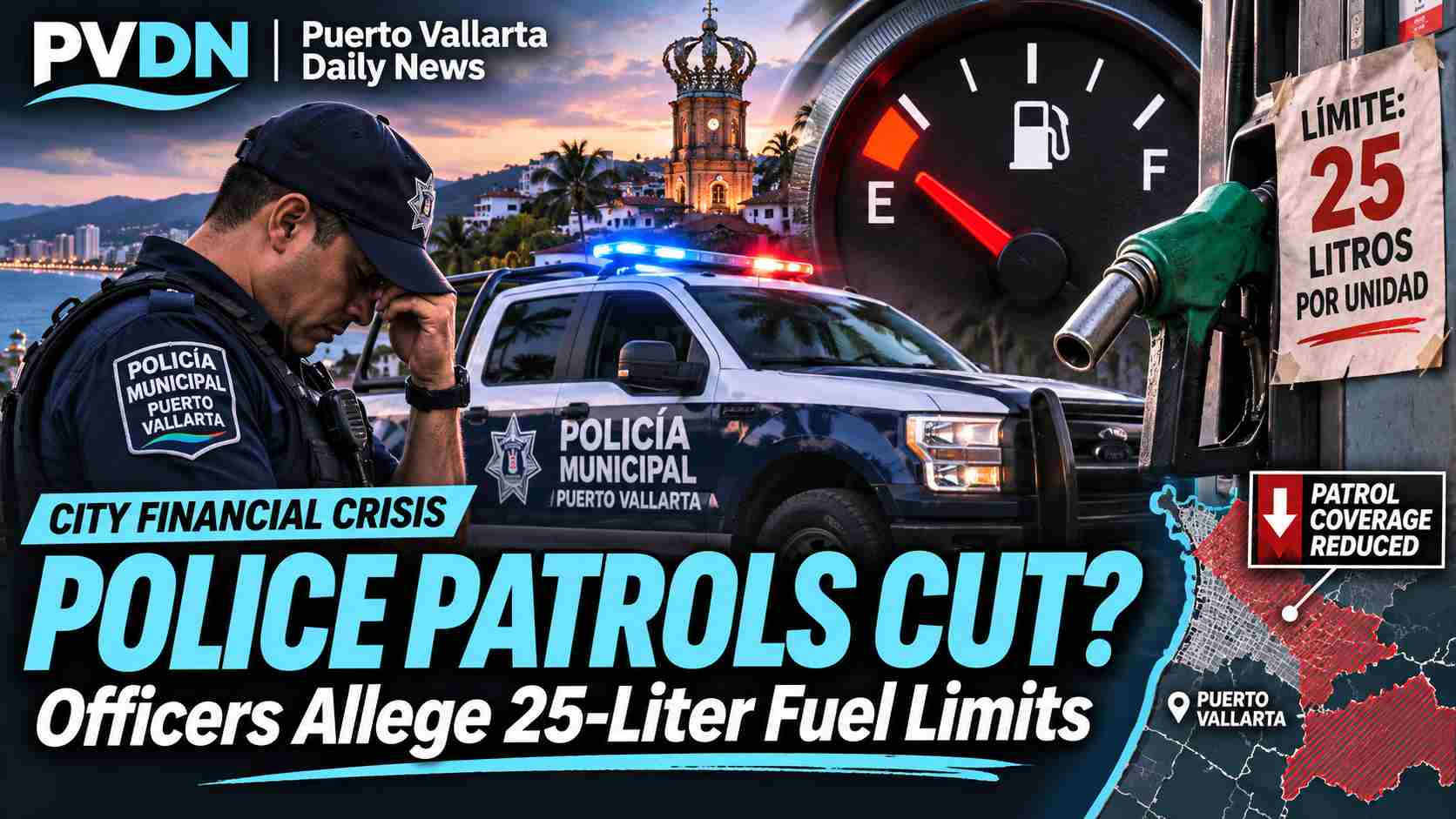
Puerto Vallarta, Jalisco, November 20, 2026 — Puerto Vallarta’s municipal financial problems are now raising concerns about police patrols, with an active officer alleging that patrol vehicles are being limited to just 25 liters of gasoline per day, forcing personnel to reduce their time driving through city neighborhoods.
The allegation, published Friday by Tribuna de la Bahía, suggests the city’s ongoing financial difficulties may be affecting more than garbage collection, delayed payroll, and municipal maintenance. They could also be limiting the ability of police officers to carry out routine patrols.
Officers say the restrictions have forced changes in how police and traffic personnel conduct their daily work.
Rather than maintaining continuous patrols, officers have reportedly been instructed to reduce their driving and spend more time at fixed observation points to conserve fuel.
The 25-liter daily allocation comes from an account provided by an active officer. The city has not publicly confirmed that figure in the reporting reviewed, and no official patrol-fuel records were available to independently establish the restriction.
There is also no verified evidence that emergency calls have gone unanswered because of fuel shortages.
Still, the allegation raises an immediate question for the administration of Mayor Luis Ernesto Munguía González: Can Puerto Vallarta maintain its planned police coverage while struggling to pay for the fuel and equipment needed to keep patrol vehicles operating?
Officers say fuel shortages are changing how they patrol
Police departments routinely combine vehicle patrols with officers stationed at fixed locations. Both have a place in public safety.
The concern raised by the Puerto Vallarta officer is that the reported shift toward stationary assignments isn’t necessarily being driven by policing priorities. It’s being dictated by the amount of gasoline available.
An officer interviewed by Tribuna de la Bahía described a daily allocation of 25 liters for each patrol vehicle in service.
According to that account, the allowance isn’t sufficient to cover full patrol shifts, leading supervisors to reduce the time vehicles spend circulating through the city.
Fewer moving patrols would mean fewer opportunities for officers to encounter suspicious activity, check trouble spots, or respond from nearby while already on the road.
That doesn’t establish that crime has increased or that emergency response times have deteriorated. Those outcomes would require police activity records and response-time data that haven’t been released as part of the allegation.
It does, however, raise questions about how the department is allocating its available officers and vehicles.
The report doesn’t establish how many patrol units are affected, whether the 25-liter allocation applies throughout the entire department, or whether supervisors can authorize additional fuel for emergencies.
Those details are significant. A daily fuel limit affecting only certain assignments would have different consequences from a restriction imposed across the entire municipal patrol fleet.
Nor has the municipality provided a public comparison showing how many vehicles are actively patrolling now versus earlier in the year.
Without that information, residents cannot determine how much police coverage may have changed.
Officers were already reporting equipment shortages
Friday’s fuel allegations aren’t the first complaints from Puerto Vallarta police personnel about having to work without adequate municipal resources.
PVDN reported complaints from active officers who said they were being asked to pay out of their own pockets for equipment needed to operate their patrol vehicles.
The complaints included a reported charge of 150 pesos per officer for radio equipment during a shift.
Police personnel also alleged that they were purchasing engine oil, antifreeze, and other basic vehicle supplies because the department wasn’t providing enough money for maintenance.
In a November 15 report, an officer described having to buy vehicle fluids to keep patrol units operating.
The accounts came from officers who requested anonymity because they feared workplace retaliation.
Those allegations have not been independently established through maintenance invoices, procurement records, or payroll documentation. They do, however, describe a recurring problem: personnel say the municipality isn’t consistently supplying the equipment needed to perform their jobs.
Vallarta Daily previously examined similar complaints in its November 14 report on traffic officers paying for basic work supplies.
That reporting included allegations that traffic personnel paid to print official documents and that some patrol vehicles were being operated with water in their cooling systems instead of proper coolant.
Taken together, the reports describe shortages affecting several parts of police and traffic operations, from equipment and vehicle maintenance to the gasoline needed for daily patrols.
The complaints come days after Vallarta appointed a new police chief
The timing is particularly uncomfortable for the municipal government.
On November 12, the Ayuntamiento announced the appointment of José Omar Quintero Becerra as director of Seguridad Pública following the resignation of Eduardo Horacio Llanas Cuevas.
The appointment brought a new police chief into an administration already facing questions about staffing, public services, and finances.
As Vallarta Daily reported when Quintero Becerra took the position, the municipality described increasing police presence in neighborhoods and tourist areas as a priority.
City officials also emphasized improving emergency response, strengthening coordination among security agencies, and rebuilding public confidence.
Quintero Becerra arrived with 25 years of experience in public security and the justice system, including previous work at the Fiscalía del Estado de Jalisco and the Puerto Vallarta police department.
But the appointment of a new director doesn’t solve an equipment or funding shortage.
Just over a week after the leadership change, officers are alleging that fuel restrictions are reducing their ability to conduct mobile patrols.
That creates a direct conflict between the administration’s stated goal of increasing police visibility and the working conditions described by its own personnel.
The municipality hasn’t provided a public explanation addressing whether the alleged fuel restrictions are temporary, how they were decided, or what resources are available to Quintero Becerra to increase patrol coverage.
For the new police chief, that leaves an important question unresolved: whether the department has the money and equipment to carry out the security strategy City Hall has announced.
The city’s financial problems have been growing for months
The fuel allegations come against a wider pattern of financial difficulties that municipal officials have already acknowledged.
As early as October 15, Vallarta Daily reported concerns about the municipality’s ability to pay workers and suppliers.
Councilman Víctor Bernal Vargas warned at the time that the city was struggling to meet financial obligations, citing approximately 400 million pesos in outstanding supplier commitments.
That figure was attributed to the councilman, rather than an independently audited balance.
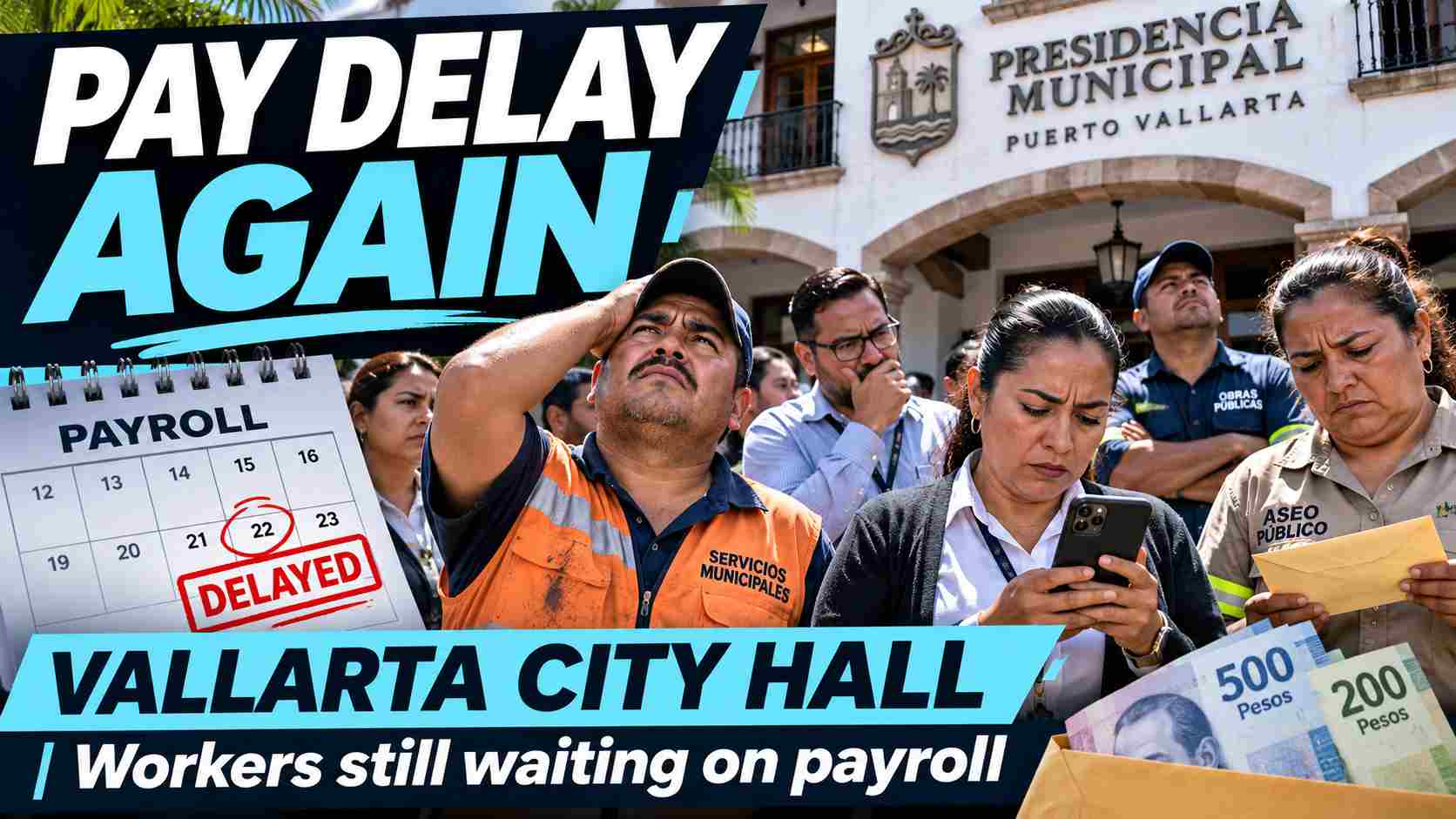
Since then, municipal employees have repeatedly reported receiving their wages later than scheduled.
On November 18, Vallarta Daily documented another payroll delay, alongside Mayor Munguía’s proposal to request an advance on future government revenue transfers.
The mayor has acknowledged that the administration faces financial difficulties and has discussed seeking approximately 100 million pesos in advance funding to help cover payroll and year-end bonuses.
The proposed advance would draw on revenue expected in 2027.
It has not been established that the money has already been approved or transferred.
Much of the public discussion has centered on garbage collection because the consequences are visible throughout Puerto Vallarta.
Residents have reported long delays between pickups, while municipal officials have acknowledged problems keeping collection trucks on the road.
Earlier this month, the former director of Servicios Públicos Eficientes, Rodolfo Domínguez Monroy, said the department had 26 working collection trucks out of a fleet of 35.
Workers interviewed for Friday’s Tribuna de la Bahía investigation disputed those numbers, claiming only about 15 trucks were actually operating.
The disagreement has not been resolved through fleet records.
Domínguez Monroy left the position November 18, and Javier Arturo Dueñas Peña was appointed to replace him the following day.
The leadership change came without a publicly verified resolution of the department’s financial problems.
Now the allegations involving police patrols suggest that shortages may extend into another essential municipal service.
City Council members have been demanding answers
The financial concerns have also contributed to a political dispute inside Puerto Vallarta’s municipal government.
On November 11, the municipal síndico and four council members broke away from the Partido Verde bloc to form an independent group.
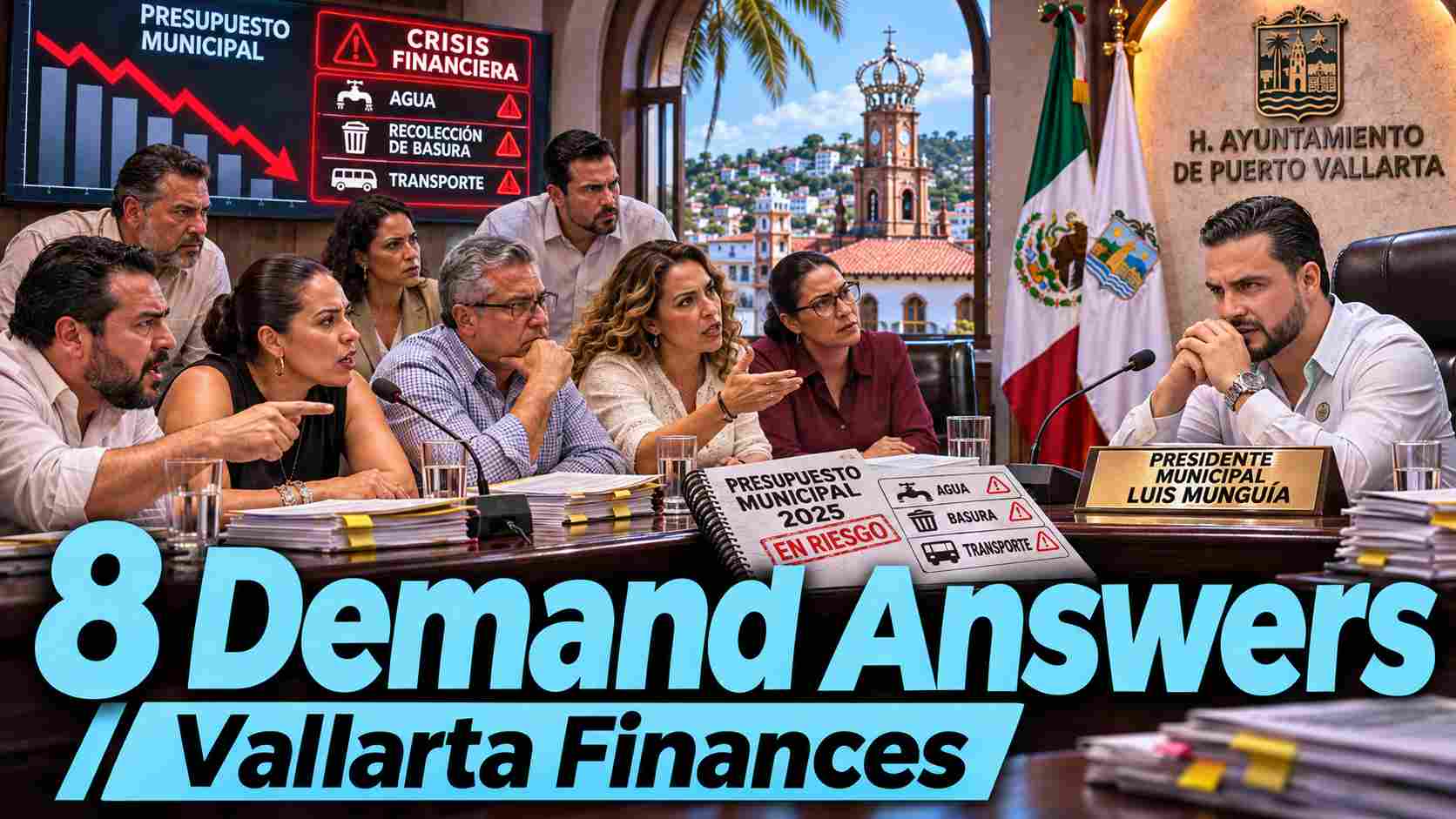
Two days later, eight members of the 16-member Ayuntamiento signed a request asking Mayor Munguía to convene an ordinary City Council session to discuss municipal finances, public services, and the condition of the administration.
Vallarta Daily covered the council members’ demand for a financial review on November 14.
The requested meeting was meant to give council members an opportunity to examine the city’s obligations and discuss how ongoing shortages were affecting municipal services.
By November 18, the council still had not held the requested ordinary session, although the municipal government had convened a separate meeting to approve alcohol-related business permits.
There has been no verified indication in the records reviewed that the full council has since received a detailed accounting of police fuel allocations, vehicle maintenance expenses, or the department’s current operating budget.
Police expenditures should now be part of that discussion.
It’s one thing for a municipality to acknowledge that money is tight. It’s another for employees responsible for protecting residents to allege that budget restrictions are determining how much time they can spend patrolling city streets.
The allegations deserve an explanation supported by records, not simply another promise that services will improve.
What the city still needs to explain
Several important facts remain unconfirmed.
The municipality has not publicly documented the alleged 25-liter daily gasoline limit, identified how many patrol vehicles might be affected, or explained whether officers can obtain more fuel when responding to emergencies.
There is also no confirmed accounting of how many vehicles are currently available for routine patrols or how many are awaiting maintenance.
Those figures would help establish whether the complaints reflect isolated shortages, a department-wide budget restriction, or a more serious reduction in the city’s ability to provide police coverage.
The same applies to the earlier allegations involving radios and vehicle supplies. Purchase orders, maintenance records, and department budgets could clarify whether officers are being asked to cover expenses that should be paid by the municipality.
For residents, the distinction between a parked patrol vehicle and one circulating through neighborhoods isn’t simply a question of appearances. Both can contribute to security, but they serve different purposes.
City Hall has announced a goal of putting more officers in visible contact with residents and businesses. Its own personnel are now alleging that fuel restrictions are making those mobile assignments harder to maintain.
As of Friday, the central figure remains an unverified allegation from an active officer: 25 liters of gasoline per patrol vehicle, per day.
Neither Mayor Munguía’s administration nor the Dirección de Seguridad Pública has supplied a public accounting in the reporting reviewed showing whether that limit exists, how many vehicles it covers, or how much fuel the department has available for its patrol shifts.