
The Mayor Has 24 Hours. But Puerto Vallarta Has a Much Bigger Problem.
Eight city officials are demanding an urgent meeting, the mayor says everyone is still friends, and the questions about Vallarta’s money are getting harder to ignore.
There’s something almost comical about a group of elected officials having to give their own mayor a 24-hour ultimatum just to get everyone into a meeting.
Almost.
Because when you look at what’s happening behind the scenes at Puerto Vallarta’s City Hall, this isn’t really a story about scheduling. It’s about money, political alliances that are falling apart, and a city government facing some pretty uncomfortable questions.
And here’s the thing: those questions aren’t coming from angry people on Facebook anymore. They’re coming from inside the government itself.
So, what’s going on at City Hall?
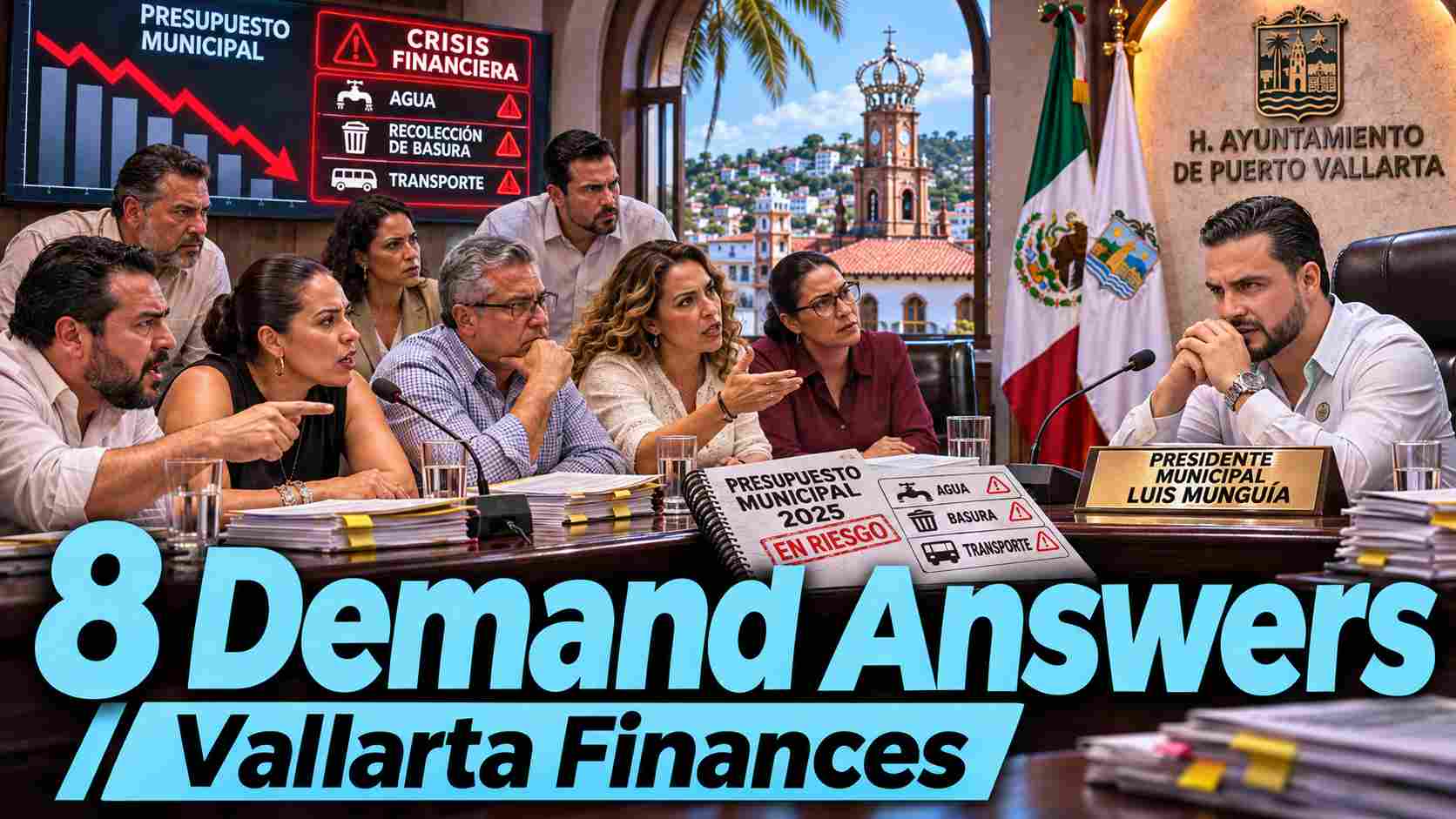
On Friday afternoon, November 20, eight members of Puerto Vallarta’s municipal government delivered a formal demand to Mayor Luis Munguía.
They want him to call a meeting of the Cabildo, Mexico’s municipal governing council, where elected officials debate and vote on city business.
The group includes seven regidores, essentially city council members, and the síndico, an elected official responsible for representing the municipality’s legal interests.
They gave the mayor 24 hours to issue the meeting notice. Not to solve the city’s problems in 24 hours, or even hold the meeting by then. Just to get it officially scheduled.
And this is already their second request.
The first came on November 13. According to local reporting, the council hasn’t held an ordinary session since September 13, meaning October came and went without one.
That’s worth noting because Jalisco state law requires municipal councils to hold at least one ordinary session every month.
Now, I’m not suggesting a missed meeting explains every pothole or pile of garbage in town. But when government services are struggling, having the people responsible for overseeing them actually sit down together seems like a reasonable place to start.
Especially when they’re asking to see the books.
Follow the money. That’s where this gets interesting.
The council members aren’t simply complaining about the mayor’s calendar.
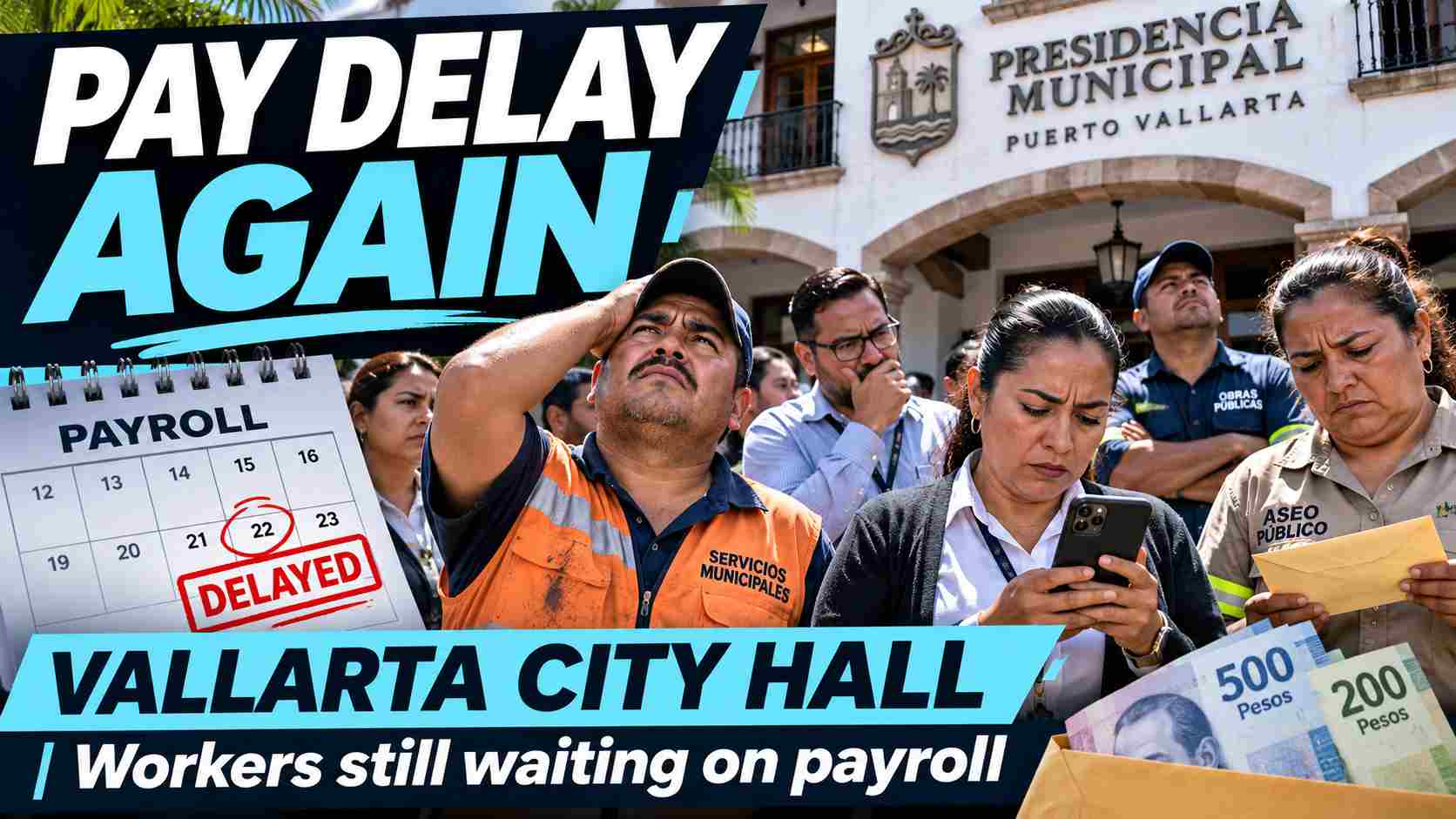
They’re raising questions about garbage collection, delayed employee payments, stalled public works, and the municipality’s ability to meet its financial obligations.
In other words, they want to know whether Puerto Vallarta has enough money to do what it’s supposed to do.
And if there are financial problems, they want to know how serious they are.
That’s a rather different conversation from arguing over meeting dates.
We’ve already seen reports of municipal employees waiting for paychecks, garbage collection problems affecting neighborhoods, and questions about the city’s ability to cover its bills.
There’s also the matter of the upcoming aguinaldos, the legally required year-end bonuses Mexican workers receive.
Mayor Munguía has acknowledged that the city is considering requesting an advance on government revenue transfers to help cover those obligations.
Now, asking for an advance doesn’t automatically mean a government is broke. Governments deal with cash-flow problems all the time, and the mayor says the amount is still being evaluated.
But it does raise a perfectly reasonable question.
If the city’s finances are manageable, why not put the numbers on the table and let everyone see them?
That’s what makes this particular political disagreement worth watching.
We don’t yet have the complete financial picture. We don’t know whether every allegation from the council members will hold up under scrutiny.
But those uncertainties are precisely why a public accounting matters.
And then there’s the awkward family drama.
If you enjoy a little political intrigue with your morning coffee, this part is particularly interesting.
Five of the officials now challenging the mayor previously belonged to the Partido Verde, or Green Party, the political organization that brought Munguía to office.
They’ve since broken away from its council faction.
Those former Green Party colleagues joined three members of Movimiento Ciudadano, another Mexican political party, in demanding answers.
So this isn’t simply the usual opposition-versus-government shouting match.
Some of the people now pressing the mayor were previously part of his own political team.
That’s a significant shift.
It’s also why I wouldn’t automatically dismiss the ultimatum as political theater, although politics certainly plays a role.
When former allies start asking tough questions about money and government management, it’s worth paying attention.
Maybe they’re frustrated by the administration’s direction. Maybe there are political ambitions behind the disagreement. Maybe it’s a little of both.
Whatever their motivations, the questions about public finances still deserve answers.
And the council members shouldn’t get a free pass, either. Asking for accountability is one thing. Helping deliver workable solutions is another.
The mayor says they’re all friends.
Here’s where the story takes an almost sitcom-like turn.
On Wednesday, November 18, Munguía was asked about the growing disagreement at City Hall.
Rather than describing it as a political crisis, he emphasized that the council members were his friends and that everyone wanted what was best for Puerto Vallarta.
He also said he expected the council to meet sometime between Monday and Wednesday of the following week.
That may well happen.
And there’s nothing wrong with maintaining friendly relationships in government. Frankly, we could probably use more of that.
But friendship isn’t a substitute for financial transparency.
Residents don’t particularly care whether everyone around the council table gets along.
They care whether the garbage gets collected, public employees get paid, streets get repaired, and the government has a realistic plan to pay for the services people depend on.
Those are fairly modest expectations.
You’d think they wouldn’t require an ultimatum.
Why should anyone living in Vallarta care?
It’s tempting to look at municipal politics and assume it’s just another argument among people who enjoy arguing.
But local government has a way of finding its way into your everyday life.
It’s there when you drive around a pothole that’s been growing for months.
It’s there when the garbage truck doesn’t arrive.
It’s there when public services become unreliable, or when the city says a project has to wait because funding isn’t available.
And it’s there when the municipality enters another year with financial obligations nobody has clearly explained to the people paying the bills.
For foreign residents, particularly those accustomed to city council meetings being routine public events, the idea that council members are fighting simply to get a meeting scheduled might seem particularly strange.
But the basic principle isn’t uniquely American, Canadian, or Mexican.
Local government works better when officials are required to explain their decisions, defend their spending, and answer questions in public.
The law already provides for those conversations.
They shouldn’t be treated as an inconvenience.
Here’s what I’ll be watching.
The 24-hour deadline runs into Saturday afternoon, November 21.
As of Friday night’s reporting, no new public meeting notice had been confirmed. That doesn’t mean the mayor will necessarily ignore the latest demand.
He has already said a meeting is coming.
The interesting part will be what happens when everyone finally sits down.
Will the administration present a clear account of its finances? Will council members receive the information they’ve requested? Will residents learn how much the city owes, which obligations are overdue, and what the plan is for getting basic services back on track?
Or will the meeting turn into another exercise in political speeches, mutual congratulations, and promises to work together?
I’d love to see the first outcome.
Because I don’t think Puerto Vallarta’s biggest problem right now is that elected officials aren’t getting along.
It’s that too many questions about the city’s ability to function still don’t have clear, publicly documented answers.
Maybe the financial situation is better than critics suggest. Maybe the administration has reasonable explanations for the delays and service problems. Maybe some of the accusations are exaggerated.
All of that is possible.
But the way to establish those facts isn’t by avoiding the conversation. It’s by opening the books and answering the questions.
And that’s what makes this 24-hour ultimatum more than just another City Hall squabble.
A city doesn’t become financially healthy because its mayor says everything is under control.
And it doesn’t become financially troubled simply because his political opponents say it is.
The truth is in the records, the obligations, the bank balances, and the decisions that follow.
The mayor has been given 24 hours to call a meeting. Puerto Vallarta’s residents deserve considerably more than a meeting notice.
They deserve some answers.