A fence permit at one of Puerto Vallarta’s most sensitive riverfront sites has reopened old wounds and new questions. The Cuale River property, where a building collapsed during Hurricane Nora, and a 13-year-old boy died, now has a municipal extension tied to perimeter fencing. But the family says recent activity looked like more than a simple safety barrier. The full story looks at the permit, the complaints, and the questions still sitting with the city and federal authorities.
Fence permit puts Cuale collapse site back under scrutiny
Puerto Vallarta’s planning office has shown a 2022 license and a new extension for perimeter fencing at the Cuale River collapse site. The document answers one question. It opens several others.
The license number 3855/22 covers a perimeter wall measuring 27.30 linear meters by 2.90 meters in height, according to the city’s 2022 transparency file. A later account says the municipal department also showed an extension signed April 29 by Edén Castillón, director of Ordenamiento Territorial y Desarrollo Urbano. The extension runs from March 9, 2023, to September 9, 2026.
The known permit is narrow. It is for a fence. The family of Curro Prados, the 13-year-old who died when the former La Surtidora building collapsed during Hurricane Nora, says recent activity looked broader. They described excavation, soil movement, and large foundations near the riverbank.
The family has taken the issue to several offices. A complaint was filed with Profepa on May 29 over alleged work along the Cuale River. A separate complaint was filed with the National Human Rights Commission on May 27. The case was also reported to the municipal planning office.
A day before the extension became public, the same municipal office was described as having no record of a permit for the work. Inspectors were expected to check the site. The later display of the bardeo license did not end the issue. A wall permit does not explain what may be planned behind the fence.
“We were told by neighbors that work was being done, and we came here,” Aránzazu Asencio Avellanas, Curro’s mother, said after the family learned of activity at the site. “It looks like they are putting in large foundations. We do not know exactly what they intend to do because we do not see a license posted anywhere.”
She added that the family feared a repeat of earlier decisions around the property. “We are concerned the mistakes that caused our son to die could be repeated,” she said.
A river site with a long paper trail
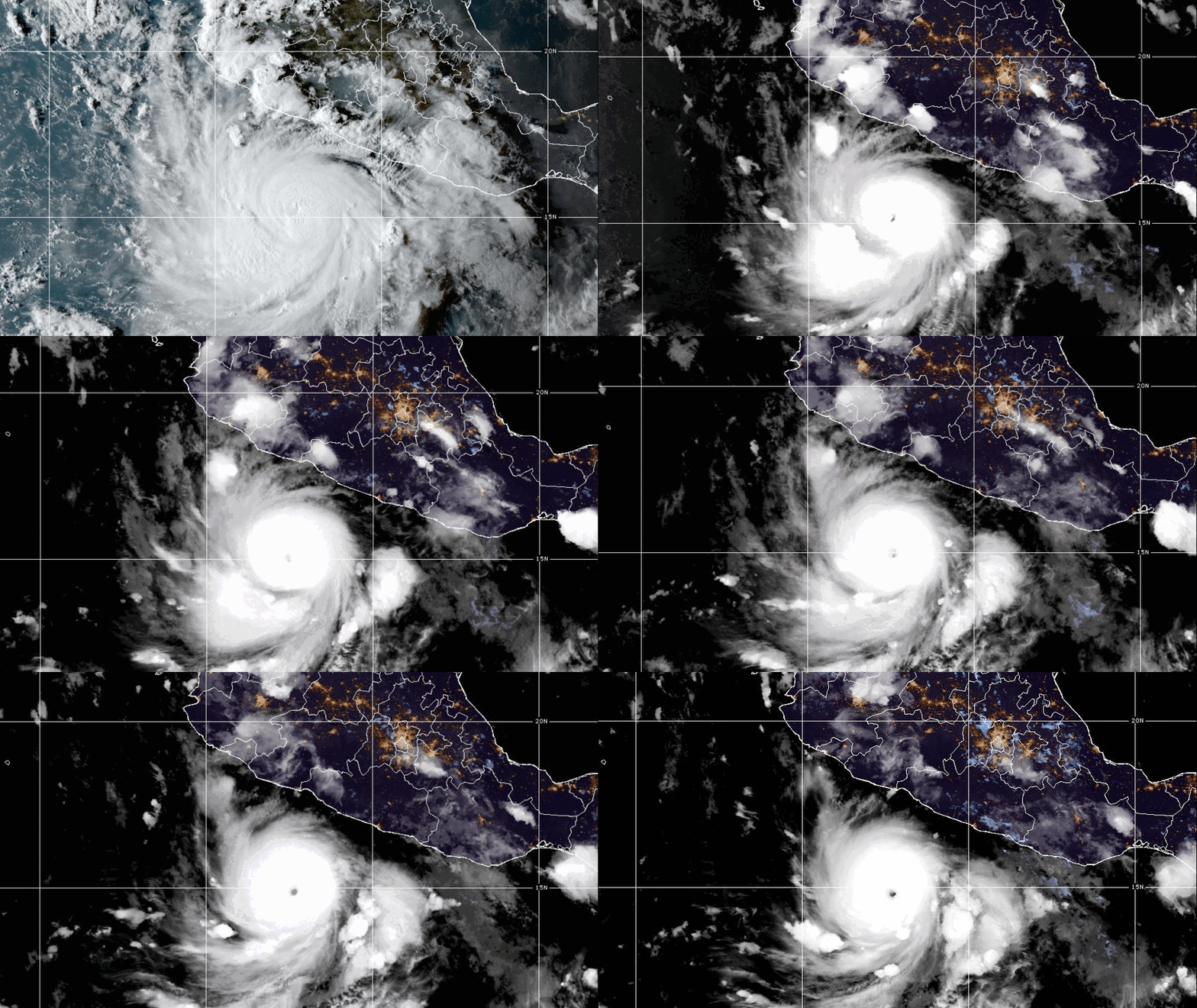
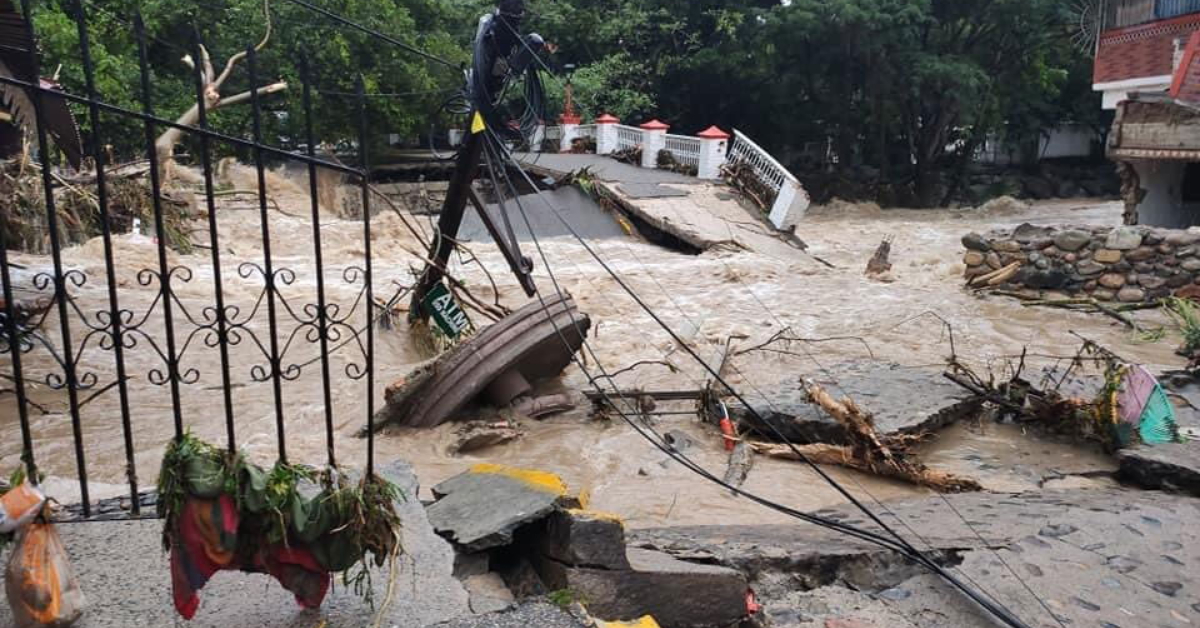
The property sits near the Cuale River bridge in Emiliano Zapata. The complaints identify it as 5 de Febrero 541 or Insurgentes 108. The building that stood there was tied to one of Puerto Vallarta’s most painful Hurricane Nora losses. Earlier coverage of the storm described the Cuale’s overflow and downtown damage. Later coverage of new riverfront activity warned that development pressure had returned to the same vulnerable stretch.
The river-zone issue is not decorative paperwork. Mexico’s National Water Law defines the federal river zone as land next to federally owned channels, measured from the ordinary high-water level. Federal procedures also cover work on national property when it could affect the hydraulic or hydrological regime of river channels, federal zones, or protection areas.
That does not prove that this fence extension needed a federal environmental authorization. It does explain why the family is asking for clearer records before more work advances. A municipal bardeo permit and a federal river-zone concern can exist in the same file. They do not answer the same legal question.
Asencio Avellanas said the family is not opposing safety work at the damaged property. Her concern, she said, is that any work near the riverbed or federal zone must follow the legal process and, where required, include an environmental review.
“Five years ago, the collapse occurred, and any action carried out on the riverbed and federal zone has to aim at recovering the riverbank,” she said. “Everything has to be transparent, with guarantees that the final project is not for private purposes.”
What the permit still does not explain
The family’s filings also point back to earlier investigations. According to publicly described complaints, a federal expert concluded in 2022 that the inspected property was within the Cuale River federal zone. A 2023 forensic damage report from the Jalisco Institute of Forensic Sciences found that work done before 2021 weakened the structure and foundation. The report linked those changes to the collapse. The same account says the remaining structure still poses a probable risk of collapse if extraordinary flows return to the Cuale.
Those findings make the fence more than a property-line matter. A perimeter wall may protect people from an unsafe site. It may also block a clear view of the new work. That tension now follows the extension.
The city has not publicly explained what inspectors found at the site. It has not been clarified whether the recent work matches the wall permit. It has not been said whether federal river-zone authorization is under review or whether any future project is planned for the property.
The 2022 municipal license covers a perimeter wall. The 2026 extension keeps that authorization alive. The larger questions remain with the city, Profepa, the CNDH, and the family still pressing for answers.