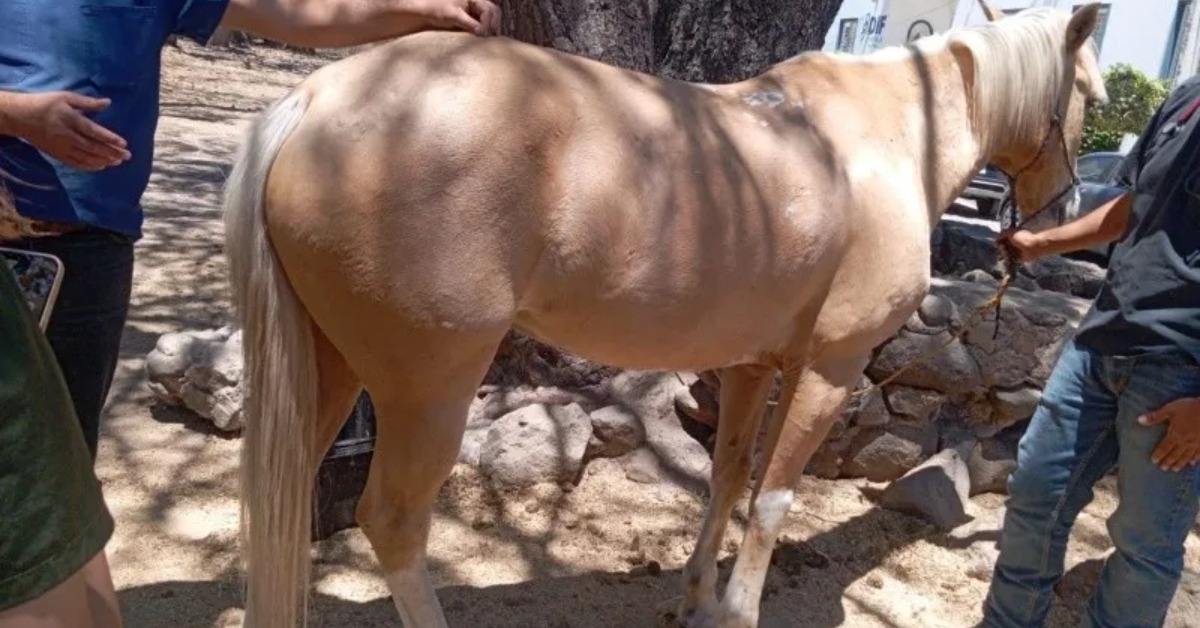
A longtime horse-tour operator in Ajijic says authorities took six of his horses from La Floresta without giving him a fair chance to explain their care. State officials say veterinarians found signs of neglect and health problems. The case has divided local opinion in a town where horse rides are part of daily tourism, family income, and public debate over animal welfare. Now the question is what happens next for the horses, the owner, and the investigation.
Ajijic horse operator asks for animals to be returned
A longtime horse-tour operator in Ajijic is asking Jalisco authorities to return six horses seized in the La Floresta area, saying he never mistreated the animals and depends on them for his family’s income.
The owner, Francisco Rojas Villanueva, is known locally as “Pancho el de los caballos.” He has worked with horses in Ajijic for more than 40 years, following a trade his father started. Horseback rides have long been part of the tourist scene around La Floresta and the lakeside community.
Jalisco authorities seized six horses during an operation on April 26 in the Paseo de los Caballos area. The seizure followed citizen complaints of possible animal neglect. State and municipal personnel inspected the horses, with veterinarians present.
Authorities said the horses showed signs of health problems, including anemia, malnutrition, parasites, injuries related to inadequate horseshoeing, untreated fractures, and wounds linked to saddle or equipment use. The animals were placed under official custody for medical care and recovery.
Rojas denies the allegations. He says the horses were not abused and that some appeared thin because of age or because they were young animals still developing. He also says he has veterinarians who have cared for them.
What authorities say they found
The official version describes the case as a possible animal mistreatment investigation, not a completed finding of guilt. The six horses were formally secured while the investigation continues.
The operation involved personnel from the Jalisco prosecutor’s office, the regional prosecutor’s office based in Chapala, municipal ecology officials, and local public security. The inspection took place on Camino Real, in the La Floresta area of Ajijic.
Authorities said veterinarians determined that the site did not meet minimum conditions for the animals to remain there. The horses were then placed under protection so they could receive care.
That distinction is important. In Mexico, an “aseguramiento” is a legal seizure or securing of animals, property, or evidence during an investigation. It does not, by itself, mean a court has ruled against the owner.
No final public finding of responsibility has been announced. The investigation remains open.
Owner says the seizure ended his livelihood
Rojas says the operation took away his main source of income. At nearly 75 years old, he says the horse rides are the work he knows and the way he supports himself.
He also says he was not allowed to contact his veterinarians during the inspection. According to his account, he wanted to show that the horses had received care, but authorities did not let him use his phone at the time.
The six horses he says were taken include La Nena, Panchito, Chula, Abuelo, Sorpresa, and Superman. Two others, Palomo and Rambo, reportedly remained with him.
Rojas says he is not interested in replacing the horses with new animals. His position is that he wants the same animals returned.
The case has also drawn local attention because of Ajijic’s foreign-resident community. Rojas says some foreign residents have contacted regional authorities to speak in his favor. Others in the broader community have raised concerns about animal welfare and horse-tour practices.
A local business tied to tourism and tradition
Horse rides have been part of the visitor experience in Ajijic for years. The town’s image is built around its lakefront, cobblestone streets, murals, galleries, restaurants, and outdoor activities. Horseback rides are among the activities promoted to visitors in the wider Pueblo Mágico tourism setting.
Ajijic became a Pueblo Mágico in 2020. The designation helped reinforce the town’s identity as a tourism and retirement destination on Lake Chapala.
That tourism role brings extra attention to disputes involving animals used for paid rides. For many visitors, horses are part of a relaxed day out. To the operators, they are working animals and a source of income. For animal-welfare advocates, they require close oversight because their labor, health, rest, shelter, and medical care are all linked.
This is where the case moves beyond one operator. It raises a wider question for Ajijic and Chapala: how traditional services should operate under modern animal-welfare rules.
What Jalisco law says about working animals
Jalisco law includes specific rules for working animals, including animals used for riding, transport, cargo, pulling, sport, or entertainment.
The state’s animal protection law requires municipal inspectors to ensure that animals used for work are not exposed to suffering or mistreatment. It also requires owners or handlers of riding animals to properly feed and care for them, avoid excessive work, and keep holding areas in a hygienic and adequate condition.
The law also says animals should not be left for long periods without food, water, or rest. Animals that are sick, injured, malnourished, too young, too old, or otherwise unfit should not be used for work or ridden.
When animals are not working, they must be kept in places protected from the sun and rain. They must also rest one day a week and should not be rented or loaned for work on that day.
Jalisco’s criminal code also treats animal cruelty and mistreatment as crimes. Penalties depend on the severity of the harm. The law allows animals under a person’s care to be secured when the alleged offense involves their mistreatment.
Why the case is sensitive in Ajijic
The case has touched several pressure points in Ajijic at once. There is concern for the animals, and sympathy for an older worker whose family has spent decades in the horse-ride business. There is also the larger reality of a town shaped by tourism, foreign residents, local workers, and changing expectations.
For readers who live around Lake Chapala, the case also shows how animal-welfare complaints can move from community concern to a formal legal process. A public complaint, a veterinary inspection, and a prosecutor’s decision can quickly lead to the removal of animals.
At the same time, the owner’s denial shows why these cases can become disputed. Animal condition, age, medical history, housing, work schedules, and veterinary records can all become part of the question.
The public record now contains two competing views. Authorities say six horses showed signs of mistreatment and needed protection. Rojas says he did not abuse them and wants the chance to prove they were cared for.
What happens next in the investigation
The next step is for authorities to continue the investigation and determine whether legal responsibility exists. That process may involve veterinary records, inspection findings, witness statements, ownership documents, and the horses’ condition after seizure.
Rojas says he has purchase invoices for the animals. He also says he has received offers of legal help to try to recover them.
The future of the horses will depend on the legal process and the findings of the authorities handling the case. If prosecutors determine there was mistreatment, the animals may remain under protection, and the case could move forward. If the owner can successfully challenge the allegations, he may seek their return.
For now, the horses remain at the center of a case that has become more than a local dispute. It is now a test of how Ajijic balances tourism work, family livelihoods, and animal welfare law.