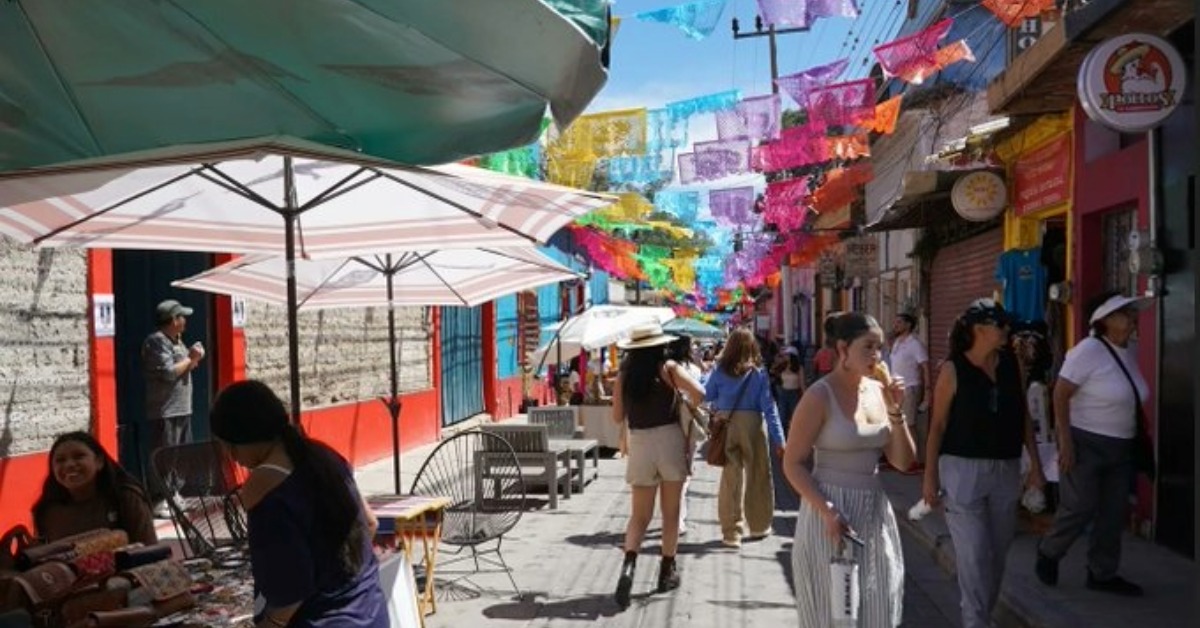
Ajijic’s weekend Cultural Walkway on Colón and Morelos has been suspended indefinitely after a short pilot that exposed a familiar conflict in the town center. The corridor was intended to enhance culture, food, and pedestrian activity along the route to the malecón. Merchants and neighbors said it had instead complicated parking, access, and daily business. Officials now say new cultural proposals may still be considered, but this version of the walkway will not continue.
Ajijic Suspends Weekend Cultural Walkway
Ajijic has suspended the weekend Cultural Walkway on Colón and Morelos indefinitely. The pilot ends in its current form after merchants and neighbors said the street closures hurt sales, parking, and access to the town center.
The walkway had been operating since March 27 in the center of the Pueblo Mágico. The plan turned Colón and Morelos into a weekend pedestrian corridor. Restaurants could place tables outside. Cultural activities were also planned along the route toward the malecón.
The idea ran into a basic conflict in Ajijic. The same streets promoted for tourism are also working streets. Shops, restaurants, neighbors, delivery drivers, and visitors all depend on them.
Merchants said the closure worked against the center
The suspension took effect on May 15, according to the local report. Merchants from Colón and Morelos sent a written request to Chapala Mayor Alejandro de Jesús Aguirre Curiel. It also went to the municipal tourism office and the Ajijic delegation. They asked that the walkway be canceled.
Their complaint was direct. The street closure made it harder for visitors to reach businesses. It created parking problems. It also lacked enough signage to guide people into the corridor.
Merchants said the hours for setting up tables did not fit the heat or the coming rainy season.
Local business owners added that the timing was poor. Ajijic’s commercial sector has already dealt with work on the Guadalajara to Chapala route, highway blockades, and underground cable work in the town center. The cable project is expected to touch 23 central blocks and move in stages through the heart of Ajijic.
The walkway was judged by merchants to already be absorbing construction, lower-season traffic, and street-access problems.
Earlier rules did not settle the dispute
The suspension followed a May 8 meeting at the Centro Cultural Ajijic. The Ajijic delegation met there with residents and merchants to review how the walkway was operating.
Residents had complained about noise, parking problems, and damage to old facades. Some said activity tied to the corridor had continued until around 4 in the morning. Authorities said music hours were already regulated by municipal departments responsible for markets and regulations. They told affected residents to call the police when the rules were not followed.
The immediate fix was to end commercial and musical activity by 9 p.m. Furniture would then be removed so vehicles could circulate again. Officials also discussed tighter control of street vendors and protection of the town’s identity.
Those changes did not save the pilot. The later cancellation request shows the conflict had moved beyond late-night noise. By mid-May, the issue was whether a weekend closure helped the area or sent customers elsewhere.
Ajijic officials leave the door open
Jesús Escamilla, the acting head of the Ajijic delegation, said the suspension was mainly in response to requests from established merchants. He said the town needed clearer and stricter rules. He also said officials had to listen to business owners who believed the walkway was hurting them.
Escamilla said the corridor worked during the Easter holiday period, when visitor traffic was stronger. Once the holiday period ended and the low season began, visits to the walkway dropped.
A street closure can look successful during a busy holiday and fail on ordinary weekends. Ajijic’s tourism rhythm changes quickly. Weather, parking, and construction can all affect short visits.
The decision does not close the door on cultural programming in Ajijic. Escamilla said officials remain open to proposals from cultural groups that want events in public spaces. The walkway on Colón and Morelos, however, will not continue as designed.
The reversal comes as Ajijic keeps leaning on culture, food, and public events to draw weekend activity. Recent local programming around Lake Chapala has included film screenings, festivals, and lakefront events. That adds more pressure on streets that were not built for heavy visitor demand.
It also coincides with a broader push to polish Ajijic’s historic center. State and local officials have tied the underground cable project to urban image, safety, and tourism readiness. Merchants are measuring those plans through blocked access, lost sales, and daily inconvenience.