Just after dawn in Puerto Vallarta, a routine drive to the Regional Hospital turned into the kind of story families repeat for generations. A couple from the rural delegation of Las Palmas set out in the early hours, trying to stay ahead of contractions that grew stronger with every kilometer.
They did what thousands of families in the region do when labor starts. They headed toward the public hospital that serves as the central reference point for much of the bay’s working-class population, trusting they would make it in time to reach the delivery room. The Regional Hospital of Puerto Vallarta is one of the city’s key public facilities, part of the state health network, and a common destination for patients who do not have private insurance. Somewhere along the road, that plan changed.
Near the Villas Universidad area, next to the charro arena that marks the edge of the city, the baby decided not to wait. Inside the car, with the father behind the wheel and no medical staff in sight, a baby girl came into the world to the sound of her first cry and the hum of passing traffic.
Shaken but focused, the father pulled over and grabbed his phone. Instead of asking for an escort to the hospital, he told the emergency operator that the baby was already here. Within minutes, municipal police, firefighters, and paramedics were on their way to the improvised delivery room on the side of the road, dispatched via the 911 system that coordinates emergency services in Puerto Vallarta.
Baby born in car on the way to Regional Hospital
When first responders arrived, they found the mother holding her newborn in her arms, wrapped in whatever blankets and clothing the family could reach inside the vehicle. The scene was tense but calm. The birth had already happened. The job now was to make sure both mother and daughter were safe.
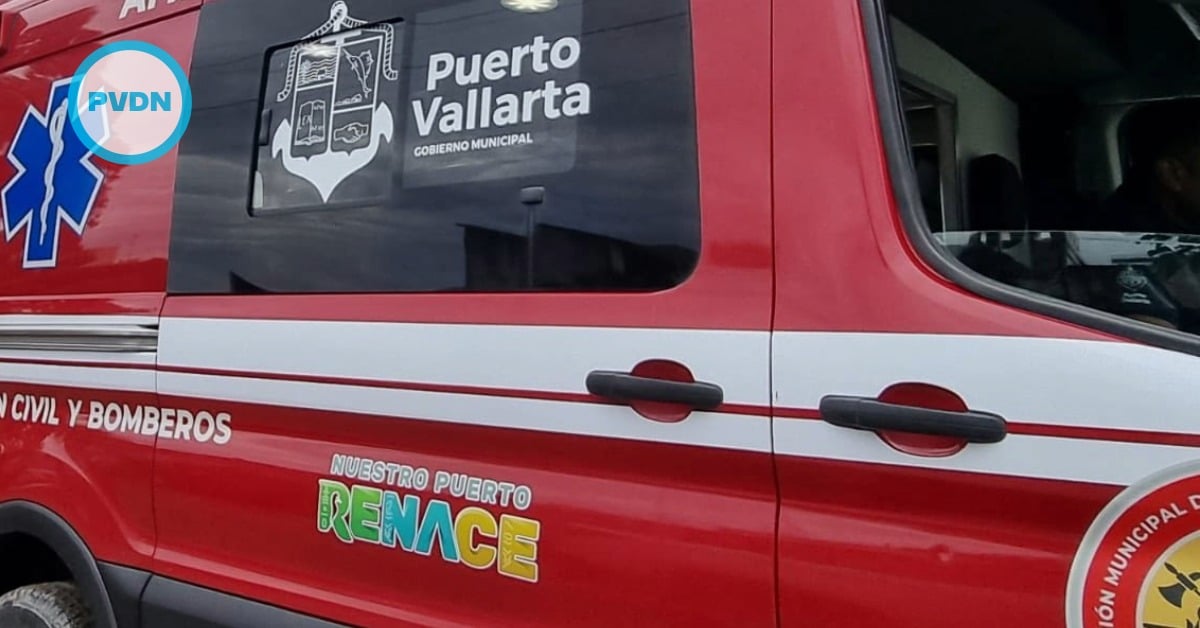
Paramedics followed their protocol for out-of-hospital births. They checked the baby’s breathing and color, secured the umbilical cord, and stabilized the mother, who had gone through the entire delivery without professional medical support. Only then did they prepare both for the short trip to the Regional Hospital, where doctors could complete a full evaluation.
Emergency deliveries like this are rare, but they are not unheard of on the roads leading into the city. Las Palmas and the surrounding communities sit roughly an hour away from the urban core, depending on traffic and the route drivers take. For families who rely on the public health system, the Regional Hospital is often the main option for specialized care in the city, especially for delicate procedures such as childbirth.
That distance, combined with unpredictable labor, helps explain why some babies arrive before their parents ever reach the hospital doors. Across Jalisco, emergency dispatchers and firefighters have handled similar cases in recent years, guiding families through contractions over the phone or meeting them in parking lots, on highways, and in taxis when a child decides to come early. In this case, the baby was already safely delivered when crews arrived, which allowed them to focus on careful follow-up rather than a frantic roadside birth.
Behind those rapid responses are years of training and coordination. Civil protection teams and firefighters in the state are trained to handle medical emergencies alongside fires, crashes, and storms. Call-takers who answer 911 learn to talk relatives through basic steps to support a woman in labor, while field crews practice improvising in cramped spaces like cars, taxis, and small homes. The goal is always the same: stabilize the baby, protect the mother, and move both as quickly as possible to formal medical care, whether at a public facility like the Regional Hospital or another clinic in the area.
The episode also highlights how much it depends on timely access to care for families who live in rural delegations around Puerto Vallarta. Reaching the Regional Hospital from communities like Las Palmas can mean driving several dozen kilometers on roads that may be dark, wet, or congested, especially in the early hours of the morning. When labor speeds up faster than expected, that distance can feel enormous.
At the same time, this birth underlines the quiet work done every day by municipal emergency teams. Police, firefighters, and paramedics are most visible at crash scenes, fires, and during storms. Much of their work, though, involves moments like this one, when a family needs calm voices, skilled hands, and a safe ride the rest of the way.
From road-side scare to healthy homecoming
Back at the hospital, staff confirmed what everyone on the scene hoped to hear. The baby girl was in good health, and her mother was stable. The ride by ambulance served mainly to ensure there were no hidden complications from the rapid labor inside the vehicle, and to give both a controlled, monitored environment after such an intense morning.
For the family, the shock of seeing their daughter born between neighborhoods instead of inside a delivery room will likely take time to sink in. The stretch of road near Villas Universidad, usually just another point on the commute for workers and students, has now become part of their family history. One day, when the girl is old enough, they will be able to point out the place where her life began and tell her how the city’s emergency teams helped bring her safely into the world.
This morning, the system worked as intended. A 911 call was answered, responders arrived quickly, and the mother and baby reached the hospital in good condition. What started as a frightening detour on the road into Puerto Vallarta ended as something simpler and far brighter: a healthy child, a relieved mother, and a new neighbor for the city, whose first home was the front seat of a family car.