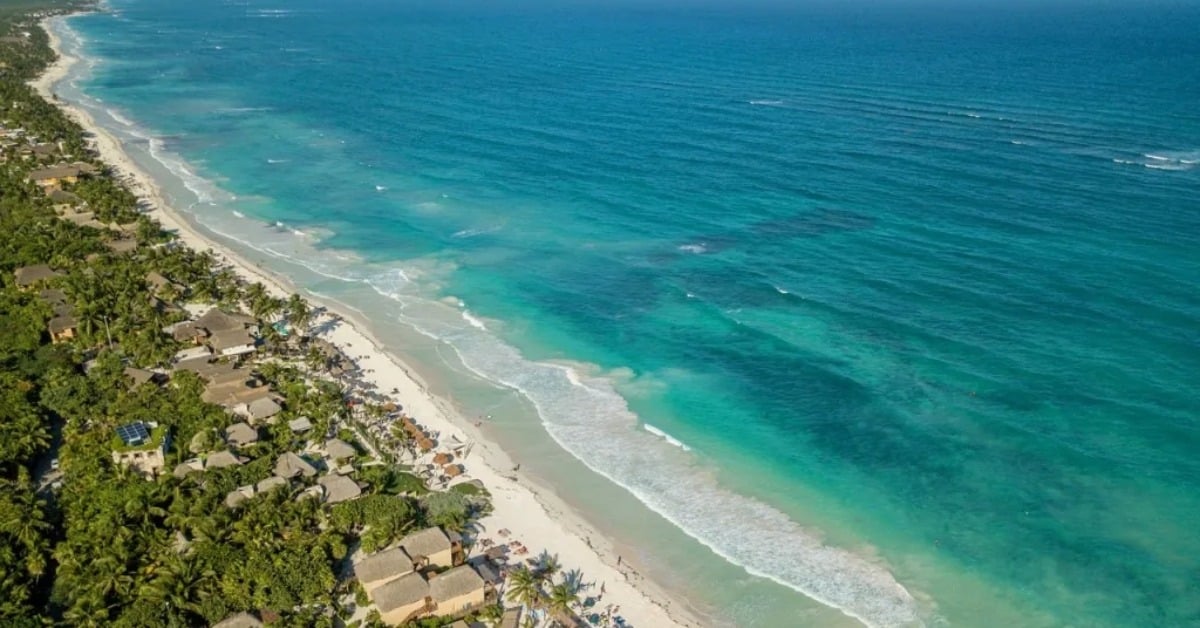
Tulum says three public beaches—Santa Fe, Pescadores, and Maya—have earned Bandera Blanca in the “conservation” modality. That label comes from Mexico’s NMX-AA-120 beach standard. It isn’t the Blue Flag or the Playa Platino program; it’s a separate Mexican certification. This certification audits water quality, waste systems, safety, services, noise, and other relevant aspects. It follows a stricter track for protected shores. If confirmed in September’s formal ceremony, Tulum would be the only municipality in Quintana Roo. It would be the only one with beaches explicitly certified for conservation, according to local authorities and the program’s rules.
Bandera Blanca Tulum beaches
Tulum’s Santa Fe, Pescadores, and Maya beaches have been awarded Bandera Blanca under the conservation modality, the municipality’s coastal authority said this week. The official in charge of the federal maritime zone described a lengthy, methodical audit. This audit concluded with top marks and an anticipated awards event in September. Local reporting notes that the recognition sets Tulum apart from other Quintana Roo destinations. The beaches are uniquely certified for ecological preservation rather than everyday recreational use.
What the conservation modality actually means
Bandera Blanca is shorthand for compliance with Mexico’s beach sustainability standard, NMX-AA-120. The rule sets measurable requirements on bathing-water quality and solid-waste handling. It also covers shoreline infrastructure, biodiversity safeguards, safety and services, environmental education, and noise. It establishes two tracks: beaches for general recreation and beaches “prioritised for conservation.” Conservation-mode sites are managed first to protect the ecosystem. Public access and services must fit that purpose. An accredited third party grants certification, which must be maintained through periodic audits and recertification.
Where these beaches sit and why it matters
Santa Fe, Pescadores, and Maya line the waterfront below the Tulum archaeological zone, inside Tulum National Park. That setting concentrates delicate dune vegetation, turtle habitat, and heavy visitor pressure in the same small corridor. A conservation-mode certification can help standardize day-to-day rules—such as trash collection, boat operations, signaling, and access points—around a protected-area management plan. It also provides residents and tour workers with a shared framework. This framework helps advocate for essentials such as functioning restrooms, lifeguard coverage, and clear mooring practices that prevent damage to the reef.
Not Blue Flag and not Playa Platino
Mexico now operates and hosts several beach-quality programs. Many of these programs have no standards but serve as tourist propaganda. Blue Flag is an international label administered by the Foundation for Environmental Education. It evaluates education, water quality, management, and safety. Playa Platino, on the other hand, is a domestic recognition program coordinated with the Mexican Standards Institute. It promotes cleanliness, signage, accessibility, and services. Bandera Blanca, under NMX-AA-120, is distinct. It is a Mexican sustainability standard with legal standing in the national norms system. Crucially, it provides a conservation pathway that aligns with protected beaches like Tulum’s waterfront.
What Tulum is claiming—and what we can verify
Tulum officials say the new labels make it the only municipality in Quintana Roo with beaches certified in the conservation modality. Statewide, many beaches carry the Blue Flag or Platino designation. However, public records on NMX conservation-mode sites are sparse and often lumped together with recreational-use certifications. What is clear from federal documentation is that the NMX standard explicitly allows this stricter conservation category. An accredited body handles that certification. Mexico’s tally of NMX-certified beaches is far smaller than Blue Flag’s list. We will update when the awards event formalises the three certificates.
What visitors and locals should expect next
Suppose the certifications are formally logged next month. In that case, the visible changes should look practical rather than flashy: clearer signage, consistent waste collection, mapped access paths, and operating procedures for boats and vendors that reduce conflicts on the sand. Expect more frequent water-quality sampling and posted results. For residents, the value is leverage. A recognised standard makes it easier to demand continuity when administrations change, sargassum seasons surge, or tourism pressures spike.