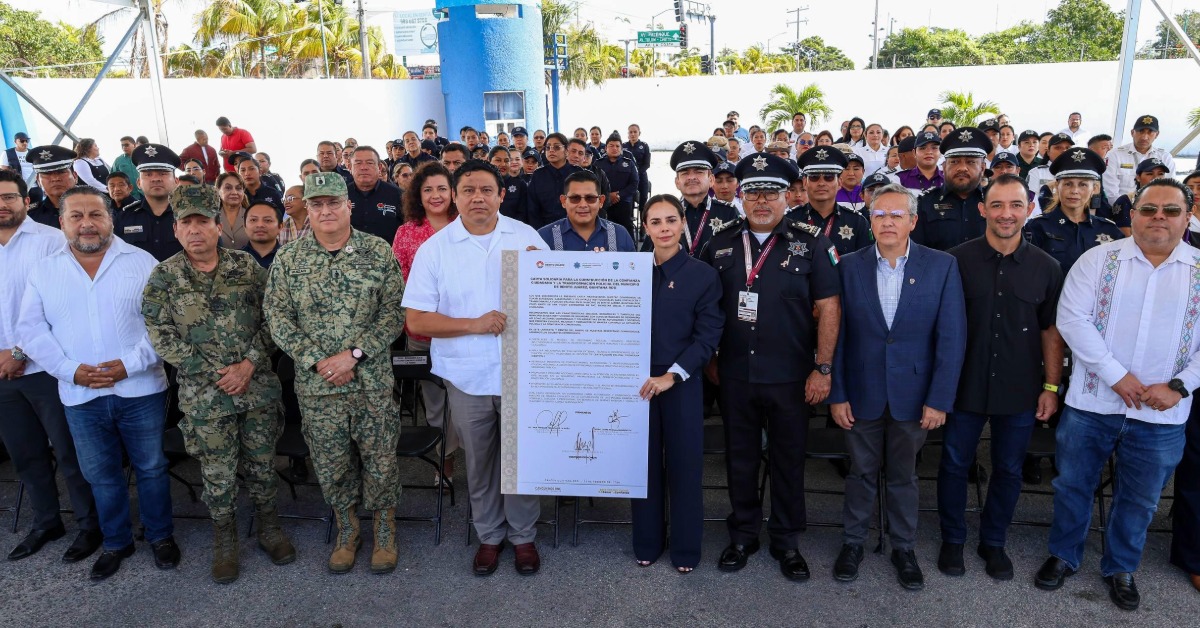
Cancún’s police force is moving through a certification process that officials say will reshape how officers are trained, evaluated, and supervised. The effort comes as the city faces pressure to improve public safety services in both residential areas and tourist zones. For residents and foreign visitors, the plan could affect how officers respond to complaints, handle victims, and follow procedures during daily policing.
Cancún moves forward with police certification
Cancún officials say the city is advancing a police certification process aimed at improving how the municipal force operates, trains officers, and responds to the public.
The effort is being led by the Benito Juárez municipal government, which oversees Cancún. Mayor Ana Paty Peralta said the process is intended to strengthen the police department by changing its operations, administration, and treatment of citizens.
The certification effort is being presented as part of a broader push to make the force more professional, more consistent, and more accountable. Officials have described the goal as building a police department that is closer to residents and better prepared to serve a city with heavy tourism demand.
The process is also tied to CERTIPOL, a citizen police certification model supported by the Instituto para la Seguridad y la Democracia (INSYDE). The model uses professional standards to review police practices and identify areas for improvement.
What the certification process includes
The certification process looks beyond basic officer training. It reviews how the department recruits, trains, supervises, and evaluates its officers.
The model includes 55 professional standards grouped into several areas. These include police development, recruitment, selection, professional conduct, accountability, use of force, victim attention, and internal supervision.
Officials say the review is designed to help standardize police procedures. That means officers should be working from clearer rules when handling reports, arrests, public contact, and emergencies.
For a city like Cancún, that consistency matters. The municipality serves local neighborhoods, the Hotel Zone, business districts, and transportation corridors used by residents and visitors. Public safety problems can look different in each area, but the basic expectations are the same. People need officers who know the law, follow protocols, and understand how to respond without escalating a situation.
Citizen oversight is part of the plan
One notable part of the certification process is the use of external evaluation and citizen participation.
The program includes the creation of a citizen committee with representatives from different sectors. That committee is expected to follow the process and help provide an independent review.
This matters because police reform efforts often lose credibility when agencies evaluate themselves without outside checks. A citizen review process can give the public a clearer view of whether promised changes are actually being made.
Officials have said the certification is not just a symbolic step. The first stage included a diagnostic review of the department. The findings from that review are now being used to make changes in different areas of the force.
That type of review can point to gaps in training, weaknesses in internal controls, or inconsistencies in how officers apply protocols. It can also help identify whether the department has the tools and staffing needed to meet its own standards.
Why Cancún is focusing on police professionalism
Cancún’s public safety demands are unusual because the city functions as both a local municipality and one of Mexico’s busiest tourism hubs.
The city has residential neighborhoods, working-class communities, nightlife areas, beaches, large hotels, and international visitor traffic. Police must respond to everyday local concerns while also protecting an economy built heavily around tourism.
That creates pressure on the police force to be visible, trained, and responsive. It also creates pressure to avoid misconduct, poor treatment, or confusing procedures that can damage public trust.
For foreign residents and visitors, police contact can be especially difficult when there are language barriers or limited knowledge of Mexican procedures. Clearer protocols and better training can reduce confusion during traffic stops, theft reports, emergency calls, or victim assistance.
Cancún has already taken other steps tied to police modernization. Recent efforts have included the use of mobile tools for police reporting and additional training in areas such as use-of-force and police-focused English instruction.
Those changes do not address public safety concerns on their own. But they show that the current certification push is part of a larger attempt to update the local security system.
The challenge of turning standards into daily practice
The key question is whether the certification process changes how policing works on the street.
Professional standards can help guide a department, but the impact depends on enforcement. Officers need training, supervision, and consequences when rules are ignored. Commanders also need reliable systems to track complaints, performance, and use-of-force incidents.
Certification can also be limited if staffing shortages remain unresolved. Cancún’s Hotel Zone and urban areas require regular patrol coverage, especially during peak tourism periods. A better-trained force still needs enough officers to respond quickly and consistently.
Public trust will also depend on transparency. Residents will want to know what areas were reviewed, what problems were found, and what steps are being taken to fix them.
For the certification effort to carry weight, officials will need to show progress in ways people can understand. That may include better response times, clearer complaint channels, improved treatment of victims, and fewer reports of poor conduct.
What residents and visitors should watch
For now, Cancún’s certification process appears to be moving from diagnosis into implementation.
That means the next phase should show whether the department adjusts its protocols, strengthens training, and applies the standards across the force. The role of the citizen committee will also be important, especially if it provides meaningful oversight rather than a ceremonial review.
For residents, the most visible changes may come through better officer conduct, clearer procedures, and improved attention during police contact. For visitors, the effect may be seen in how police handle reports involving theft, traffic issues, or emergencies in tourist areas.
The certification process does not mean Cancún’s public safety concerns are resolved. It does mean the city is trying to create a more formal structure for improving the police department.
The test will be whether those standards become part of everyday policing, not just a reform plan announced from City Hall.