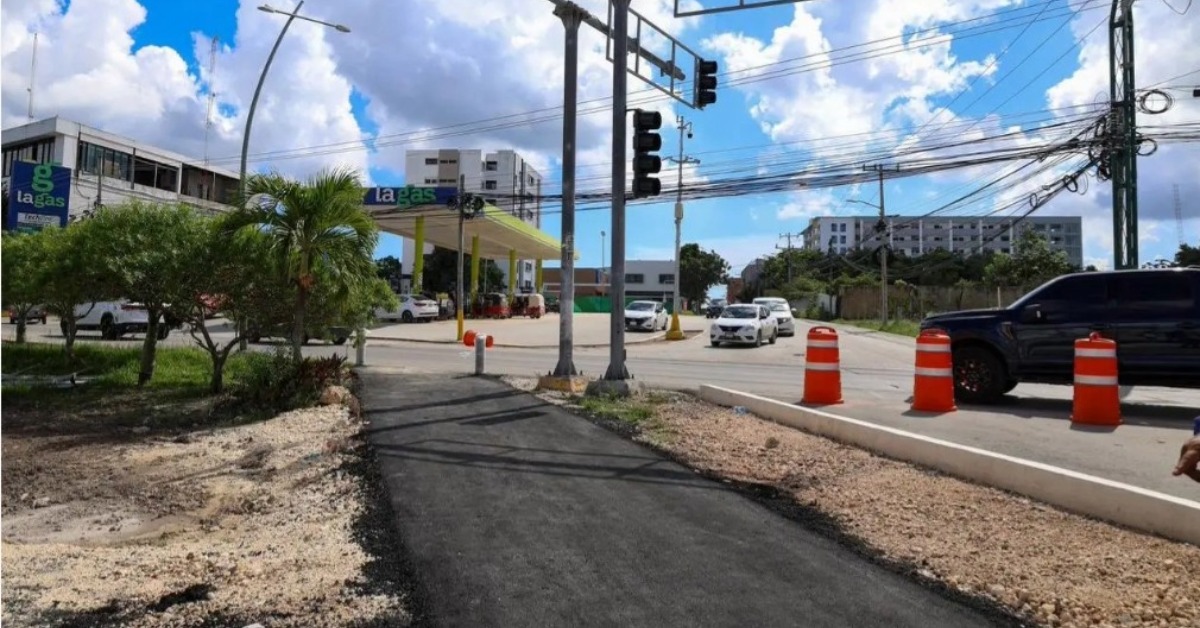
Cancún’s streets are not cursed. They are being asked to do too much, too late, in a city that keeps growing faster than its pavement, drainage, and traffic plans can keep up with.
The newest clue came this week, when Benito Juárez officials approved a second 2026 public works package worth more than 457 million pesos. The plan names some familiar trouble spots: Avenida Huayacán, Avenida 135, Galaxias del Sol, and Avenida Kabah, along with work in Colonia Los Pinos, road adjustments in several areas, and improvements tied to the Centro de Seguridad Ciudadana and C2 system, according to the municipality’s official announcement.
That does not mean every cone in Cancún is included in this package. Roadwork in the city comes from different levels of government, different funding pots, and different calendars. Still, the new package gives residents a useful map of official priorities. When the same corridors keep appearing in public works plans, the city is showing where pressure has become hard to ignore.
Cancún’s road problem starts with growth
Cancún was planned as a tourism project, but it became a full city. That explains half the traffic headaches before the coffee gets cold.
Benito Juárez, the municipality that includes Cancún, had 911,503 residents in 2020, according to Data México’s Benito Juárez profile, which uses INEGI census data. The same profile reports that the municipality grew by 37.9 percent from 2010 to 2020. More people mean more school runs, delivery routes, buses, taxis, work commutes, trash trucks, emergency vehicles, and private cars fighting for the same lanes.
The strain does not land evenly. Tourist corridors get attention because they drive visitor movement, hotel employment, airport traffic, and state revenue. Residential supermanzanas need pavement, drainage, lights, sidewalks, crossings, and safer access to schools. Growth corridors such as Huayacán and Avenida 135 carry both pressures at once, which is why they appear so often in mobility conversations.
Daily travel already takes a toll. Data México reports an average home-to-work commute of 38.4 minutes in Benito Juárez in 2020. That number came before some of the latest population and housing pressure reached full force.
How streets move up the repair list
Public works packages sound tidy from a podium. On the ground, prioritization is messier.
A street can rise on the list because pavement is failing, buses need a better route, a school zone needs safer access, or flooding keeps returning after rain. Another corridor may jump ahead because it connects to a larger project, such as the Nichupté Bridge, or because police, fire, and ambulance routes need more reliable movement.
Money also shapes the order. Municipal work can be funded through annual budgets, federal programs, carried-over projects, or later packages approved during the year. Benito Juárez already announced a first 2026 package of more than 321 million pesos, which included work on Kabah, Nazareth, Colosio, Huayacán, drainage-related upgrades, and complementary connections for the Nichupté Bridge. The new 457-million-peso package brings the first two rounds of public works to more than 748 million pesos, according to the municipal government.
That rolling-package system helps explain why Cancún can feel permanently unfinished. The city does not approve one grand repair plan, close every lane, fix every weakness, and return the streets gift-wrapped. It releases projects in waves, while traffic keeps moving through the construction zone like nothing is wrong. Anyone who has driven Kabah at the wrong hour knows the comedy is very dark and very local.
The named corridors tell the real story
Huayacán is more than another avenue with rough pavement. It has become a symbol of Cancún’s outward growth, where housing, schools, commercial strips, and daily commuting have piled onto a corridor that was not built for endless modern demand.
Avenida 135 carries another version of the same problem. It serves residential expansion and cross-city movement, so small failures can cause major delays. A damaged section is more than a pothole. It can slow a bus route, push traffic into side streets, and make school drop-off feel like a competitive sport nobody trained for.
Galaxias del Sol points to the neighborhood side of the infrastructure story. Local reporting by Luces del Siglo says the planned work there includes reconstruction between Francisco I. Madero, also known as Ruta 4, and Lak’in, with pavement, signage, and absorption wells. Those details belong in the repair story because Cancún’s street fixes often fail when drainage is treated as an afterthought.
Kabah may be the best example of how long road repair can stretch across budget years. The avenue has appeared in earlier mobility spending, and municipal officials described another stage in the first 2026 works package. That kind of phased work can be practical, but it also makes it harder for residents to judge progress. A finished section can sit beside a damaged one, and both become part of the same daily complaint.
Drainage is part of mobility
In Cancún, rain can turn a street problem into a traffic problem within minutes. Pavement, stormwater capture, absorption wells, curbs, sidewalks, and underground conditions are all part of the same system, even when they are funded under different headings.
Recent reporting by Vallarta Daily on Cancún’s use of ground-penetrating radar showed how city officials are trying to identify underground risks before pavement failures become emergencies. That is not separate from road planning. In karst terrain, where water and cavities can sit below the surface, a street may look repaired while the real weakness remains underneath.
Absorption wells also deserve closer attention in every works package. They are not glamorous. Nobody cuts a ribbon and poses lovingly with a drainage well unless the photographer has run out of options. Still, they can decide whether a newly rebuilt road survives the rainy season or starts collecting water in the same old place.
What residents should watch in each new package
The most useful public works question is not whether Cancún is spending money. It is where the money goes, how the project was chosen, and whether the finished work solves the original problem.
Residents should look for named corridors, exact stretches, drainage components, sidewalk and accessibility work, school-zone impacts, and completion dates. A package that says “rehabilitation” needs a closer read. That word can cover anything from surface repairs to deeper reconstruction, and those are not the same thing when traffic volume is high.
Budget comparisons also help. If tourist corridors receive fast, visible improvements while residential zones wait through another rainy season, the imbalance should be documented street by street. For residential avenues that make the list, residents can track whether crews address drainage, signage, crossings, and lighting, rather than leaving a smooth road that still works badly.
The Nichupté Bridge offers a related lesson. Vallarta Daily has covered the bridge’s opening plans, traffic rules, cost increases, access questions, and role as a new link between the urban area and the Hotel Zone. A major project can relieve one bottleneck while creating new pressure at its entrances and exits. Smaller street packages then become the cleanup crew for the next round of congestion.
The orange cones are a growth report
Cancún’s roadwork never seems finished because the city itself is not finished. New neighborhoods keep pushing outward. Tourism keeps adding movement. Public safety systems need faster access. Rain keeps exposing weak drainage. Old corridors are being asked to serve a city larger and more complicated than the one they were built for.
The 457-million-peso package will not answer every complaint. It does give residents a checklist. Huayacán, 135, Galaxias del Sol, Kabah, Los Pinos, safety infrastructure, drainage, and accessibility are now part of the 2026 watch list. The useful work begins when residents compare the announcement with the contracts, the calendar, the detours, and the condition of the street after the crews leave.