Dancers in Puerto Vallarta traded choreography for chopping boards during a new food contest inside the city’s traditional markets. The Sabores del Mundo event brought visiting folklore groups into a setting many residents know well, turning local markets into small stages for food, music, and dance. Chihuahua took the top prize, while Latvia and Jalisco also earned recognition in a contest that added a new layer to one of Vallarta’s annual cultural events.
Chihuahua and Latvian dancers win Puerto Vallarta folklore food contest
The Vallarta Azteca International Folklore Festival took a turn into the kitchen this week, as visiting dancers joined a new cooking contest inside Puerto Vallarta’s traditional markets.
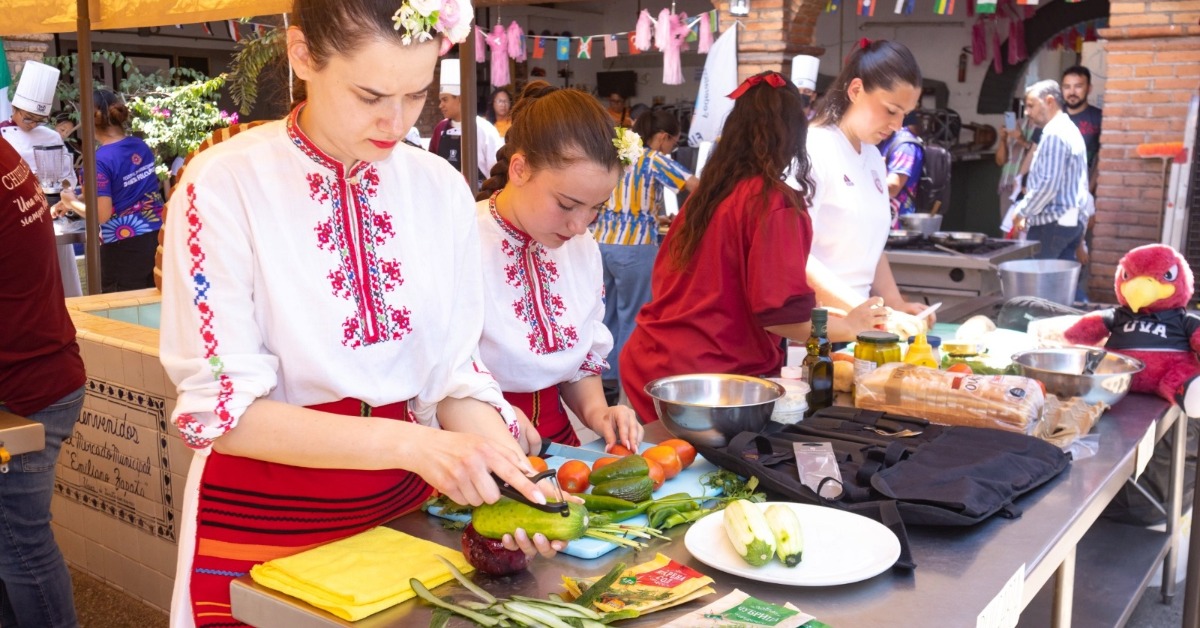
The contest, called Sabores del Mundo, was added to the 20th edition of the festival. It brought dance groups into the Mercado Municipal Emiliano Zapata and Mercado Río Cuale, where performers prepared dishes from their home states or countries.
Chihuahua won first place with asado de puerco, a pork dish prepared by Julio César Mendiola Hernández and Josué Efraín Violante Cano. Latvia placed second, while Jalisco took third.
The contest was judged by chefs from Puerto Vallarta. It was not presented as a professional cooking competition. Instead, it was designed as a cultural exchange, with dancers using ingredients bought from local butchers, fruit vendors, and market shops.
Dancers move from the stage to the market
The final round took place at the Mercado Municipal Emiliano Zapata, in the southern part of the city. Earlier activities also took participants through the Mercado Río Cuale, one of Puerto Vallarta’s best-known central market areas.
The idea was simple: bring the festival closer to daily life in the city. Rather than confining performances to theaters or formal venues, organizers placed visiting groups in markets used by residents, workers, and tourists.
For international readers, this setting is important. Municipal markets in Mexico are not only places to buy food. They are also social spaces, where local food habits, family routines, and neighborhood life are visible in one place.
That made the contest a natural extension of the festival. The dancers were already sharing culture through music, costumes, and choreography. Food gave them another way to explain where they came from.
A new event in the festival’s 20th year
The cooking contest was introduced during the 20th Festival Internacional del Folclor Vallarta Azteca 2026, also known as FESTVA.
The festival ran in Puerto Vallarta from May 3 to May 9, with public programming across several locations. Events included galas, street performances, market presentations, a parade, cultural displays, and a closing concert.
This year’s festival included groups from several Mexican states and international delegations from Bolivia, Bulgaria, Colombia, Costa Rica, and Latvia. Chihuahua, Jalisco, and Latvia were among the groups featured in the food contest.
Festival director Antonio Salcedo Padilla has presented the event as a way to support cultural exchange and strengthen Puerto Vallarta’s profile as a host city for international arts events.
The festival also had municipal support, including coordination with the city’s markets department. That allowed the cooking contest to use market spaces rather than outside catering areas or hotel kitchens.
Food as part of folklore
The word “folklore” is often used to refer to dance, costumes, and music. In practice, it also includes food, language, festivals, family traditions, and community habits.
That is why a cooking contest fits the larger purpose of the Vallarta Azteca festival. A dish can carry the same cultural weight as a song or dance. It can show migration, climate, farming traditions, and family memory.
Mexico’s own food traditions are widely recognized as part of its cultural heritage. Traditional Mexican cuisine was inscribed by UNESCO in 2010 as intangible cultural heritage, using the Michoacán model as a reference.
For readers in Mexico, this helps explain why food events often play a deeper role than casual tasting. They are also a way to preserve regional identity and introduce visitors to local and national traditions.
In this case, the contest also allowed foreign delegations to share part of their own food culture with a Mexican audience.
Puerto Vallarta’s markets become cultural stages
The decision to use municipal markets gave the event a local feel.
The Mercado Río Cuale sits near the river area and is familiar to many visitors for its crafts, food stands, and its central location. The Mercado Emiliano Zapata serves a more everyday role, with vendors selling ingredients and household goods to local shoppers.
By taking dancers into these spaces, the festival connected visiting performers with the people who make Puerto Vallarta function beyond the beach and hotel zones.
This matters for a city that depends heavily on tourism. Events that use public spaces can help residents and visitors share a cultural moment, rather than keeping tourism activities separate from daily life.
The contest also gave market vendors a role in the event. Participants bought ingredients directly from market businesses, adding a small economic benefit while keeping the competition tied to the location.
Chihuahua takes the top prize
The winning dish, asado de puerco, is closely associated with northern Mexico and family-style cooking. In Chihuahua and nearby regions, pork dishes often carry strong ties to gatherings, celebrations, and home kitchens.
The version prepared by the Chihuahua participants earned the top score from the judges.
Latvia’s second-place finish also stood out because it showed how far the exchange reached. The festival was not only a display of Mexican regional culture. It also gave international groups a chance to share their own traditions in a setting shaped by Mexican market life.
Jalisco’s third-place result kept the host state in the awards, linking the contest back to the region where Puerto Vallarta sits.