Puerto Vallarta’s city government had a visible June. It added police vehicles, leaned into World Cup tourism, and picked up another environmental recognition. It also spent much of the month trying to outrun old problems: trash, sewer complaints, street conditions, tree removals, and public frustration with basic services.
My read from the June government watch is simple. City Hall performed best when the work was visible, timed to major events, or backed by state money. It struggled most where people judge the government every day, block by block.
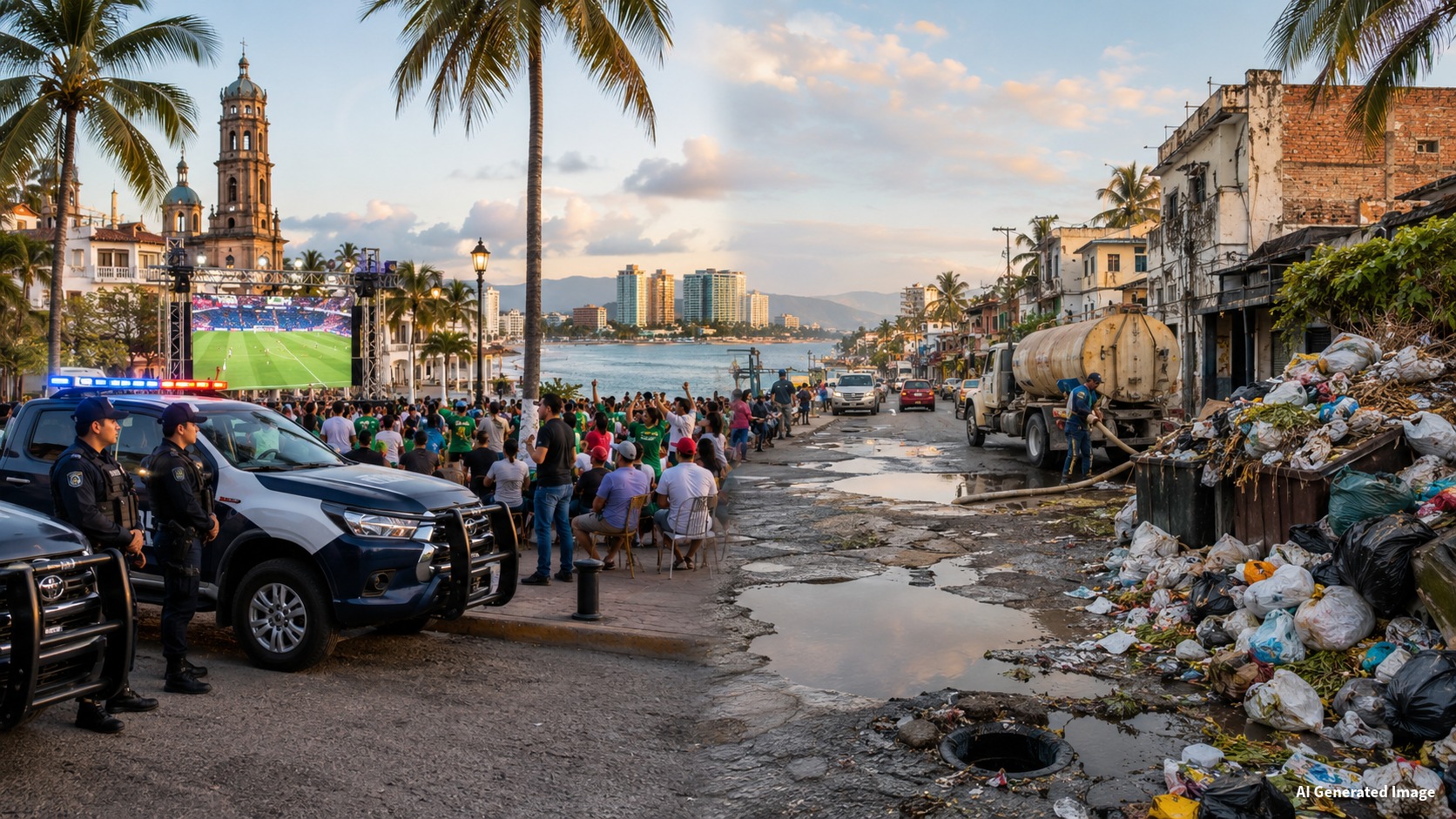
The administration of Mayor Luis Ernesto Munguía González did not have a quiet month. It had a split-screen month.
Security was the clearest win
The strongest government action in June came in public safety. Puerto Vallarta added 35 patrol vehicles to the municipal fleet on June 23. Of those, 30 were bought with federal FORTAMUN 2026 funds, giving the city more capacity for surveillance and response.
That followed a broader push to increase police presence in high-traffic areas. PVDN previously reported that police had added fixed and mobile patrols in the Romantic Zone, Hotel Zone, and commercial corridors after dark. The timing was not accidental. June brought summer travel, rainy-season street problems, and World Cup crowds.
This is where the city deserves credit. Patrol vehicles do not solve crime on their own, but response time, visibility, and coverage all depend on equipment. The city also benefited from Jalisco’s wider security posture after a difficult start to 2026.
The U.S. State Department still lists Jalisco under “reconsider travel,” but its written advisory says there are no travel restrictions in Puerto Vallarta, including neighboring Riviera Nayarit, for U.S. government employees. That distinction is important because Puerto Vallarta often gets pulled into broader Jalisco headlines that do not accurately reflect local conditions.
The World Cup gave City Hall a stage
Puerto Vallarta also did well on World Cup positioning. The city is not hosting official matches, but June showed how local and state officials want the destination to benefit from Guadalajara’s role in the tournament.
The Vibra Jalisco Zona Fan Puerto Vallarta opened in the Hotel Zone with free access, giant screens, Domósfera Vallarta, music, and a food area. The official event listing runs from June 11 to July 19 and promotes 50 matches on screen during 39 days of programming.
The project is not small. Coverage from Guadalajara described the Fan Zone as a 31,000-square-meter site next to the Sheraton, with beachfrontage, free access, and capacity for up to 10,000 people. The Domósfera was promoted as an immersive dome and one of the major attractions of the state’s World Cup strategy.
This was one of June’s better government plays. It gave Puerto Vallarta a public gathering point, helped restaurants and vendors during a slower travel month, and connected the city to the World Cup without pretending Vallarta was a host city.
The risk is cost and follow-through. Local reporting placed the Domósfera investment between 50 million and 60 million pesos and said state officials would later evaluate whether the structure should remain for future events. If it stays, the city will need a real public-use plan, not just a post-tournament photo opportunity.
Tourism strategy looked stronger than service delivery
Jalisco’s Pasaporte Mundialista 2026 also gave Puerto Vallarta a place inside a statewide tourism campaign. The plan includes 39 experiences and more than 70 travel packages across Jalisco, including Puerto Vallarta, Costalegre, Tequila, Chapala, Guadalajara, and other destinations.
That is a useful promotion. But June also showed the limit of promotion when daily services fall short.
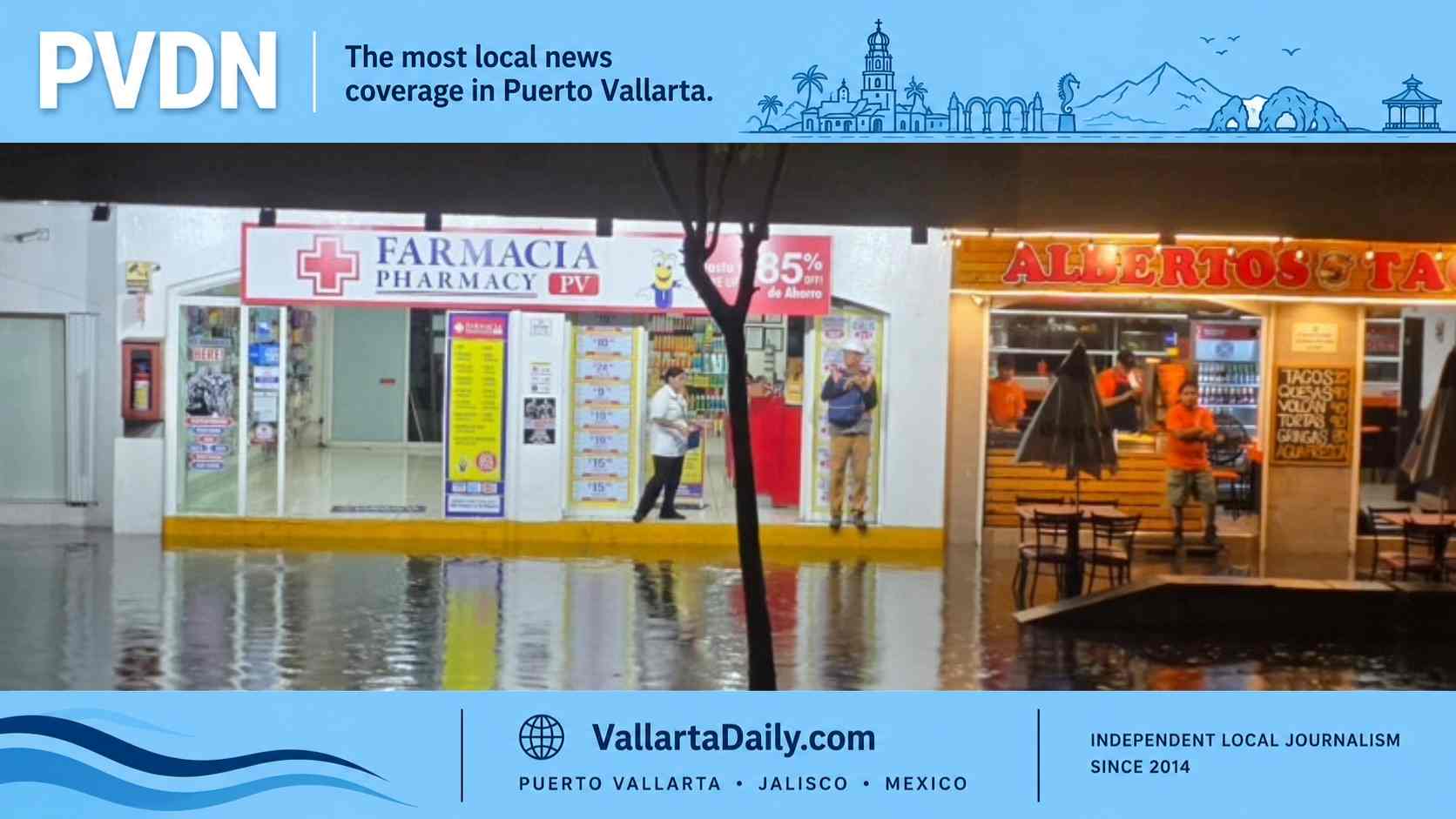
The city continued to face criticism over garbage, sewage, street conditions, and urban deterioration. A June 11 local political critique argued that trash, wastewater, and deteriorating streets reflected a lack of municipal strategy. The same complaints have appeared in neighborhood reports, service calls, and PVDN’s own public services coverage.
Trash remained the most visible weakness. PVDN reported that neighborhood trash pickup was suspended on June 19 after weeks of irregular service and waste buildup. That kind of breakdown undercuts almost every other City Hall message because people see it outside their door.
Water service also stayed fragile. SEAPAL announced a planned suspension affecting 136 neighborhoods in Puerto Vallarta due to highway-related line relocation. Planned work can be necessary, but June again showed how quickly infrastructure work becomes a quality-of-life problem when communication and timing are poor.
Development enforcement still feels reactive
Urban development was another weak spot. The biggest example carried over from late May, when a judge ordered the developer of the Frida building in El Cerro to demolish upper floors after a fight over height limits and neighborhood impact. PVDN covered the case as a major test of construction oversight in older hillside neighborhoods.
That case was important because enforcement came through the courts, not through an early municipal correction that prevented the conflict. When neighbors have to fight project by project, the city’s planning system looks reactive.
June brought a similar credibility problem with trees and public space. Puerto Vallarta earned international recognition through the Tree Cities of the World program, while local concern grew over authorized tree removals and development pressure. PVDN reported this week on a large ficus removal in Fluvial Vallarta, a case that put fresh attention on municipal environmental approvals.
The Tree Cities designation is still a real achievement. The Arbor Day Foundation and FAO say the program recognizes communities that manage urban forestry through standards that include tree responsibility, policy, assessment, resources, and annual public education.
But the recognition creates a higher bar. A city cannot promote itself as a tree-conscious municipality while leaving neighborhoods unsure why mature trees are removed, how compensation is calculated, or who checks that permits align with the public interest.
The public mood was not all bad
June’s polling picture was mixed, which fits the month. Demoscopia Digital listed Munguía at 60.9% approval for May 2026, a relatively strong number heading into June.
A separate June ranking by GobernArte placed him 10th among 10 Jalisco mayors listed, with 45.9% approval, based on polling conducted June 11-16. Polls are snapshots, not verdicts, but the contrast shows how unstable the mayor’s standing can look depending on who asks and when.
That instability makes sense. People can support added patrols, enjoy free World Cup programming, and still be angry about trash, sewer odors, potholes, flooding risks, or construction decisions.
That was June.
The June scorecard
City Hall’s best work this month was visible and practical: more patrol vehicles, stronger tourist-zone policing, a functioning World Cup Fan Zone, and participation in statewide tourism promotion.
Its weakest work was routine government: keeping trash service predictable, communicating water interruptions clearly, staying ahead of sewer complaints, and enforcing development rules before disputes reach the courts.
I would score June as a month of useful action but ineffective governing. The Munguía administration showed it can move when there is a deadline, a ceremony, or state-level coordination. The harder test is whether it can make the everyday city work better when there is no ribbon to cut or social media post at stake. Promoting a city is much easier than managing one.