A federal operation against the alleged El Caballito network has put Mexico’s fake-invoice problem back in the spotlight. Prosecutors say the group used shell companies, fiscal addresses, and invoices for nonexistent operations to move money and cut tax bills. The case now turns on whether authorities can prove the paper trail in court, identify the companies that allegedly benefited, and show how far the scheme reached across several states, including Jalisco.
How El Caballito Turned Fake Invoices Into Cash Fast
Federal prosecutors said they broke up an alleged money laundering and fake-invoice network known as El Caballito. The operation led to eight arrests and searches in nine states. The FGR tied the case to shell companies, tax-evasion services, and invoices for deals that prosecutors say never happened.
The announcement came through a public message from the FGR on May 29. The suspects have not been convicted. The agency’s account remains an allegation unless tested in court. That point is central in a case built around paper trails, fiscal addresses, and companies accused of making illegal money look legal.
How prosecutors describe the alleged scheme
Ulises Lara López, the FGR spokesman and special prosecutor for relevant affairs, described an alleged business model built around tax fraud. He said the network worked through private offices that sold tax-evasion structures to real companies. “The Caballito scheme is operated by individuals who design and commercialize tax-evasion mechanisms through their own offices, offering real companies the issuance of invoices for false operations,” Lara said.
Prosecutors say the group then used shell companies to issue tax receipts and move money under false pretenses. Lara said those companies generated false tax receipts “in which money flows enter for later distribution under concepts outside reality.” He said taxes were not paid, and fiscal duties were reduced.
The money-laundering theory depends on that circular flow. Lara said the invoicing companies sent the money “toward the owners of the beneficiary companies.” Prosecutors say the circuit concealed the origin of the money, evaded tax payments, and kept the false-invoice system running.
Where the federal operation reached
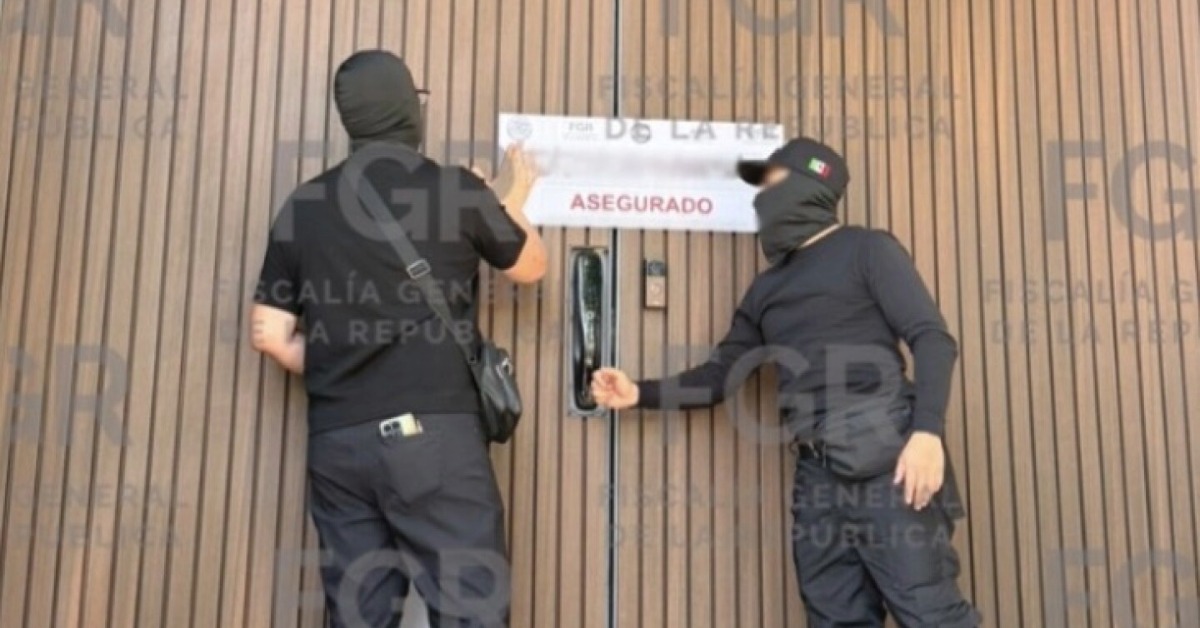
Authorities said 440 federal personnel took part in the investigation and later searches. The searches covered 30 properties in Jalisco, Guanajuato, Colima, Durango, Quintana Roo, Sonora, Sinaloa, Aguascalientes, and Coahuila. The FGR said agents, federal prosecutors, and specialists in accounting, computer forensics, criminology, photography, and video were involved.
The agency said arrest warrants were carried out against eight people. Public accounts identified them as Michael or Maikol “N,” Salvador “N,” Laura Belén “N,” Luis “N,” Manuel “N,” Elda “N,” Monserrat “N” and Lilia “N.” Two men, Michael or Maikol “N” and Salvador “N,” were described as possible leaders.
Federal authorities said the alleged network used 15 companies and civil associations as fronts. Their fiscal addresses were mainly in Jalisco, Michoacán, Sinaloa, Sonora, and Quintana Roo, according to the public accounts. The same summaries named Jalisco, but did not identify Puerto Vallarta as a search site or fiscal address.
What the fake-invoice case signals
The case falls within a broader federal push against simulated operations. The SAT keeps a public Article 69-B system for taxpayers presumed to simulate operations through invoices or digital tax receipts. That process allows taxpayers to appear, present documents, and try to rebut the presumption.
That tax process is separate from the criminal case announced by prosecutors. Here, FGR alleges operations using resources of illicit origin. That is the legal language often used in money-laundering cases. In court, prosecutors must connect the paperwork scheme to money movement, intent, and beneficiaries.
The backdrop includes earlier reporting on Mexico’s 2026 tax authority powers over false invoices and on invoice fraud in Mexico’s trade data. Those issues are not proven in this case. They show why federal officials treat false invoices as both a tax problem and a tool for financial crime.
What remains unanswered
FGR has not publicly identified the client companies that allegedly bought the invoices. It has not released a verified estimate of tax losses tied to this case. Several public accounts reported cash and foreign currency seizures, but the peso amounts were inconsistent across the accounts reviewed.
The eight arrested people must face court proceedings. Prosecutors will have to support the allegations behind the arrest warrants. Any companies or individuals named later would have the right to challenge tax and criminal claims through the legal process.