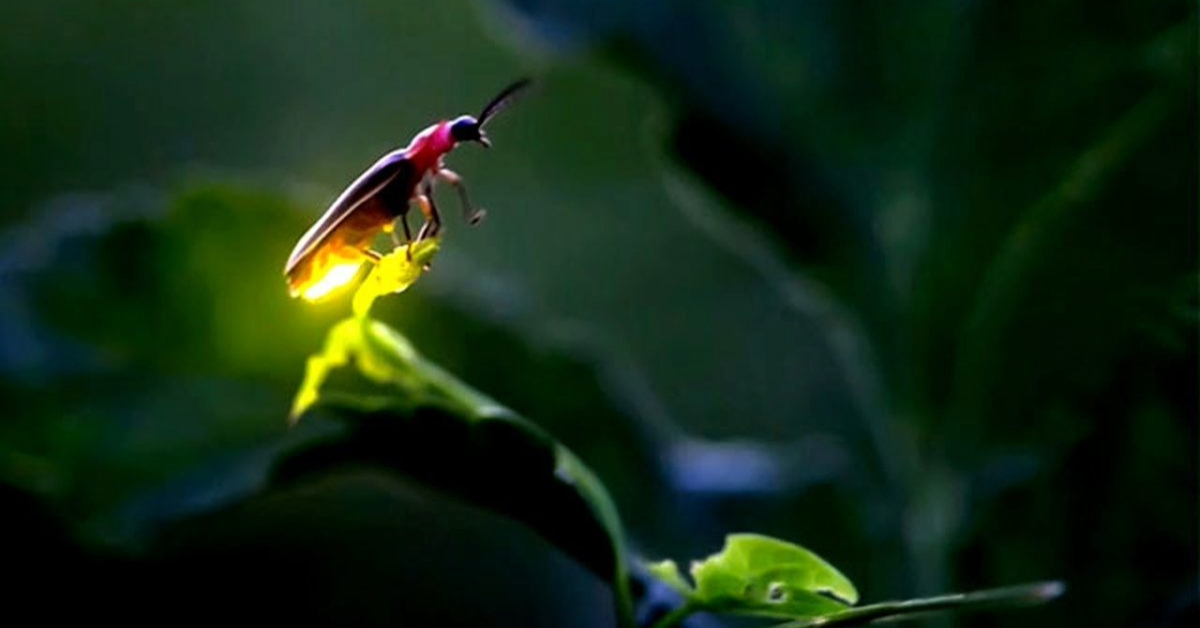
Mexico News – Fireflies in Mexico are facing a growing threat from habitat destruction, urban expansion, and climate change, according to entomologists from the University of Guadalajara. The glowing insects, beloved for their nighttime light displays, are showing signs of displacement and population decline across multiple regions of western Mexico. Scientists warn that if action isn’t taken soon, these “charismatic” insects may disappear from ecosystems where they once thrived.
Critical regions see habitat degradation
Entomologist José Luis Navarrete Heredia, a professor at the University Center for Biological and Agricultural Sciences (CUCBA) of the University of Guadalajara (UdeG), spoke out through the UdeG Gazette, highlighting the alarming state of firefly habitats. Areas such as Casimiro Castillo, the Sierra de Manantlán, the mesophilic forest of Talpa, as well as Magdalena and Etzatlán, have all experienced clear signs of environmental degradation.
“These insects require dark environments to reproduce, and both artificial lighting and urbanization are altering their life cycle,” Navarrete Heredia warned.
Fireflies belong to the Coleoptera order and are more than just a light show. They help control other arthropods and contribute to plant pollination, making them a vital part of healthy ecosystems.
However, land-use changes, including deforestation and the spread of urban development, are rapidly transforming the delicate environments that fireflies rely on to survive. In mountainous areas such as Mazamitla and Tapalpa, the presence of lowland tropical species at higher elevations is a new phenomenon attributed to rising global temperatures.
Loss of fireflies signals deeper ecological trouble
While no national database tracks the exact number of fireflies in Mexico, scientists like Navarrete Heredia say the trend is clear: populations are dwindling. One of the major challenges in understanding the full scope of the crisis is the lack of long-term, systematic studies. Most warnings are drawn from field observations, not rigorous statistical data.
“The absence of quantitative records makes it harder to measure just how quickly this decline is happening,” he said.
Despite this gap in scientific documentation, the concern has been strong enough to spark citizen science movements. Notably, Dr. Santiago Zaragoza Caballero of the National Autonomous University of Mexico (UNAM) has led initiatives involving community participation, environmental education, and awareness efforts to protect these iconic insects.
From bioluminescence to environmental advocacy
Fireflies, like monarch butterflies, have the potential to become symbols of environmental conservation, according to Navarrete Heredia. Their popularity and visual appeal could help draw public support for preserving natural spaces.
“As a charismatic species, fireflies can become a rallying point for campaigns that protect a wide range of biodiversity,” he noted.
But effective conservation efforts will require more than awareness. Navarrete Heredia also pointed to the insufficient monitoring and enforcement in many of Mexico’s protected natural areas. For instance, he cited La Primavera Forest, a critical ecological reserve in Jalisco, where the lack of personnel has led to forest fires and other ecological setbacks due to insufficient surveillance.
The concern is that without immediate and coordinated efforts, many habitats that still support fireflies could be lost forever—along with the broader ecological balance they help sustain.
Call for coordinated action
The solution, Navarrete Heredia argued, lies in collaborative action. Governments, academic institutions, and civil society must work together to safeguard habitats and combat the forces driving fireflies to extinction.
He urged institutions to take a more active role in field research, conservation planning, and policy development. Local and federal governments must invest in the enforcement of environmental regulations, while the public can contribute through sustainable practices and by supporting community science efforts.
“If we don’t act soon, we may face an irreversible ecological crisis,” he concluded.
Fireflies are more than just fleeting summer lights. They are vital actors in Mexico’s ecosystems—and their disappearance would be a signal that much more is going wrong in the natural world around us.
Sources:
Field observations reported by entomologists in Jalisco and surrounding areas
UdeG Gaceta
University Center for Biological and Agricultural Sciences (CUCBA)
UNAM conservation projects on fireflies
fireflies, climate change, biodiversity, Mexico environment, University of Guadalajara, Jalisco news, species decline, entomology, conservation, La Primavera Forest