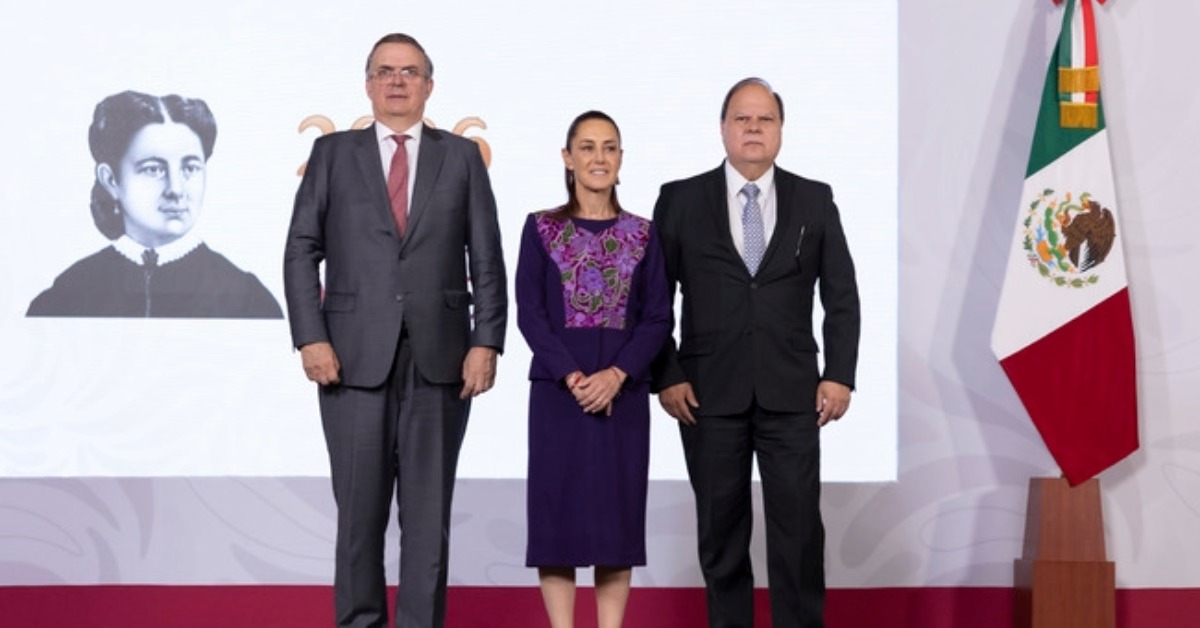
Flex says it will invest $1 billion in Mexico between 2026 and 2028 to expand manufacturing tied to data centers and artificial intelligence. The company says the project will create more than 5,000 jobs, with the main impact expected in Jalisco, Chihuahua, and Aguascalientes. The announcement came during the federal government’s morning press conference, where officials framed the move as another sign that Mexico wants a larger role in advanced manufacturing, not just basic assembly.
That distinction matters. This is not a headline about a consumer-products plant or a routine factory expansion. Flex is talking about equipment linked to the digital infrastructure now driving the global AI buildout. That includes the kind of hardware that supports data centers, where demand has surged as companies race to expand computing power, storage, cooling, and energy systems. For readers outside the business world, the practical meaning is simple: Mexico is trying to capture more of the physical backbone behind AI, not just talk about the software side of the trend.
Why this matters beyond one company
The investment also lands at a moment when Mexico is still being pitched as a nearshoring winner. Companies serving the U.S. market want production closer to North America, with shorter shipping times and fewer supply-chain shocks. That strategy has helped keep Mexico attractive even as global trade has grown more uncertain. Flex’s move fits that pattern. It suggests the country is still being seen as a place where high-value manufacturing can be scaled, especially for industries that need speed, engineering support, and proximity to customers.
There is another reason this announcement stands out. Flex is not a newcomer testing the market with a small pilot project. The company already has a large presence in Mexico and has spent years building its local operations. It also has an established training pipeline in Jalisco, which matters because this kind of expansion depends on technicians, engineers, and operators who can handle specialized equipment. When companies make investments tied to AI infrastructure, the labor question is not just how many workers they can hire. It is whether they can find enough workers with the right skills, or train them fast enough.
Why Mexico fits the AI supply chain
Flex’s own strategy offers a clue to why Mexico is central to this push. The company has said that producing closer to North American data-center customers can reduce lead times, lower transport costs, and improve delivery speed. It has even used Guadalajara as an example of how localized manufacturing can better support U.S. demand. That helps explain why this investment is aimed at the hardware around AI growth, rather than at a single flashy software project.
This is also why the geography matters. Jalisco has long marketed itself as a technology and electronics hub, with Guadalajara at the center of that identity. Chihuahua brings border logistics and deep industrial experience. Aguascalientes gives companies another established manufacturing base in the country’s center. Together, those states show that the investment is not about a single isolated facility. It is about using different parts of Mexico’s industrial map to support a larger production network.
The bigger test will be infrastructure
Still, a large investment announcement is not the same as a completed industrial transition. The harder part comes after the press conference. Manufacturing equipment for data centers and AI systems demands reliable electricity, specialized testing capacity, and strong logistics. Flex executives have already signaled how energy-intensive this work can be. That matters because Mexico’s broader data-center boom is already putting more attention on power, cooling, and telecom capacity.
That is where the story becomes larger than Flex. Mexico has attracted strong interest from investors, and trade with the United States remains a major advantage. But infrastructure limits can slow the benefits of factory growth. If the country wants to win more AI- and digital-infrastructure-related projects, it will need more than lower labor costs and geographic proximity. It will need stable energy, better industrial support systems, and enough regional capacity to keep these projects moving after the first round of announcements fades.
What readers should watch next
The next phase of this story will not be the headline number. The details that follow. Readers should watch for supplier contracts, hiring plans, training programs, and any signals about how power demand will be met in the regions involved. Those details will show whether the investment becomes a lasting industrial shift or simply another impressive pledge in a crowded investment cycle.
For international readers living in Mexico, the broader takeaway is that the country is being pulled deeper into the physical side of the AI economy. That can mean jobs, supplier growth, and more industrial activity in key regions. It can also mean heavier pressure on infrastructure and public services. Flex’s announcement points to opportunity, but it also raises the question Mexico keeps facing in 2026: can it move from being a convenient manufacturing platform to a more complete, high-value production base for the next generation of technology?