Puerto Vallarta, Jalisco, June 23, 2026 – A suspected explosion in the López Mateos neighborhood turned out to be an active gas leak from a 30-kilogram tank, Puerto Vallarta emergency crews reported.
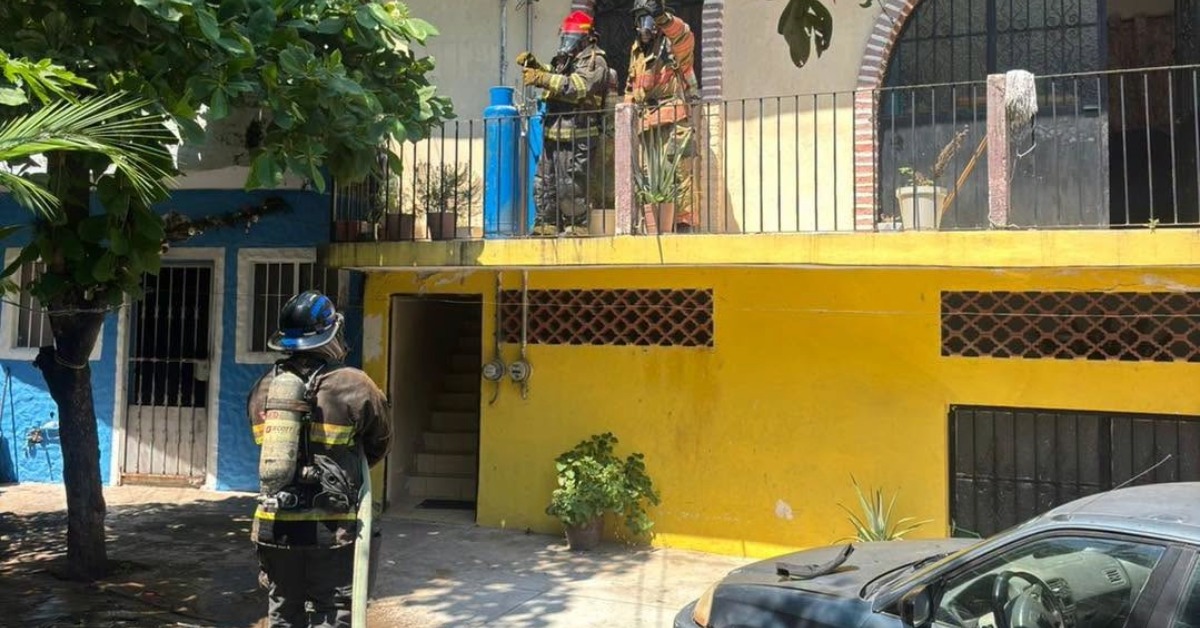
Puerto Vallarta Civil Protection and Firefighters responded to the home after neighbors reported a loud noise. Crews found that gas was escaping from a damaged service hose, not from an explosion.
Firefighters used self-contained breathing apparatuses and established a protective line before entering the property with the owner’s permission. The tank valve was closed, cutting off the leak and removing the immediate risk.
What happened inside the home
The emergency centered on a portable 30-kilogram LP gas cylinder, a common size in Vallarta homes, rentals, and small businesses.
The sound of gas escaping under pressure can be sharp and sudden. In this case, the noise was mistaken for an “explosion,” but the reported response ended with crews closing the valve and returning the property to the person who made the report.
The city did not report fire damage or a blast. The key failure point was the hose connected to the cylinder.
Why hose leaks deserve fast attention
Gas leaks often start small: a cracked hose, a worn regulator, a loose connection, or a tank that should not have been accepted at delivery.
That is why crews treated the call as a real emergency even after the source was identified. LP gas can build up quickly in poorly ventilated areas, especially near floors and low spaces.
Recent local responses have shown how quickly tank problems can draw emergency crews. Earlier this month, a stationary LP gas tank fire at Hotel Krystal brought firefighters to the Hotel Zone. Days before that, Puerto Vallarta approved a plan to reinforce Civil Protection and Firefighters with additional equipment and supplies.
What to do if you suspect a gas leak
Emergency guidance from Mexico City’s fire department tells people to close the tank valve or gas shutoff if it can be done safely, ventilate the area, avoid electrical switches, leave the site, and call emergency services.
That means no lights, no fans, no phone charging, no stove ignition, and no testing with a flame. If the smell is strong or the sound is active, the safest call is 911 from outside the property.
CENAPRED’s gas safety guidance also stresses that cylinders should be kept in good condition and filled only through authorized channels. Damaged, dented, corroded, or leaking tanks should not be used.
Small checks before the next refill
A quick home check can prevent a routine tank change from becoming an emergency call.
Hoses should be made for LP gas, not improvised from water or garden tubing. They should be free of cracks, heat damage, and loose clamps. Regulators should sit firmly, and tanks should remain upright, ventilated, and away from heat sources.
A basic soap-and-water check can help find small leaks at connections. If bubbles appear, close the valve and call a qualified technician or emergency services, depending on the strength of the leak.