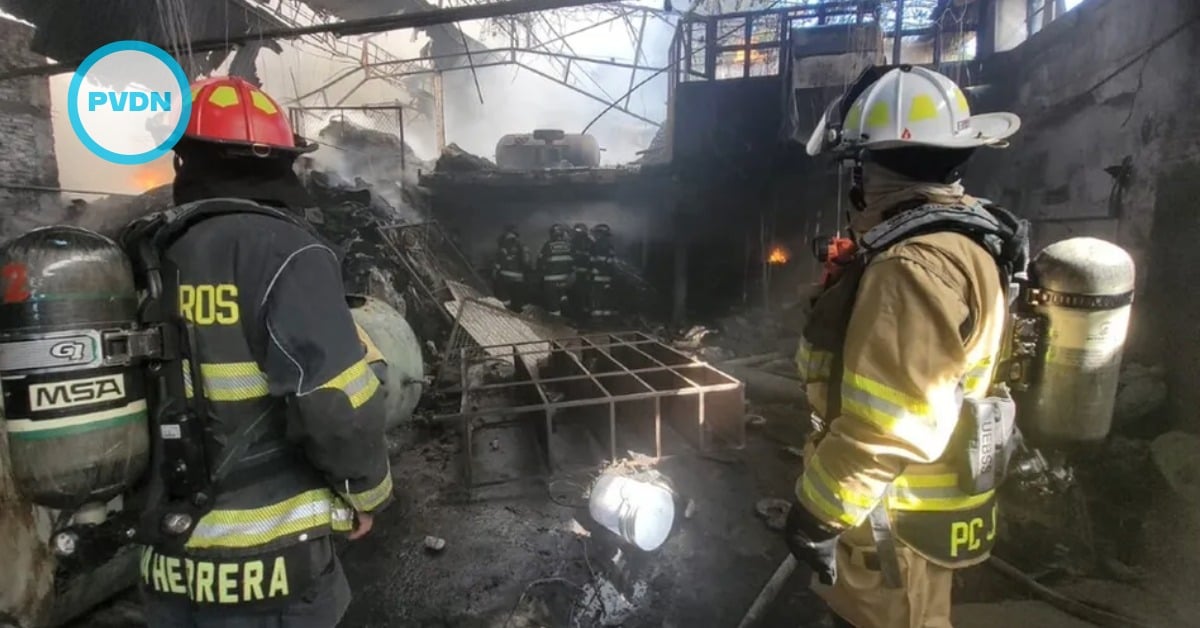
A towering plume rose over Guadalajara’s historic center on Tuesday, November 11, after an abandoned warehouse near Plaza Tapatía caught fire, sending a sharp smell of scorched plastic through the afternoon air. Firefighters from the city and state attacked the blaze fast, cut off its spread, and reported no injuries. The quick stop mattered in a district packed with shops, vendors, and pedestrians.
The fire broke out at Av. República and Román Morales, a spot several blocks behind Plaza Tapatía on the northeast edge of the core. Crews described the site as a long, disused scrapyard-style warehouse filled with combustible debris. On arrival, they found plastics, rubber, garbage, and out-of-service containers burning—exactly the kind of load that produces thick, dark smoke and intense heat in minutes.
Guadalajara warehouse fire
By early afternoon, neighbors and office workers could see the column from across the city, and emergency lines lit up. The first alerts landed around 1:45–2:00 p.m., and video from the C5 system later showed how fast the plume built as engines moved in. Officials from Jalisco’s civil protection agency said they worked shoulder to shoulder with Guadalajara’s firefighters, an important detail given the maze of narrow streets and old structures in this part of town.
Inside, crews fought a contents fire, not a structural one. That helped. Once they knocked down the main body of flames, teams opened walls and piles to chase hot spots and prevent re-ignition. The working area spanned roughly 20 by 100 meters, according to preliminary measurements shared on Tuesday. No nearby homes or businesses reported damage, and responders kept people clear while hoses and tankers cycled through the scene.
The cause wasn’t known late Tuesday. Investigators will start with basic questions: how trespassers could access the site; whether sparks, open flame, or an electrical fault set off the pile; and who owns the property. What is clear is how vulnerable abandoned spaces are when they become informal dumps. Stacks of plastic and rubber throw off toxic smoke, burn hot, and can spread embers and molten runoff to alleys and roofs if not contained quickly. Officials emphasized there were no injuries, a fortunate outcome in a tight urban grid.
To understand the scale—and the luck—consider how the wind might have carried embers toward the mercados and hotels that ring the core. Tuesday’s fire did not jump the perimeter. Lines were placed on the flanks and the rear while crews cooled the heart of the blaze. A city government update shortly after the first alarms said municipal units had the scene under control with state support and that no evacuations were needed.
What investigators are checking now
Property status and site security will be central in the coming days. Guadalajara has pockets of aging warehouses and former “chatarreras” within walking distance of major plazas; when they sit empty, they fill with flammable debris fast. That’s why coordination between Protección Civil Jalisco and Protección Civil y Bomberos Guadalajara is now routine in the historic center—shared staffing, shared water supply planning, and shared command so they can box in a fire before it runs. The teamwork on Tuesday shows that the system is working.
For people who saw the smoke from blocks away, the question is whether the next one will be as contained. The answer depends on basics: clearing abandoned interiors, locking down access, and inspecting neighboring roofs that sit a few meters from any spark. After the hose lines were rolled and the last wisps of steam faded, the story became less about a dramatic plume and more about prevention in a crowded, historic grid where a single pile of plastic can still shut down an afternoon.