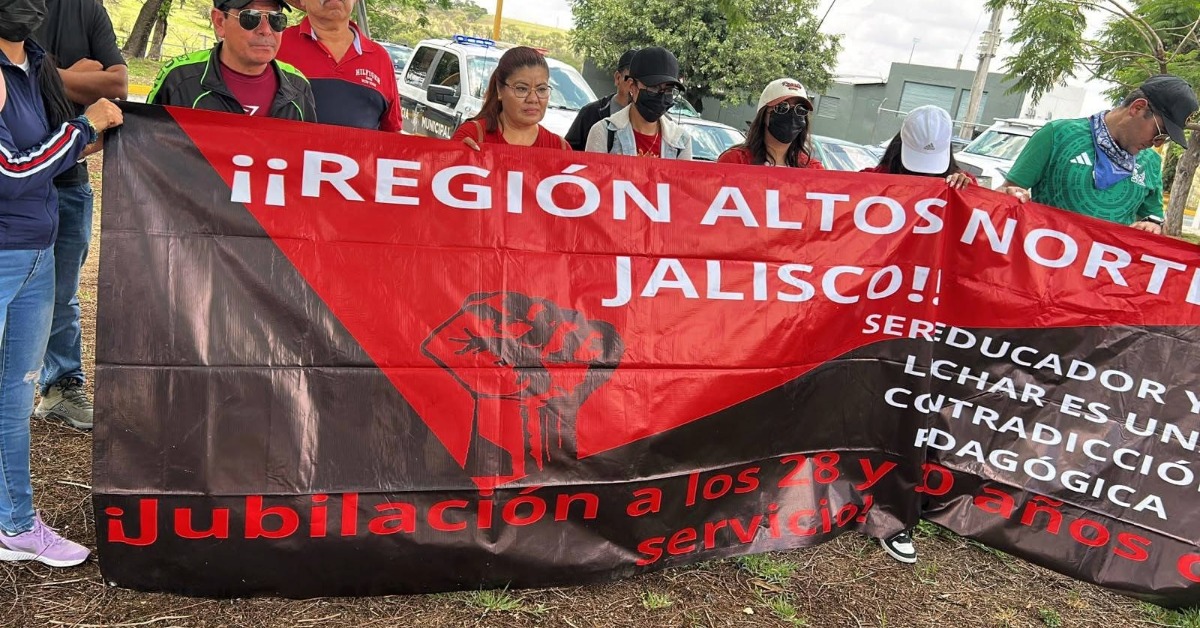

Puerto Vallarta, Jalisco, October 20, 2026 – Thousands marched in Guadalajara on Sunday for clean water and accountability for police abuses, intensifying pressure on Jalisco Gov. Pablo Lemus.
The October 18 protest brought demands for his removal alongside calls to punish those responsible for violence during the previous Sunday’s demonstration. Participants reached Palacio de Gobierno in Guadalajara’s Centro Histórico after masked people carrying sticks interrupted the march and set off firecrackers.
Turnout estimates varied. El País reported about 5,000 participants, while the state government’s subsequent account put attendance at approximately 9,500 and said most people demonstrated peacefully.
For Lemus, the central question is whether his government can restore public confidence while fixing the water supply and answering for the police response. The protesters are demanding both.
On Monday, the governor distinguished the peaceful march from later attacks on government buildings, which he attributed to approximately 300 people. State authorities reported 10 detentions during the day and damage to public buildings, businesses and vehicles. Those arrests are separate from the detentions during the October 11 protest.
The accountability demands grew out of that earlier demonstration outside Casa Jalisco, the governor’s official residence. As Vallarta Daily reported after the confrontation, police used tear gas and water cannons after some demonstrators removed barriers and threw objects at officers.
Lemus subsequently acknowledged serious mistakes. In his October 13 statement, he recognized police excesses and said water jets and tear gas should never have been used against the population. He also announced the release of the last seven people among the 39 detained.
The release has not resolved every legal issue. The National Human Rights Commission, known as the CNDH, has expressed concern about criminal proceedings against four people and is investigating allegations of arbitrary detention, mistreatment and possible torture.
President Claudia Sheinbaum called for an investigation that examines who authorized the operation. During her October 14 news conference, she asked: “Who gave the order? Why?” She said investigators should interview victims and identify those responsible.
By October 15, Jalisco’s security secretary, Juan Pablo Hernández, said 17 officers were under internal investigation for allegedly acting outside police protocols. The possible disciplinary consequences included dismissal.
The scrutiny also extends to the masked groups. In a Monday update, the CNDH called for clarification of their role in both demonstrations. Responsibility for specific abuses remains under investigation.
Behind those proceedings is the complaint that brought residents into the streets: water they cannot trust when they open the tap.
Vallarta Daily’s March reporting on Guadalajara’s failing water network documented complaints about foul smells, brown water and sediment months before the October marches.
One Sunday protester, identified as Joyce, described the problem plainly: “The water barely reaches my house, and when it does, it comes with a terrible smell, like chemicals.”
The government’s emergency response has created another household problem: reduced supply.
Lemus ordered flows from the Las Pintas reservoir and an open canal stopped on October 6. SIAPA, Guadalajara’s metropolitan water utility, then introduced a supply rotation covering 627 neighborhoods served by the Miravalle treatment plant, about 42% of its service area.
According to details published Monday, the program alternates supply between seven sectors. Authorities have promised free tanker deliveries and community storage tanks to help affected households.
The proposed longer-term response includes a replacement Chapala–Guadalajara aqueduct costing nearly 12 billion pesos. State water commission director Luis Barboza said treatment facilities and distribution pipes would also require investment.
Protesters question the private participation. Lemus maintains that the arrangement would not privatize water service. The aqueduct remains a proposed infrastructure response, rather than a completed improvement residents can assess at home.
For Puerto Vallarta readers, the distinction between the two cities’ systems matters. Guadalajara’s crisis concerns SIAPA; Puerto Vallarta’s service is operated by SEAPAL. In its March infrastructure report, SEAPAL described 40 supply sources and five treatment plants. The Guadalajara complaints do not establish contamination in Puerto Vallarta’s network.
For households affected in Guadalajara, the immediate test is whether the emergency program reliably delivers usable water. Barboza acknowledged Monday that approximately 15% of participating neighborhoods had reported little or no supply. Residents can check their address on SIAPA’s official supply calendar; the program’s first stage is scheduled to continue through March 2027.