Mexico’s consumer complaint rules require proof of a purchase or service. Jalisco offers voluntary mediation for eligible disputes, giving residents routes to refunds, repairs or agreements.
Profeco, the federal consumer protection agency, handles claims against businesses. Jalisco’s Instituto de Justicia Alternativa, or IJA, offers mediation for eligible civil, business, and community disputes, including neighbor disputes.
For this report, I reviewed federal filing rules, mediation guidance, and local service directories. They set out a practical approach: identify the problem, keep the evidence, and choose the right channel.
Where Puerto Vallarta residents can seek help
Water problems, consumer claims, and neighborhood disagreements start in different places. The local directories I checked identify offices and reporting channels for each.
SEAPAL lists water and sewer reporting channels at 073, 322-226-9191, and 322-226-9190. Its WhatsApp number is 322-105-8226. The utility’s main office stands at Avenida Francisco Villa and Manuel Ávila Camacho in colonia Lázaro Cárdenas.
For municipal complaints or suggestions, the city’s citizen-attention listing provides [email protected] and Calle Independencia 123 in Zona Centro. It lists office hours of 8 a.m. to 4 p.m. Monday through Friday.
Residents seeking mediation can contact the IJA’s Puerto Vallarta office at Calle Corregidora 533, telephone 322-224-3843. Its UNIRSE module is at Avenida Grandes Lagos 236 and can be reached at 33-1380-0000, extension 406.
Our guide to how public services work in Puerto Vallarta provides related context for residents sorting out local responsibilities.
Begin with a request the other person can answer
Profeco’s consumer education guidance supports trying to resolve issues directly with the provider before seeking third-party help. It also describes Profeco’s role when that approach becomes unviable.
“The consumer always has the option of trying to resolve differences directly with the provider,” the guide states, in our translation.
For a routine service problem, I adapted that approach into a first-contact checklist:
- Identify the transaction, appointment, or service involved.
- State what was promised and what occurred.
- Point to the receipt, message, contract, or other supporting record.
- Ask for a specific correction and a date for a response.
Naming the correction gives the request a clear purpose. It does not create an automatic right to that remedy.
The Spanish phrases below are examples I drafted for this report, with English translations. For a disputed charge:
Buenas tardes. Mi recibo muestra un cargo que no reconozco. ¿Me puede ayudar a revisarlo?
Good afternoon. My receipt shows a charge I do not recognize. Can you help me review it?
The request identifies something the recipient can examine. A follow-up can name the amount, date, and supporting document, then ask who can authorize a correction:
¿Quién puede revisar este cargo y autorizar una corrección?
Who can review this charge and authorize a correction?
Keep the complaint about conduct and evidence
The IJA’s civil mediation guide sets concrete rules for discussion. Participants should take turns, avoid personal attacks, and consider both sides’ interests.
It instructs participants to “avoid raising your voice and using profanity,” in our translation. The guide also directs facilitators to prevent stereotypes, discrimination, and violence.
These are rules for a mediation process, rather than evidence that everyone in Mexico responds to complaints the same way. I used them here as a model for keeping an everyday disagreement focused on the issue.
Mexico’s Education Ministry makes a related distinction in its school conflict-resolution guidance. It advises participants to use objective facts rather than assumptions, avoid threats, and focus on the conflict instead of personalizing it.
Applied to a missed repair appointment, that distinction produces two different statements. The following examples are mine:
Personal accusation: You never care about your customers.
Documented complaint: The appointment was set for Tuesday at 10 a.m. Nobody arrived, and I received no cancellation message. Please confirm a replacement appointment.
The second statement gives a date, an observable event, and a requested action. It leaves the other person room to explain or correct the record.
For residents using Spanish as a second language:
Mi español es limitado. Traigo los detalles por escrito para explicar el problema.
My Spanish is limited. I brought the details in writing to explain the problem.
That wording explains the language issue without asking the other person to accept your account of the dispute.
Listen, then confirm what was agreed
The Education Ministry’s communication lesson on reaching agreements advises listeners to let others finish and ask questions about unclear points. It recommends stating what they understood to check that they heard it correctly.
Although designed for students, the lesson supplies a useful communication method. For this report, I adapted it into a confirmation question:
Para confirmar, ¿la reparación será el viernes? ¿Quién me avisará la hora?
To confirm, will the repair take place on Friday? Who will tell me the time?
This asks for the action, date, and person responsible. A written follow-up can record those details and ask the other person to correct any errors.
The ministry’s school conflict guide also calls for agreements to state who will do what, how, when, and where. That gives both sides a checklist for recording what they agreed.
Build the file before making a formal claim
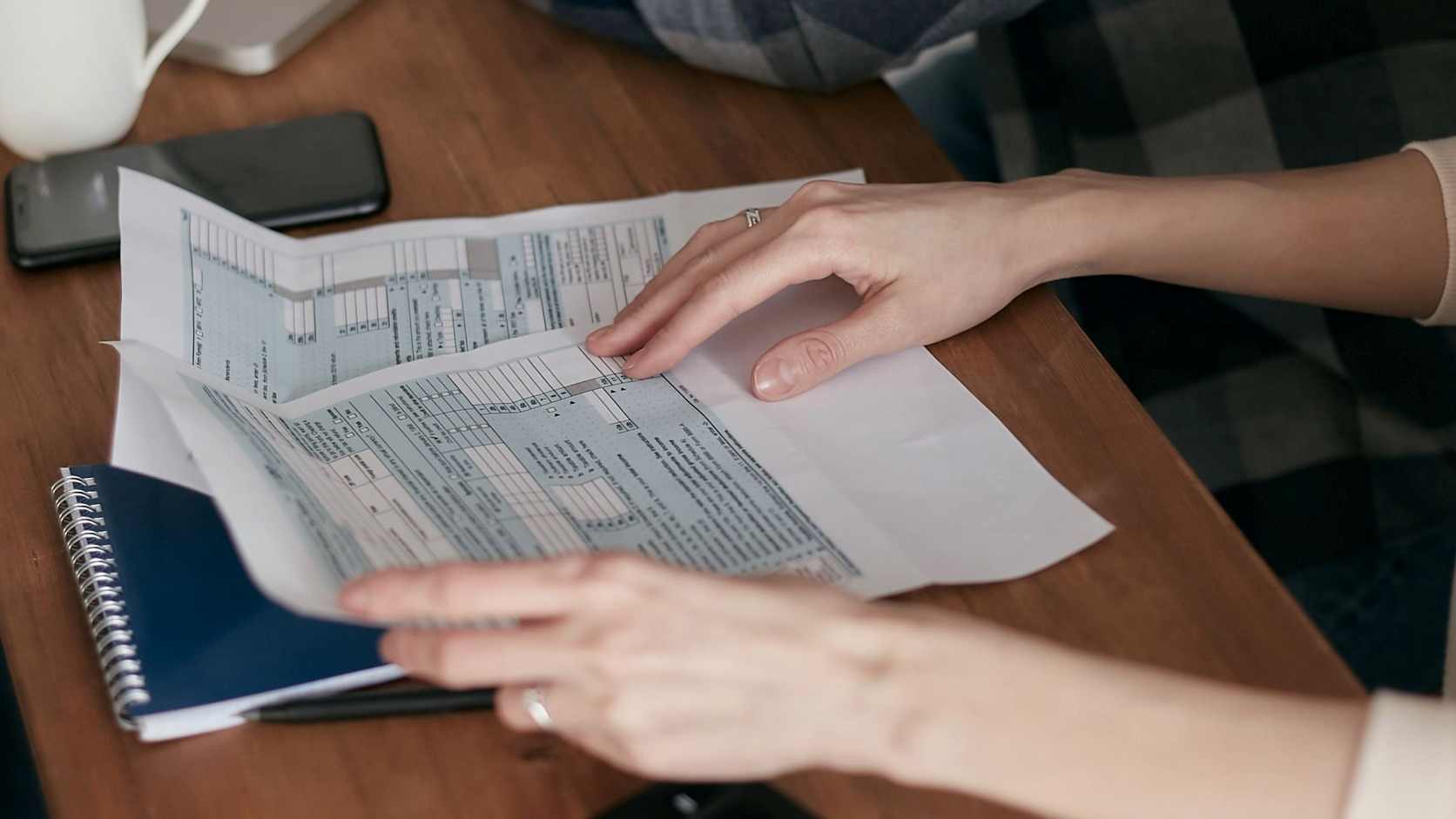
A federal agreement published March 30, 2026 sets the filing requirements for Profeco’s conciliation process. It lists form FF-PROFECO-2025-002, or details entered through Concilianet, and documents proving the consumer-provider relationship.
The agreement also requires official identification for in-person or overseas claims and expressly allows a valid passport. It includes documents proving the legal capacity in which the person filing acts.
Foreign residents can use the passport option for in-person filing. Before filing for someone else, ask Profeco which documents it needs to prove the right to represent that person.
Article 99 of the Federal Consumer Protection Law requires the claimant’s name and address, the provider’s identifying details, and a description of the goods or service. It also calls for a concise account of the facts.
I used those rules to build a checklist: contact details, provider details, a dated account of the problem, and supporting records. Receipts, contracts, payment records, and relevant messages can help explain the claim. The agency decides whether the material meets its requirements.
Profeco also operates a filing portal for people residing abroad. Its stated category concerns where the applicant lives. A foreign citizen living in Puerto Vallarta should not assume that nationality alone makes that overseas procedure the appropriate route.
Choose a personal claim or a violation report
PROFECO’s definitions of queja and denuncia distinguish two purposes. A queja is a consumer’s claim over deficient goods or an unfulfilled service, handled through conciliation.
A denuncia alerts the agency to a provider’s breach of consumer rights. According to the glossary, the person reporting it need not have suffered that breach.
For a reader seeking repayment over a purchase, that distinction points toward asking Profeco about a personal claim. Reporting a suspected breach does not confirm that an individual refund has been requested or approved.
Our earlier coverage of consumer complaints in Puerto Vallarta provides local background on the agency’s work.
Escalate through a defined channel
Profeco’s Concilianet instructions describe online conciliation with participating providers. Consumers submit details and supporting documents. The agency decides whether it can handle the case.
The service applies to businesses that have an agreement with Profeco. Readers should check its provider list before relying on it for a claim.
Concilianet instructs users to check their account, email, and spam folder for notices. For telephone or office contact, my preparation checklist adds another step: ask for a case or reference number to keep with the documents.
The agency’s consumer assistance page also describes Conciliaexprés, which seeks resolution by telephone with participating providers. It lists 800-468-8722 for consumer information and advice outside Mexico City.
For businesses outside those programs, Profeco directs consumers to a consumer protection office. Residents can call for guidance on where to file before traveling to an office.
Using those channels need not threaten the business. I drafted this example to state the next administrative step:
No hemos llegado a un acuerdo. Voy a solicitar orientación a Profeco y presentar la documentación correspondiente.
We have not reached an agreement. I will seek guidance from Profeco and submit the relevant documentation.
The consumer law excludes regulated financial services from its scope. For disputes with banks or insurers, Condusef’s complaint channels provide a separate starting point. The commission lists its contact center at 55-5340-0999 and [email protected].
Consider mediation for an ongoing relationship
The IJA’s current service guidance includes civil, business, and community disputes, such as neighbor disagreements and contract breaches. Mediation and conciliation at its offices and modules are free for people who take part voluntarily.
The institute asks people seeking help to describe the conflict, provide the other side’s contact details, and bring supporting documents. It then invites the other side to take part. Both sides must agree to seek a mediated solution.
The institute says eligible agreements can gain enforceable legal status through the required process. An informal agreement alone does not carry that status.
For an ongoing neighbor or contract dispute, this offers a structured option beyond repeating the same private argument. The institute must assess the case and both sides’ willingness to take part.
Immediate danger calls for a different response. Jalisco’s 911 guidance identifies emergencies involving threats to life, property, or the environment. It directs routine issues such as potholes, streetlights, and noisy neighbors to municipal channels.
Make the resolution specific
The IJA’s civil mediation guide requires final agreements to state duties clearly and precisely. It also directs facilitators to ensure that both sides understand the terms and consequences before signing.
For an everyday arrangement, I adapted that principle into a final check: identify the promised correction, who will carry it out, and when. Ask the recipient to confirm the written details.
For a formal consumer claim, ask Profeco about the applicable filing deadline. Article 105 of the consumer law establishes a one-year period with different starting points depending on the circumstances.
Courtesy does not waive consumer rights. Article 1 of the same law makes its protections nonwaivable. A complaint can remain respectful while stating the evidence, requested correction, and the formal channel the resident intends to use.