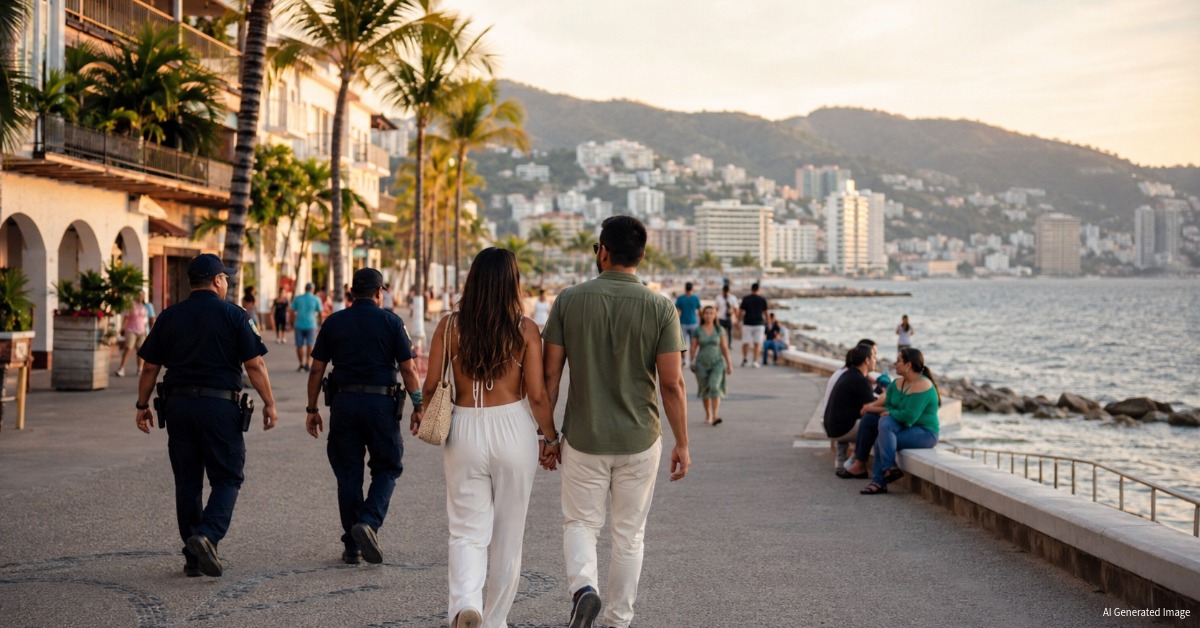
Is Puerto Vallarta safe?
The honest answer is yes, with qualifications.
Puerto Vallarta is one of the easier Mexican coastal cities for foreigners to settle into. It has busy tourist zones, a large expat community, an international airport, private hospitals, English-speaking services, and a local economy that depends heavily on visitors. Those things help. They do not make the city immune to crime, scams, bad policing, road problems, or the wider security issues that affect Jalisco.
The mistake is treating Puerto Vallarta as either perfectly safe or obviously dangerous. Neither version is useful.
A visitor walking the Malecón after dinner, taking registered transportation, and staying in a well-managed condo will probably have a very different experience from someone who drinks heavily, flashes cash, rents through a stranger on Facebook, drives unfamiliar mountain roads at night, or meets someone from a dating app in a private apartment.
Puerto Vallarta safety is mostly about risk management. The city is not a war zone. It is also not a place where common sense can go on vacation.
Safety feels different depending on where you are
Most foreigners spend their time in areas such as Centro, 5 de Diciembre, the Hotel Zone, Marina Vallarta, Versalles, Fluvial, Conchas Chinas, Amapas, and the Romantic Zone. These areas have more foot traffic, more taxis and rideshare access, more businesses, and more police visibility than outlying neighborhoods.
That does not mean crime cannot happen there, because it does. It means problems are usually more practical than dramatic: stolen phones, overcharging, rental disputes, card skimming, bag theft, noise conflicts, intoxicated tourists, and occasional street harassment.
Outside the central tourist corridor, the city becomes more residential and more uneven. Some neighborhoods are perfectly normal working communities. Others are harder to navigate without Spanish, local contacts, or a clear reason to be there. A foreigner looking lost at night on an unfamiliar side street is more exposed than someone walking a busy, well-lit route with a destination in mind.
The same applies to nearby beach towns. Nuevo Nayarit, Bucerías, La Cruz, Sayulita, San Pancho, Mismaloya, Boca de Tomatlán, and Yelapa are not all at the same level of safety. Some are polished and resort-oriented, while others are small villages with limited emergency response. Some have nightlife that feels relaxed until alcohol, drugs, and late-night transportation become part of the equation.
What the official warnings actually mean
Foreign governments tend to issue advisories by state rather than by neighborhood. That can make Puerto Vallarta look worse or better than it feels on the ground.
Jalisco has security concerns tied to organized crime, kidnapping risk, and violence in parts of the state. At the same time, travel guidance has treated Puerto Vallarta differently from some restricted areas of southern and interior Jalisco. That distinction matters because Puerto Vallarta is not Guadalajara, nor is it the Jalisco-Michoacán border region.
Still, a state-level advisory should not be brushed off. It tells you that the wider environment can change. Roadblocks, security operations, cartel responses, highway incidents, and regional violence can affect travel even when the tourist zone feels calm.
For residents, the best habit is boring but useful. Check advisories before long drives, pay attention to local news during major security events, and avoid acting like every part of Jalisco carries the same risk.
Local perception has shifted
One reason the safety conversation feels more tense now is that local perceptions have shifted sharply in recent public surveys. Puerto Vallarta had been seen by many residents as one of the safer urban areas in Mexico. Then, the perception of insecurity rose significantly between late 2025 and early 2026.
Perception is not the same as crime data. People may feel less safe after a high-profile incident, even if their daily routine does not change. But perception still tells us something. When more residents say they feel unsafe, it often reflects what people are seeing, hearing, and adjusting to in their own neighborhoods.
For foreigners, this is a useful reminder. Do not rely only on hotel marketing, Facebook groups, or people who say they have “never had a problem.” Longtime residents can have very different experiences from tourists. Women, LGBTQ travelers, Spanish speakers, non-Spanish speakers, people using public buses, and people living outside the tourist strip may all read the city differently.
A safer answer comes from listening across those experiences.
The most common problems foreigners run into
Most visitors and foreign residents are not victims of violent crime. The more common problems are smaller, more frustrating, and easier to prevent.
Petty theft is the obvious one. Phones disappear from tables. Bags get lifted from beach chairs. Wallets vanish after a crowded bar night. A backpack left in a car becomes an invitation.
Rental scams are another growing issue. Puerto Vallarta’s housing market is expensive and competitive, which gives scammers room to work. Fake listings, stolen photos, pressure to pay deposits, vague contracts, and “owners” who cannot provide proper documents should all slow you down.
Taxi and transportation disputes happen, especially when prices are not agreed upon up front. Apps can reduce confusion, but they are not always available everywhere, and pickup points can be inconsistent in busy zones.
ATM and card problems are also common enough to mention. Use bank ATMs when possible, cover your PIN, avoid machines in isolated spots, and watch for card readers that look loose or damaged. When paying in restaurants or shops, keep your card in sight.
Then there is alcohol. Many bad stories in Puerto Vallarta start with someone who was otherwise sensible but got careless after midnight. The city’s nightlife is part of its appeal. It is also where judgment gets expensive.
Dating apps deserve their own safety rule
This is uncomfortable to talk about, which is exactly why it should be included.
There have been confirmed warnings involving people who were targeted after meeting strangers through dating apps in the Puerto Vallarta and Nuevo Nayarit area. The risk is not limited to a single app, a single type of traveler, or a single neighborhood.
The safer practice is simple. Meet first in a public place. Tell someone where you are going. Do not go to a private residence, hotel room, or isolated location with someone you just met online. Trust the part of your brain that notices when a story changes, a plan shifts, or someone pressures you to move quickly.
This is especially relevant in a city with a large LGBTQ travel scene. Puerto Vallarta is one of Mexico’s most important gay beach destinations, and many LGBTQ visitors have great experiences here. That does not remove the need for caution. Being open and social should not mean being easy to isolate.
Is it safe to walk at night?
In the busy parts of Centro, the Malecón, Marina Vallarta, Versalles, and the Romantic Zone, walking at night is common. Restaurants, bars, taco stands, convenience stores, and taxis keep many streets active.
The question is not whether people walk at night. They do. The better question is whether the walk is well-lit, familiar, populated, and short enough to make sense.
A ten-minute walk from dinner to your condo along a busy street is one thing. Wandering uphill through dark residential streets after drinking is another. Walking alone on the beach late at night is rarely worth it. Neither is taking shortcuts through quiet stairways, empty lots, river paths, or construction areas.
For many foreigners, the better habit is to walk early, ride late. Use a taxi or app-based ride when the route feels empty, when you are tired, when you have been drinking, or when you are carrying a laptop, camera, passport, or cash.
A simple rule at night is that if you do not see other people walking down a street, you should not walk the street.
Driving and road safety may be the bigger risk
Visitors often focus on crime and forget about roads. In daily life, traffic safety may be one of the more realistic concerns.
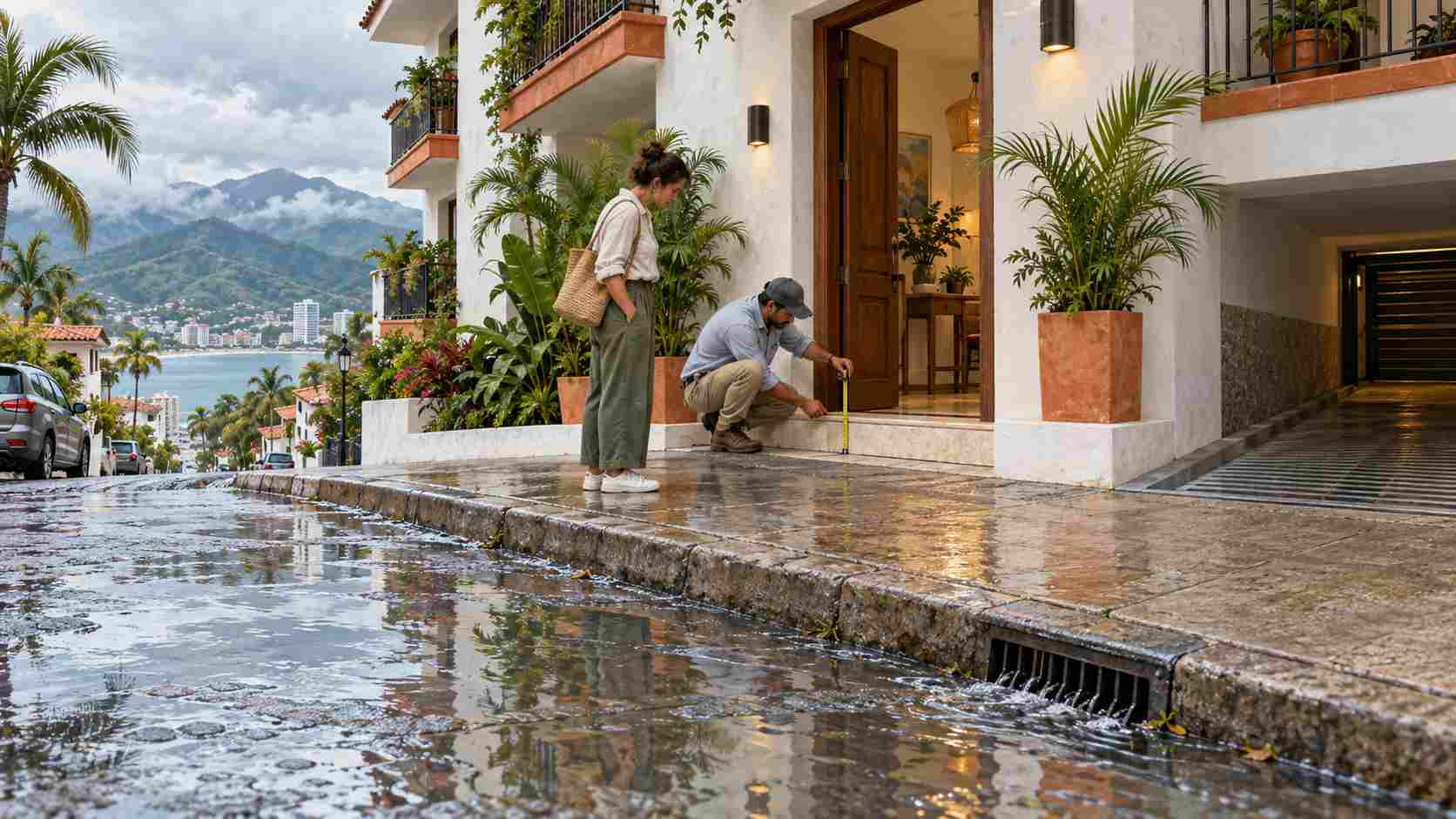
Puerto Vallarta has narrow streets, steep hills, impatient drivers, buses that stop suddenly, motorcycles slipping through small gaps, and pedestrians crossing wherever traffic allows. Rain makes everything worse. Potholes hide under puddles. Hills get slick. Low areas can flood quickly.
Driving outside the city adds another layer. The coastal highway is beautiful, but it can be narrow and unforgiving. Mountain roads toward San Sebastián, Mascota, or Talpa are not ideal for nervous drivers, night driving, or anyone unfamiliar with Mexican road conditions.
If you rent a car, take the insurance seriously. Photograph the vehicle before leaving the lot. Avoid driving at night outside the urban area. Do not assume Google Maps understands road quality. A route that looks short on a screen can become slow, dark, and stressful in real life.
Beach safety is part of the safety conversation
Puerto Vallarta’s beaches look calm on many days, but the bay can still have strong currents, sudden drop-offs, river-mouth hazards, jellyfish, and rough conditions after storms.
Pay attention to beach flags. A yellow flag means caution. A red flag means dangerous conditions. A purple flag warns of potentially hazardous marine life. If locals, lifeguards, or Civil Protection staff say not to swim, do not negotiate with the ocean.
Alcohol and swimming are a bad mix. So is swimming alone at quiet beaches. Families should be especially careful near river mouths and beaches where waves break close to shore.
The beaches are one of the best parts of living in Puerto Vallarta. They deserve more respect than many visitors give them.
Hurricane season and heavy rain
Puerto Vallarta sits on Mexico’s Pacific coast, where the official eastern Pacific hurricane season runs from May 15 to November 30. Most days during the rainy season are normal: humid mornings, hot afternoons, dramatic evening rain, and streets that dry out again.
The problem is not daily rain. The problem is underestimating the storms that are not normal.
Heavy rain can flood low streets, knock out power, trigger landslides, close roads, and make river areas dangerous. Beach conditions can change quickly. Flights may be delayed or canceled. Some hillside neighborhoods become harder to reach.
Residents should have a basic storm plan: drinking water, flashlights, charged power banks, medication, pet supplies, copies of documents, and a realistic idea of whether their street floods. Visitors should avoid booking tight travel connections during storm season and should not ignore official warnings because the morning sky looks clear.
So, is Puerto Vallarta safer than other places in Mexico?
Often, yes, especially when compared with areas that have more visible cartel conflict, higher homicide rates, or fewer services for visitors. But comparisons can create false comfort.
Puerto Vallarta is safer for someone who behaves as if they were in a real city. It is less safe for the person who treats a beach town as a consequence-free bubble.
Foreigners sometimes get into trouble because the city feels friendly. People are warm. The ocean is right there. The streets are full of restaurants and music. A person relaxes, then relaxes too much.
The better mindset is relaxed but awake.
Practical habits that lower your risk
Keep your phone out of easy reach when sitting near the street. Do not hang a bag over the back of a chair. Carry only the cash you need for the day. Use ATMs inside banks or secure locations. Save your passport in a safe place and carry a copy when appropriate.
When renting, never send a deposit until you have verified the property, the person renting it, and the contract. A real landlord or agent should be able to explain who owns the property, whose name appears on the lease, where the deposit goes, what is included, and what happens if either side cancels.
For transportation, agree on taxi prices before the ride when there is no meter. Check the plate and driver details on app-based rides. Avoid accepting rides from strangers outside bars.
For nightlife, keep control of your drink. Leave with the people you came with, or tell someone if your plans change. If you meet someone new, choose public places first. A person who reacts badly to that boundary has already given you useful information.
For emergencies, 911 is the general emergency number. Save local emergency contacts before you need them, along with your consulate information if you are a foreign resident or frequent visitor.
What residents should think about differently
Living in Puerto Vallarta is different from vacationing here.
Residents deal with landlords, contractors, delivery workers, utility bills, banks, neighborhood disputes, medical appointments, and occasional bureaucracy. That creates more exposure than a one-week hotel stay.
A resident needs a more grounded safety routine. Know your neighbors. Learn enough Spanish to explain an emergency. Keep copies of immigration documents. Build relationships with reputable doctors, locksmiths, mechanics, and service providers before something goes wrong. Do not keep large amounts of cash at home. Be careful about who has keys, gate codes, or access to your building.
Condo living adds another layer. Ask about building security, cameras, visitor rules, parking access, emergency exits, and how management handles problems. A beautiful view does not help much if the building has weak access control or no clear process for reporting incidents.
When to be extra cautious
Some moments call for a lower-risk version of your normal routine.
Be more careful during major security operations, cartel-related alerts, election periods, large festivals, long holiday weekends, and severe weather. Avoid protests, roadblocks, and police or military activity. Do not stop to film security incidents. Do not assume that being foreign protects you from the consequences of being too curious.
Also, be cautious after midnight, around isolated ATMs, on quiet beaches, in unfamiliar neighborhoods, and when someone is pushing urgency around money, romance, transportation, or real estate.
Urgency is often the smell of a scam.
A fair answer
Puerto Vallarta can be a safe and comfortable place for foreigners who use good judgment. Many visitors return year after year. Many residents build full, happy lives here. The city has real advantages: walkable neighborhoods, strong tourism infrastructure, active public spaces, private healthcare, and a community used to receiving foreigners.
It also has real risks. Some are the everyday risks of a tourist city. Some are tied to Mexico’s wider security situation. Some come from the choices people make when they feel too comfortable.
The best approach is neither fear nor denial. Choose the neighborhood carefully. Move around with intention. Keep your documents and money secure. Treat dating, nightlife, rentals, roads, and storms with the seriousness they deserve.
Puerto Vallarta rewards people who pay attention.