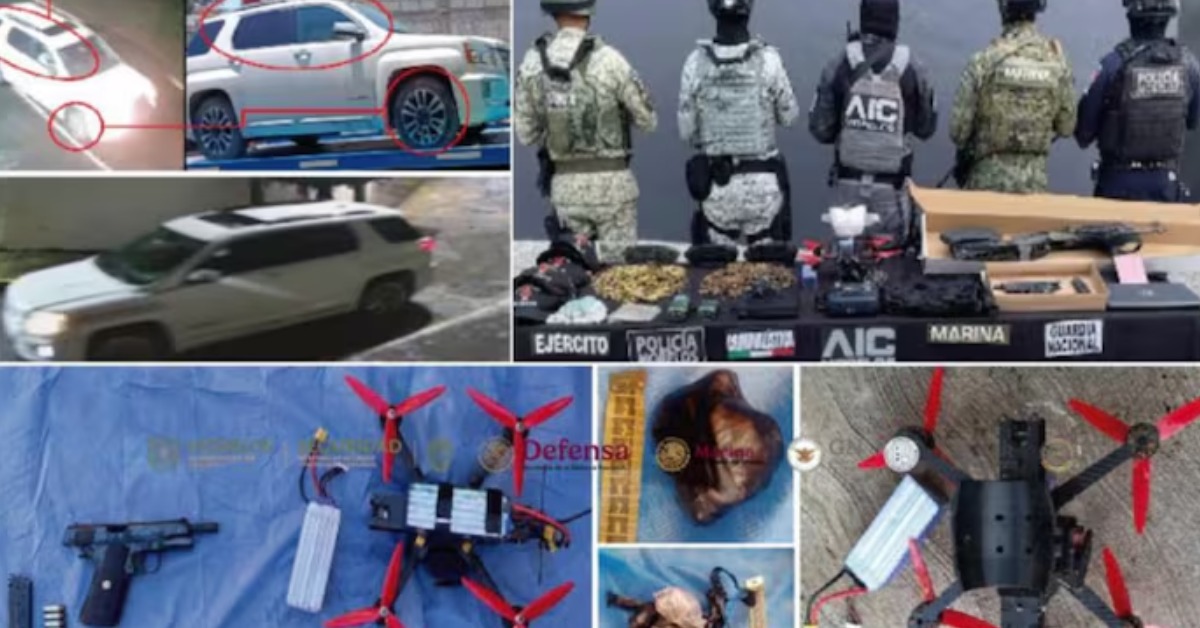
Authorities in Morelos carried out a court-ordered search in Jiutepec that turned up vehicles, guns, suspected explosives, and a modified drone built to carry extra weight. The raid, tied to gunfire against a home in Cuernavaca days earlier, drew in the Army’s bomb squad to secure hazardous material. Officials say the evidence—along with documents, radios, and a DVR—will feed an ongoing probe into who used the property and why. It’s a case with wider stakes: weaponized drones have reshaped crime tactics across Mexico.
Jiutepec Operation
A coordinated security task force searched a house in Jiutepec’s Lomas del Texcal neighborhood. It seized vehicles, firearms, suspected explosive material, and a drone that investigators say was modified to carry extra weight. The operation stemmed from an inquiry into gunfire that struck the façade of a Cuernavaca home earlier in the week. Army bomb-squad specialists from the 24th Military Zone handled the suspect material at the scene.
Authorities report the search followed four days of analysis and surveillance after the August 25 shooting in the Prados de Cuernavaca area. A white GMC Terrain—allegedly tied to that attack—was located, and a judge authorized the subsequent entry and search at 11:00 on August 28.
What was found inside the property
Officials itemized the seizure as including multiple vehicles; a black drone with homemade adaptations for extra payload and additional batteries; two packages of suspected explosive material; four lengths of detonating cord; long and short firearms; hundreds of cartridges; two green handheld radios; a DVR; and personal documents. A cardboard sign with a threat aimed at a local criminal group was also collected as evidence. All items were turned over to the Public Prosecutor’s Office.
Local and national outlets that reviewed official briefings and images corroborated the seizure in Jiutepec and the modifications made to the drone for load-bearing. Reports also note participation by federal and state forces working under Morelos’s Coordinating Table for Peace and Security.
How the case connects to Cuernavaca
Authorities say the Jiutepec address surfaced in the probe of the August 25 gunfire against a residence. After locating the suspect vehicle, investigators obtained the warrant that led to Thursday’s search and the discovery of the weapons, explosive components, and the drone. Officials have indicated that the individuals linked to the property may be from Guerrero; arrest warrants are being pursued.
Independent coverage aligns with the timeline: the shooting on August 25, the intelligence work that followed, and the August 28 search that produced the seizure in Lomas del Texcal.
Why the modified drone matters
Weaponized or load-bearing drones have appeared more often in organized crime tactics in Mexico, including incidents in states such as Michoacán, Tamaulipas, and Chihuahua. Analysts and security officials say the trend complicates policing and raises risks for first responders, even as formal statistics remain sparse. While Jiutepec has not featured prominently in those national trends, this seizure echoes a pattern authorities have flagged for several years.
In Jiutepec, the drone and explosive components triggered the Army’s anti-bomb protocol. Mexican law restricts explosives and certain firearms for exclusive military use; prosecutors typically rely on that framework when bringing charges tied to such seizures.
What comes next
Prosecutors now control the evidence, and the investigation aims to identify and arrest the individuals behind the house and the vehicle allegedly used in the Cuernavaca shooting. As of publication, authorities have not announced arrests tied to this specific search. Further forensic work on the drone, firearms, and explosive material will shape the eventual charges.