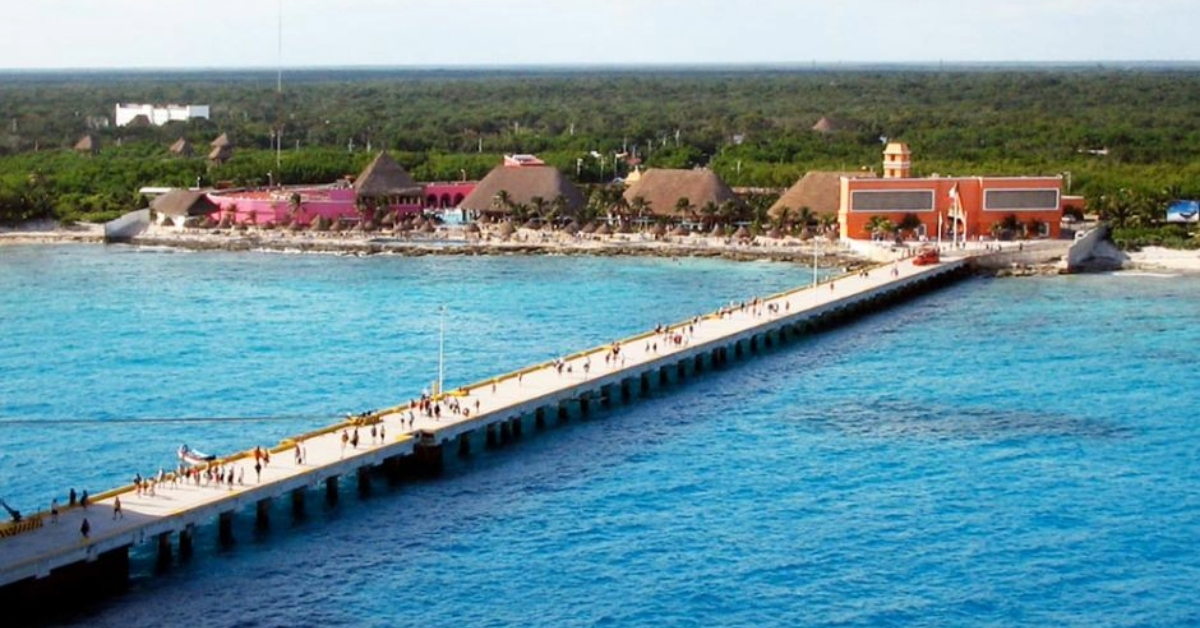
Eagerly anticipated by cruise travelers, Royal Caribbean’s ambitious “Perfect Day” park in Mahahual, Quintana Roo, has suddenly hit a legal roadblock. A federal judge in Mexico froze a key land-use change needed for the $1 billion development, citing possible irregularities and environmental concerns. The stunning decision leaves plans in limbo and raises new questions: Will this megaproject find a way forward, or will mounting legal challenges force a major course correction?
Court Freezes ‘Perfect Day’ Land-Use Change
A federal district court in Quintana Roo has granted a definitive suspension against the land-use changes underpinning Royal Caribbean’s proposed “Perfect Day” mega-project in Mahahual. In practical terms, this court order halts the legal effect of a recent municipal zoning modification – about 107 hectares of planned development – that had been approved to facilitate the new cruise destination. As a result, no new rights, permits, or construction licenses can be issued for the project while the court’s injunction stands. The judge’s decision essentially halts development until the underlying lawsuit is resolved, ensuring the project cannot proceed under the contested land-use plan.
This decisive ruling came in response to an amparo (injunction) lawsuit filed by the civil association Defendiendo el Derecho a un Medio Ambiente Sano (DMAS), which translates to Defending the Right to a Healthy Environment. DMAS argued that the approval of the land-use change by local authorities was rushed and legally improper. According to the group, the Othón P. Blanco city council (which governs Mahahual’s area) reconfigured the town’s urban development plan in late 2025 without the required public consultation or adherence to environmental planning principles. The court’s granting of a definitive suspension indicates it found sufficient grounds in these claims to keep the new zoning on hold. For Mahahual’s mangroves and coastline, the injunction is a protective measure – effectively a legal shield until the courts can fully review the case.
Environmental Concerns and Legal Battle
Local environmental advocates have welcomed the suspension as a crucial victory for the rule of law and conservation. DMAS, the nonprofit behind the lawsuit, emphasizes that it is not trying to scuttle development outright; rather, it insists that any growth must respect existing laws, urban planning norms, and the community’s right to a healthy environment. In Mahahual’s case, the stakes are high. The area’s coastal ecosystems – including mangrove forests and coral-rich waters – could be profoundly affected by a massive influx of tourists and construction activity. Activists have long voiced worries that a project of this scale might strain or overwhelm Mahahual’s infrastructure. The village of roughly 2,600 residents already struggles with wastewater treatment and drainage issues, and adding thousands more visitors per day could exacerbate those problems if not properly managed. There are also fears of ecological damage; the region’s mangroves, vital for shoreline protection and water filtration, must be safeguarded from pollution and land alteration.
By suspending the land-use change, the judge has effectively frozen all permits that stemmed from that zoning decision. One immediate implication is on Royal Caribbean’s federal environmental approval process. The cruise line had initiated an environmental impact assessment with Mexico’s environment ministry (SEMARNAT) in December 2025, presumably confident that local land-use permits were in hand. In that filing, the company asserted that the project’s land use was officially compatible with its plans. Now that the municipal authorization has been annulled for the time being, that claim is no longer valid. This throws a wrench into the federal environmental review: authorities cannot green-light the project if its local zoning status is in legal limbo. In essence, the court’s intervention ensures that environmental due diligence isn’t bypassed. Royal Caribbean may now face delays or additional scrutiny in obtaining the necessary federal permits, since it must first regain a firm legal footing at the local level.
Mega-Project Ambitions vs. Local Impact
Plans for “Perfect Day” Mahahual paint a picture of a colossal private cruise destination – one that Royal Caribbean bills as bigger and bolder than anything it has done before. The project, valued at around $1 billion USD, envisions transforming a stretch of Mahahual’s coast into an 80-hectare (200-acre) tropical theme park for cruise visitors. It would feature a sprawling water park complete with record-shattering attractions: over 30 waterslides, including one of the tallest slide towers in the Americas, and even the world’s longest lazy river winding through the property. Guests could enjoy multiple pools, white-sand beaches lined with cabanas and umbrellas, zip-lines, upscale beach clubs, restaurants, and more – all designed as a “perfect day” ashore for cruise passengers. Royal Caribbean has projected that at full capacity, the destination might welcome up to 20,000–21,000 visitors in a single day, with several ships calling at once. That translates to five or six million cruise-goers per year experiencing this slice of paradise. The development would also be a major jobs engine, with an estimated 2,500 local employees needed to operate the park and provide services, giving a significant economic boost to the impoverished Costa Maya region.
Royal Caribbean officials have touted the project as a game-changer for the Mexican Caribbean. They note that Mahahual (home to the existing Costa Maya cruise pier) would be solidified as a marquee port of call, drawing more ships and tourists than ever to southern Quintana Roo. Company executives, in presentations late last year, described a vision to turn this once-sleepy fishing village into a thriving hub of tourism – much like their successful “Perfect Day at CocoCay” island in the Bahamas. If all went according to plan, Perfect Day at Costa Maya (Mahahual) was expected to debut by late 2027, aligning with Royal Caribbean’s growing cruise itineraries in the Western Caribbean. The promise of new infrastructure and increased visitors has excited some local business leaders and government officials, who see it as the largest private investment in southern Quintana Roo’s history. They argue it could spur improvements in roads and utilities and create long-term employment opportunities in an area that has lagged behind the more developed resorts of the northern Riviera Maya.
However, the scale of Royal Caribbean’s ambitions is exactly what alarms community members and environmentalists. Mahahual’s charm has long been its relatively unspoiled nature – a low-rise village beside a tranquil reef, popular with divers and adventure travelers. Residents have campaigned to ensure that any development does not sacrifice these natural assets. Even some supporters of the cruise project acknowledge that precautions are needed. For instance, handling the tremendous increase in sewage and waste will be critical; without significant upgrades, pollution could devastate the same Caribbean waters and mangroves that tourists come to enjoy. Royal Caribbean has responded to these concerns by pledging to be a responsible steward. The company has stated it will not build on or harm designated mangrove conservation zones on the Mahahual site. In fact, cruise line representatives claim they intend to help restore and enhance the mangrove habitat, which has been degraded by existing pollution. Royal Caribbean has even proposed funding a new wastewater treatment plant for the town, aiming to resolve current sewage issues as part of the project’s legacy. These assurances reflect the delicate balance Royal Caribbean is trying to strike: delivering a world-class attraction for its guests while convincing locals that the environment will be protected.
Aftermath and Outlook
For now, Royal Caribbean’s dream of a “Perfect Day” in Mahahual remains on hold. The definitive suspension issued by the judge means the company cannot legally move forward with construction or further permitting until the court case is settled – a process that could take months or longer. The injunction does not mean the project is canceled outright; rather, it ensures that the cruise line and authorities address the legal and environmental questions before any irreversible work is done. Royal Caribbean, for its part, has kept public comments to a minimum. A spokesperson acknowledged the ongoing legal matter but noted the company would not litigate its case in the media. The cruise operator emphasized its commitment to regulatory compliance and to upholding high environmental standards, signaling that it intends to cooperate fully with Mexican laws and regulations. Behind the scenes, the company will likely explore options to remedy the situation – whether that means supporting the authorities in an appeal, revising its project plans to meet requirements, or engaging more with the community to gain support.
Local government officials have indicated they are keen to get the project back on track. The Quintana Roo state agency responsible for urban development (Sedetus) has reportedly filed a challenge to the court’s suspension, seeking to overturn or lift the injunction. Municipal leaders likewise defend their approval of the land-use changes as legal, arguing that the modifications to Mahahual’s development plan were done within their authority. They maintain that a public consultation was not mandatory for this partial update of the plan, pushing back against the notion that the process was “irregular.” This brewing legal tussle – essentially pitting economic development proponents against environmental rule-of-law advocates – will play out in the federal courts. The judge’s final decision on the amparo lawsuit will determine whether the land-use changes are nullified for good or allowed to proceed.
The outcome carries high stakes for all involved. If the court ultimately rules in favor of DMAS and voids the zoning changes, Royal Caribbean would be forced back to the drawing board, potentially downsizing or relocating parts of the project to comply with existing plans (or even abandoning the project if no compromise can be reached). On the other hand, if authorities validate the land-use approvals, the project could resume – albeit likely with additional environmental oversight given the public scrutiny it has received. In the meantime, Mahahual’s residents, local businesses, and the expat community are in a wait-and-see mode. Many are cautiously optimistic that a middle ground can be found: one where sustainable development brings jobs and growth without destroying the natural beauty and tranquility that make Mahahual special. As the legal process unfolds, it has at least sent a clear message that even mega-projects must play by the rules. The pause on “Perfect Day” may, in the end, result in a better, more thoughtfully planned project – one that can truly benefit both Royal Caribbean and the people of Mahahual in the long run.
With information from El Economista, Mexico News Daily, Por Esto, Cruise Hive, Royal Caribbean Blog