Puerto Vallarta’s March of Silence returns Dec. 14, walking in silence to Los Arcos with candles and flowers for victims and the disappeared.
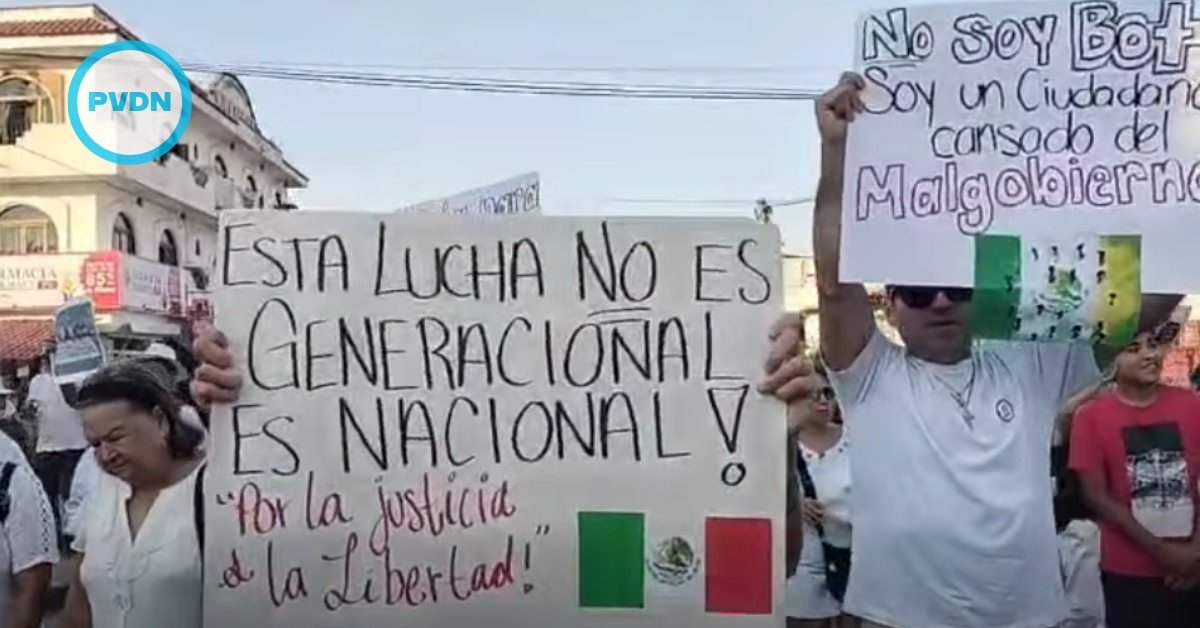
On Sunday, December 14, young organizers from Generation Z are calling for a second “March of Silence” under the slogan “There is nothing to celebrate.” The idea is simple yet heavy. People walk together without chants, music, or speeches along the way. The silence is the point.
In Vallarta, the march is set to begin at 10:30 a.m. beside the Sheraton Hotel. From there, the group will move toward downtown and finish at Los Arcos del Malecón. Organizers say the closing moment will be about memory and hope. White candles will be lit, and flowers will be placed as a tribute to victims of violence, corruption, injustice, and disappearances.
The call is aimed first at students, youth groups, and civil associations. It also asks people from older generations to join in, as they did during a previous march on November 15. Organizers emphasize that Sunday’s event is intended to be peaceful.
December is usually when the city leans into the festive mood. Lights go up, the calendar fills, and the Malecón turns into a steady stream of families and visitors. The organizers are deliberately choosing that backdrop. Their slogan, “There is nothing to celebrate,” is meant to cut through the season’s noise and force a pause, even if it is only for the length of a walk.
March of Silence
The march in Puerto Vallarta is part of a wider mobilization planned for the same day in several cities across Mexico. The shared slogan, “There is nothing to celebrate,” is not about one single case or one single headline. It is a statement of frustration that many families recognize, especially those who have spent years looking for answers.
Across the country, disappearances have become a reality that is hard to escape. Mexico’s federal public registry of missing and not located people has counted cases in the hundreds of thousands over time, and the total remains deep into six figures. Jalisco, in particular, has spent years near the top of national discussions about disappearances, with an active state search system and ongoing public pressure from families and community groups.
That national context matters in Vallarta, even when daily life here can feel far from the worst violence seen elsewhere. This is a city built on visitors, weekends, weddings, and holiday photos. It is also a city that depends on a sense of safety, because safety is part of the product. When organizers say Vallarta is not exempt, they are pushing back against the temptation to treat this place like a bubble.
Silence has its own power in public spaces like the Malecón. It changes what people notice. Instead of listening for slogans, passersby tend to watch faces. They watch who is walking and who is not. They see candles in daylight and flowers carried through traffic. A march like this asks the public to sit with discomfort for more than a few seconds.
The choice to end at Los Arcos is also symbolic. It is one of the most recognizable points in the city, a place where residents and tourists cross paths. By finishing there, the organizers are making a clear bet that visibility matters and that memory should not be pushed to the margins.
Still, a march does not fix the problems it names. The organizers are not claiming it will. What it can do is create a moment where people who feel isolated in their anger or grief realize they are not alone. It can also put pressure on institutions that often respond only when there is sustained attention.
The national call has also been framed as a simultaneous action, with communities choosing their own routes and meeting points. In some places, it is set for afternoon plazas, in others, it starts near museums, temples, or well-known roundabouts tied to the search for the missing. That variety is part of the message. This is not one city’s problem to solve alone. It is a shared crisis, and organizers want it seen as shared.
After the quiet, what changes
For many people, the hardest part of public violence is how quickly it turns into background noise. Numbers blur. Stories drop off timelines. Families keep searching. Life keeps moving, even when it feels wrong that it can.
That is why the organizers are asking for a bigger turnout this time. A second march says the first one was not a one-off. It also invites people who stayed home last time to step into the street now, even if they do not see themselves as activists. Silence lowers the barrier. You do not need the right chant. You just have to show up and walk.
The closing ritual matters for the same reason. Candles and flowers are not policy. They do not replace investigations or honest public records. But they are a public marker that the people being remembered are not just statistics. Someone loved them. Someone still waits for them.
The March of Silence is a local act inside a national story. On Sunday, the organizers want Vallarta to answer in the simplest way possible, by walking together and refusing to look away.
Organizers ask participants to keep the walk silent and peaceful from start to finish. The group meets at 10:30 a.m. beside the Sheraton and ends at Los Arcos, where candles are lit and flowers placed. The rest is up to those who show up.