A small vessel in the far Pacific drew attention for a reason most people never see. Authorities say it was carrying hundreds of tightly wrapped packages, far beyond Mexico’s usual patrol lanes. The interception occurred near one of the country’s most remote islands, in waters where jurisdiction can be complicated quickly. Officials are framing the case as a test of real-time coordination with the United States. But the most revealing detail may be what this route suggests about how trafficking is adapting in 2026.
Seizure in the far Pacific
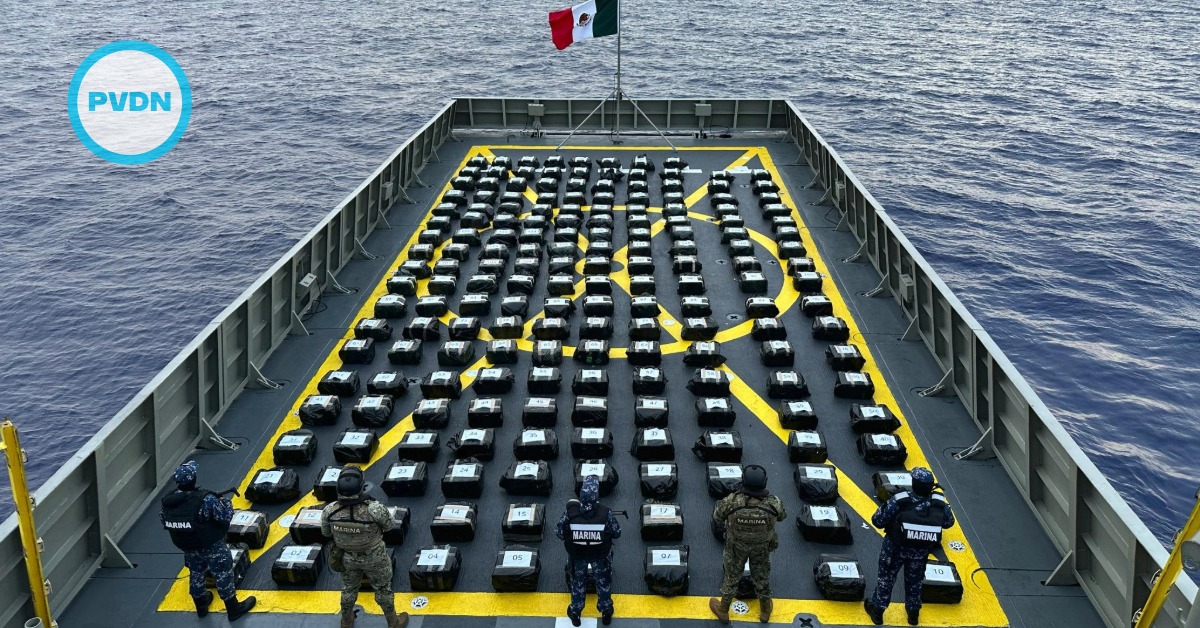
Mexico’s Navy says the US Coast Guard helped stop a vessel west of Isla Clarión on February 11. Sailors boarded the craft and found 188 tightly wrapped bales holding more than 4.5 tons of suspected cocaine. Five people were detained on the scene and transferred to Mexican authorities. Officials said the interception took place beyond Mexico’s Exclusive Economic Zone, in waters where long-range surveillance matters more than luck. The operation combined surface ships and aircraft from both countries. It also relied on shared tracking and real-time coordination with a US Southern Command task force that supports counter‑trafficking missions. The Navy described the seizure as a significant hit to the finances of criminal networks. Prosecutors are expected to confirm the official weight after forensic processing and after outer packaging is removed. The detainees’ legal status will be determined as the investigation proceeds. Authorities have not identified the detainees or the intended destination.
Why Clarión matters
Clarión is the westernmost island in the Revillagigedo archipelago, a chain of volcanic outcrops tied to the state of Colima. It sits roughly 720 to 970 kilometers off Mexico’s mainland, surrounded by open ocean and protected waters. The archipelago is a national park, and access is tightly controlled. There are no civilian towns on Clarión. That remoteness is part of the point. For smugglers, distance can mean fewer patrols, less coastal radar, and more time to react. For authorities, it means aircraft, ships, and shared intelligence become the real tools. Officials stressed that this case unfolded beyond the country’s Exclusive Economic Zone. That fact blurs the line between national enforcement and international coordination. Even so, seizures far from shore can matter on land. Interdicting a load at sea can prevent it from being split into smaller shipments. Those are harder to detect once they reach ports and highways. It also signals which corridors traffickers are betting on in early 2026.
The coordination story officials want to tell
Beyond the bales and the arrests, officials are leaning into the message of coordination. They say the operation depended on information sharing between Mexico and the United States. It also used air and surface assets from both countries. Mexican officials linked that work to a Western Hemisphere defense chiefs conference in Washington held on February 10 and 11. The meeting brought together senior military leaders to discuss regional security and cross‑border crime. Mexico’s defense chief, General Ricardo Trevilla Trejo, attended. The Navy chief, Admiral Raymundo Pedro Morales Ángeles, also attended, officials said. Security secretary Omar García Harfuch was part of Mexico’s delegation, according to officials. The interdiction also highlights Joint Interagency Task Force South. It is a US Southern Command hub that helps track suspected smuggling across the region. That structure matters because traffickers rarely operate within a single map. A single load can pass through several jurisdictions before it ever nears shore. In practice, the fastest wins often come from shared radar, shared aircraft, and shared decisions.
What happens to the case now
For now, much of the case turns on paperwork and lab work. Officials say the cocaine will be weighed under prosecutorial supervision once forensic teams finish their processing. That matters because the public estimate includes the packaging, and authorities want a ministerial figure for the court. The five detainees were handed over to prosecutors, who will decide charges and venue. Because the interdiction happened beyond Mexico’s Exclusive Economic Zone, jurisdiction can look complicated on a map. Still, Mexico’s Navy says the suspects were placed at the disposal of Mexican authorities. For expats watching security headlines, the distance is also the context. This was not a city street bust or a border checkpoint. It was a maritime interception hundreds of kilometers from the mainland. These seizures do not automatically translate into local conditions in places like Mexico City, Guadalajara, or Mérida. But they do show what Mexico and the United States are prioritizing at sea. They also hint at where traffickers think enforcement is thinnest.
With information from La Jornada, Secretaría de Marina (SEMARMX), Gabinete de Seguridad (GabSeguridadMX)