Mexico City says it has stopped hauling most of its trash to someone else’s landfill. The government has unveiled a plan to process significantly more waste at home, including four new compost plants for household organics, a dedicated tire-recycling facility, and upgrades to the city’s backbone plant at Bordo Poniente. Officials frame it as a shift from disposal to reuse by 2030. How much will capacity actually rise? Where will the plants be situated, and what will they be used for? Here’s what the plan really changes—and what to watch next.
CDMX waste management plan
Mexico City’s government has presented Ciudad Circular Basura Cero, a plan to transform the capital’s waste management by 2030. The plan focuses on organics, which account for roughly 60 percent of household waste. It aims to process a greater portion of that stream into compost rather than sending it to landfills.
Under the plan, the city will modernize and expand the compost operation at Bordo Poniente and build four new compost plants—one in each of Xochimilco, Tláhuac, Milpa Alta, and Tlalpan. Authorities outlined a multi-year public investment of approximately 489 million pesos through 2030, which includes trucks and plant equipment.
A dedicated facility for end-of-life tires is also in the package. The city says it will convert tires into materials for waterproofing and asphalt mixes, a notable shift for a waste stream that largely lacks treatment today. Reporting around the launch pegged the outlay at about 35 million pesos to handle a stock that runs to hundreds of thousands of tires each year.
What changes in capacity—and why it matters
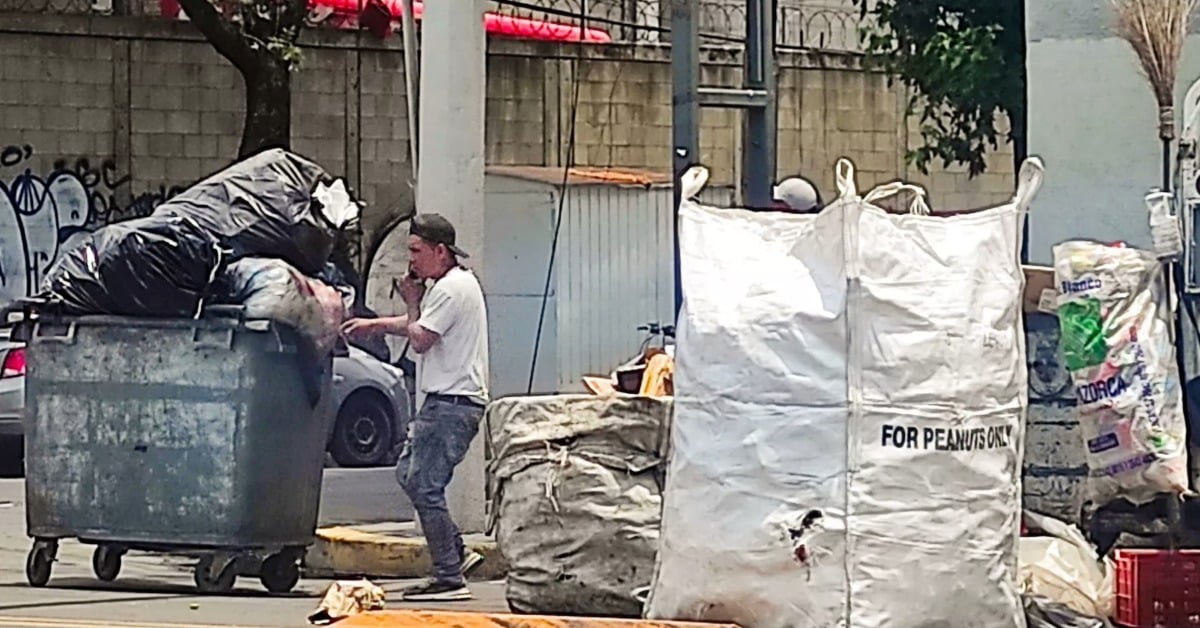
The capital’s infrastructure currently receives about 8,500 tons of waste a day, and roughly 82 percent of that ends up in landfills outside city limits—a costly status quo both financially and politically. **Total generation sits nearer 12,454 tons daily, according to the city’s own environmental reporting. The Basura Cero strategy aims to reduce those numbers by increasing treatment, particularly for organics.
At today’s levels, officials say the public system takes in 4,804 tons of organics per day but only has the capacity to process about 1,172. The goal is to nearly double treatment to around 2,402 tons daily, with each of the four new plants sized for ~200 tons/day and a significant throughput increase at Bordo Poniente. That step-up would not end landfill dependence, but it meaningfully expands the fraction of waste the city can handle through composting.
Beyond plants, authorities flagged 34 new sanitation trucks to improve collection and keep separated streams from mixing—an Achilles’ heel for any sorting system. If the trucks and routing aren’t managed well, separation collapses before it reaches a plant.
The separation challenge the plan must beat
The capital has promoted separation for years, with mixed results. The Basura Cero relaunch aims to reset habits with a massive separation campaign, alongside the new infrastructure, emphasizing that the city cannot compost what households and businesses don’t keep separate. The environmental ministry frames the shift as moving from a “throw-away” model to a circular economy, coordinated between SEDEMA and the Public Works Secretariat.
That framing matters because the system remains export-dependent: Mexico City ships much of its garbage to six landfills, mainly in the State of Mexico, paying tens of millions of pesos each year. Cutting that bill by processing more within city limits is as much a budget policy as it is an environmental policy.
Context and credibility checks
The numbers presented this week track with the city’s own recent reporting. SEDEMA’s latest yearbook reports a daily generation of approximately 12,454 tons, down from 2018 but still a substantial load; the administration’s new target is to transform half of the waste that reaches public infrastructure by 2030. Independent outlets and the city’s official briefing corroborate the four-plant buildout, Bordo Poniente upgrade, and the tire facility.
Two questions remain open. First, timelines: the plan spans 2025–2030, but individual plant commissioning dates were not broken out in detail. Second, compliance: Organics are the low-hanging fruit; yet, the city will only hit its targets if separation improves at the household, market, and restaurant levels. Those are implementation questions that we’ll continue to press officials to answer as tenders and construction schedules are rolled out.