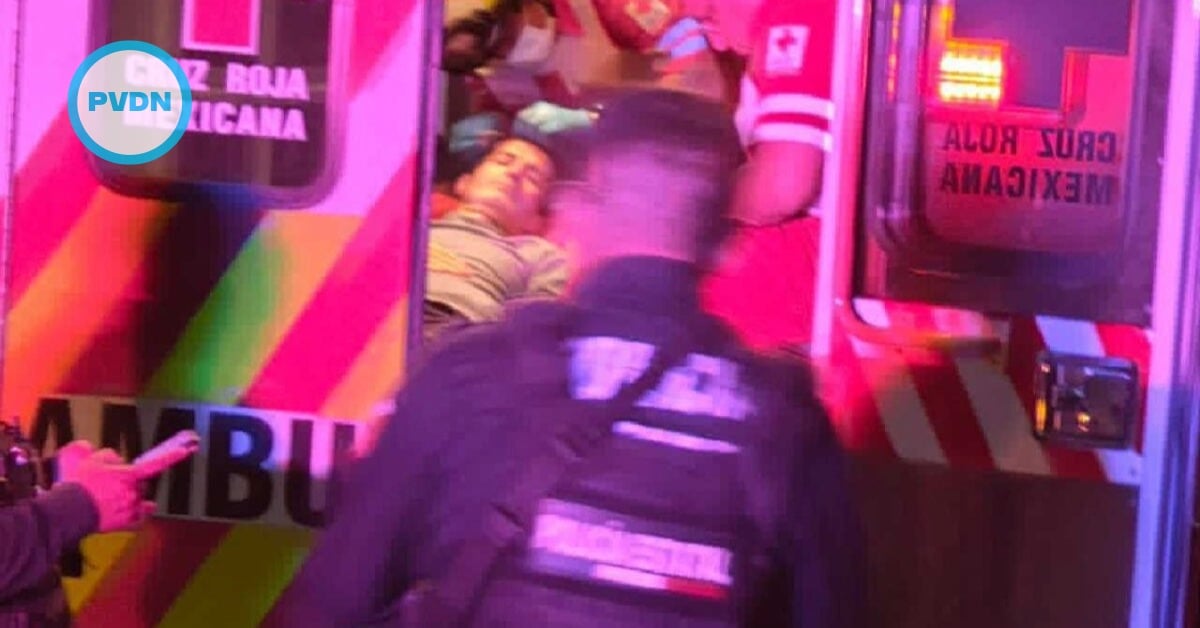
Shortly before 2:30 a.m. on Friday, Nov. 7, a French tourist was discovered tied and gagged alongside the Arco Vial near Región 106 in Cancún. Drivers called for help after spotting a man on the ground by the roadside. Responding officers found him alive, visibly beaten, and able to say he’d been attacked and robbed. Paramedics stabilized him and took him to the General Hospital, where he was reported in stable condition. Police opened an investigation and have not announced arrests.
Local outlets that first reported the case agree on key details: the location along the Arco Vial by the Carabanchel area, the early-morning timing, and the victim’s condition. One report adds that officers initially feared they were responding to a body, a common assumption in late-night emergency calls along that corridor. Another notes the victim’s age as roughly 40. Authorities have not released his full identity.
The incident unfolded on a day when Mexico’s president hosted France’s Emmanuel Macron in Mexico City, a coincidence that put extra attention on the well-being of French nationals traveling in the country. The leaders highlighted trade and cultural cooperation, including a plan to exchange historic codices—symbolic of warmer ties. That diplomatic backdrop does not change the facts in Cancún, but it helps explain why the case drew fast international interest.
What we know so far
Police received the call after motorists reported a person lying in the brush off the Arco Vial. Officers confirmed the man was alive but injured; paramedics treated him at the scene and transported him. The working hypothesis is a violent robbery. Authorities have not said how many attackers were involved, whether a weapon was used, or if surveillance cameras captured the assault. Investigators typically review feeds from nearby intersections and businesses, canvass for witnesses, and cross-check recent robbery patterns along the ring road. Those steps are underway.
The discovery point matters. The Arco Vial is a fast corridor that skirts several neighborhoods, including Región 106. It has stretches with limited lighting and pockets of brush close to the pavement. Late-night traffic there can mask cries for help and give attackers quick exit routes—by car or on foot into side streets. Residents have pushed for better lighting and patrol coverage on vulnerable segments; police have said they rotate patrols as resources allow. We’ll update if authorities release a map of the precise scene or a timeline beyond the initial 2:30 a.m. call.
Medical sources quoted locally said the man was stable after first aid, and there were no immediate complications. In practical terms, “stable” often means vital signs are normal and injuries—though traumatic—aren’t life-threatening. That status can change with observation, but by mid-morning, there were no red flags reported publicly. Police are now responsible for victim support, including consular notification through foreign affairs channels.
French tourist Cancun
Security context helps make sense of risk without sensationalizing it. Overnight disturbances were also reported elsewhere in the city, including a bar attack that left a woman dead—an unrelated case that nonetheless strains first responders during the same window of time. When several calls land at once, patrols triage, and some scenes may see a slower response. That’s not unique to Cancún, but it’s part of the picture on this particular night.
State and municipal officials have touted upgrades to reporting and coordination tools—like the roll-out of mobile standardized police reports—to quicken response and reduce paperwork. Those tools, if used well, help preserve details from the first minutes after an attack, when witness memory is freshest and physical evidence is easiest to collect. Technology won’t solve staffing or lighting gaps, but it can tighten the chain from patrol to prosecutor.
For travelers, the advice is straightforward: use licensed transport late at night; keep route-sharing on; favor well-lit avenues for short walks; and call 911 if something feels off. Most trips in Cancún end safely, and the city’s tourism economy depends on it. But this case is a reminder that predawn hours in semi-isolated corridors carry added risk. The victim survived, thanks to passing drivers who called for help and a medical team that arrived quickly. That mix—community alertness and a competent response—often decides outcomes long before a case file reaches a judge.