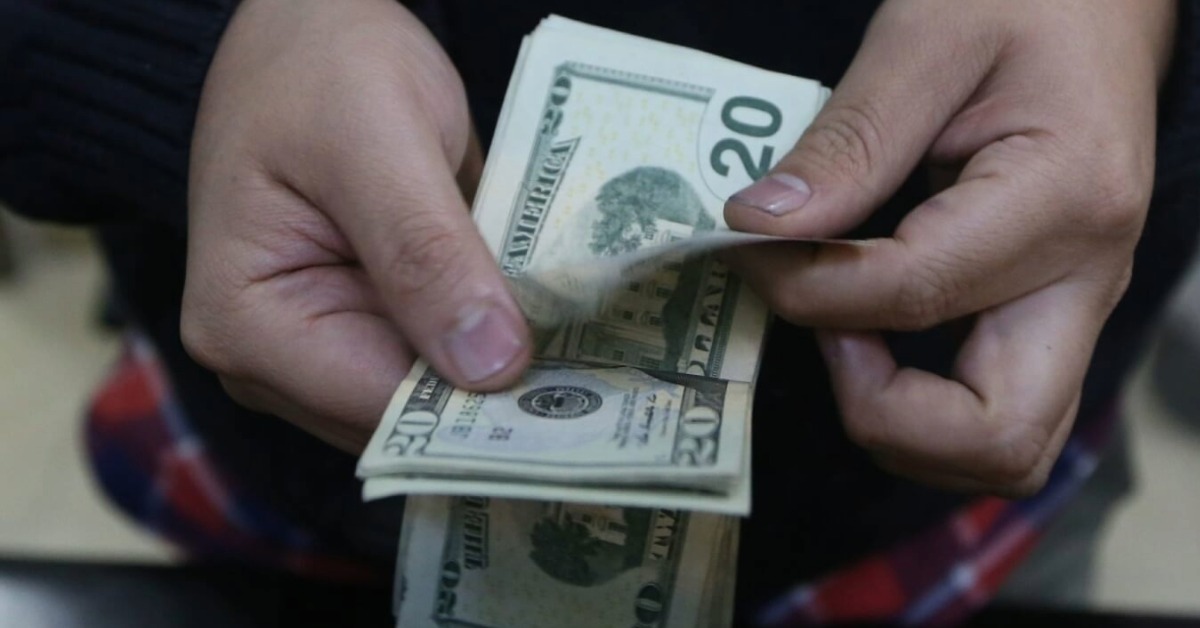
Mexico’s remittance inflows started 2026 with a headline shift: January dipped under $5 billion. That timing overlaps with a new U.S. 1% excise tax that targets transfers funded with cash and similar instruments. But the January report also includes a detail that changes the read on momentum. Banxico’s seasonally adjusted series moved in the opposite direction. Understanding the gap between the raw number, the transaction count, and the payment channels can clarify what may come next.
The $5B headline and the seasonal adjustment
Banco de México reported $4.594 billion in remittance inflows in January 2026, below the $5 billion mark. On the same report, inflows were 1.4% lower than in January 2025. The month also came in lower than December, a common seasonal peak. Banxico’s table shows a drop of about 13.5% from December to January on the original series. Behind the total, the composition changed. Banxico counted 11.461 million transactions, down 5.2% year over year. The average remittance rose to $401, up 3.9% from a year earlier. Over the last 12 months through January, inflows summed $61.710 billion, slightly under the prior 12-month reading. Mexico also sent $99 million abroad in January, down 9.3% year over year. After subtracting those outflows, the remittance account surplus was $4.495 billion. Seasonal adjustment complicates the headline, because Banxico also reported a 2.2% monthly increase in inflows on an adjusted basis. On the adjusted series, the surplus was $5.188 billion, above December’s $5.069 billion.
The new 1% US excise tax and who pays it
The January decline also coincides with a new U.S. rule that changes the cost of some transfers. Under Internal Revenue Code section 4475, a 1% excise tax applies to certain remittance transfers made after December 31, 2025. The tax applies only when the sender provides cash, a money order, a cashier’s check, or a similar physical instrument. In those cases, the tax is calculated on the transfer amount, not on provider fees. The sender is liable for the tax. The remittance transfer provider must collect it at the time of the transfer. If it is not collected, the provider becomes responsible for paying it. Providers report the tax on Form 720 and make semimonthly deposits during the quarter. The IRS said the first deposit, covering the first half of January, was due January 29, 2026. Federal guidance offered temporary deposit penalty relief for the first three quarters of 2026. It depends on timely deposits and later reconciliation on the quarterly return.
What the data say about channels and what to watch
Banxico’s report also shows why a tax aimed at cash-funded transfers can matter, even when most money arrives digitally. In January 2026, electronic transfers made up 98.6% of total inflows, or $4.529 billion. Remittances recorded as cash and in-kind totaled $54 million, and money orders totaled $11 million. Those categories describe how funds enter Mexico’s balance of payments, not how senders fund a transfer in the United States. A cash payment at a retail counter can still result in an electronic transfer on the Mexican side. That is why the tax cannot be read directly from Banxico’s channel split. Still, Banxico data underline how cash remains part of the remittance ecosystem. Across 2025, electronic transfers accounted for 99.1% of inflows. Within that electronic flow, recipients collected 49.6% as cash payouts and received 50.4% as deposits to accounts. For expats in Mexico, that cash component can affect day-to-day demand in many communities.
For readers trying to interpret the January dip, the transaction details may be more informative than the $5B threshold. A lower total paired with a higher average remittance means families received money in fewer payments, on average. That pattern can occur even when overall needs stay similar. It also aligns with a policy change that targets a specific payment method. The 1% excise tax applies only when the sender uses cash or similar instruments. That concentrates the added cost in that channel. For those transfers, the tax scales with the amount sent, so the charge increases as the amount goes up. Banxico’s seasonally adjusted series showing a monthly gain in inflows is a reminder that December-to-January comparisons can be hard to interpret. The next releases will show whether January was a one-month adjustment or the start of a broader slowdown. Key markers include the number of transfers, the average amount, and any sustained shift in delivery or payout methods. Another marker is whether the 12-month total remains near the current $61.710 billion level.
With information from El Universal, Banco de México, Internal Revenue Service