Mexico has agreed to an updated deal with the European Union after years of talks that extended its terms of trade, investment, and cooperation with one of its largest commercial partners. The agreement comes as Mexico is also readying itself for formal talks linked to the USMCA review. Officials called the new EU agreement compatible with Mexico’s North American trade connections. European leaders said the agreement was linked to new investments, the opening of markets, and wider cooperation.
Mexico’s New EU Deal Could Change Its Trade Playbook
Mexico signed a revised commercial and cooperation agreement recently with the EU, following a summit in Mexico City, which aimed to take its place in a plan that would replace the framework that has underpinned the two sides’ relationship since 2000.
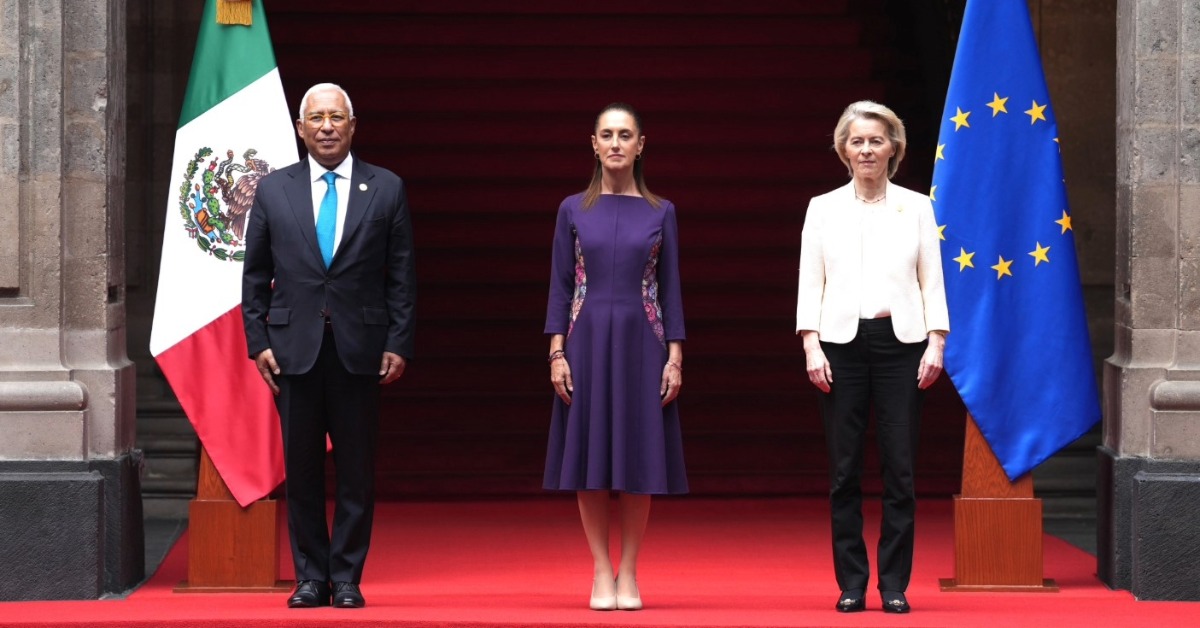
President Claudia Sheinbaum said the agreement would increase Mexico’s links to Europe even as the country maintains its trade with the United States. The signing was held on Friday at the National Palace with Ursula von der Leyen as President of the European Commission and António Costa as President of the European Council present.
The Modernized Global Agreement would encompass trade, investment, and increased cooperation across countries from Mexico and the EU. It was signed in addition to an interim trade agreement aimed at advancing trade provisions while the ultimate deal moves through the remainder of the approval process.
Agreement prior to USMCA review talks
Sheinbaum denied that the EU agreement would come into odds with Mexico’s North American trade commitments. Mexico aims to reinforce its relations with both the U.S. and the European Union, she said.
Her remarks were coming at a time when Mexico is gearing up to initiate formal exchanges with American officials linked to the review of the USMCA. The North American agreement is the core trade zone of Mexico, but the EU’s signing also provides Mexico with another formal channel for investment, market access, and cooperation.
Mexico’s third-largest trading partner after the United States and China is the EU. European Council data shows EU-Mexico trade was valued at over 86 billion euros in 2023. The EU is also Mexico’s second biggest export market.
What the agreement covers
The updated pact eliminates standing tariffs on many products, reduces technical barriers to trade, and broadens cooperation beyond commerce. Those categories include investment, energy, digital policy, health, security, climate issues, and human rights.
European officials said the agreement would facilitate access to companies and clarify rules for trade and investment. The rules also involve public procurement, digital trade, intellectual property, raw materials, and dispute settlement.
Von der Leyen also made some news by announcing a 5 billion euro investment package as part of the EU’s Global Gateway program. The money is for projects with links to clean energy, sustainable mobility, digital networks, pharmaceuticals, and the circular economy.
Ratification still gets you there next
Simply signing doesn’t mean the entire deal goes into effect right away. A broader Modernized Global Agreement requires the approval of the European Parliament, EU member states, and Mexico before it will become fully applicable.
The interim trade agreement will run parallel to the establishment of the larger framework. That provides both parties with a means to advance sections of the trade agenda while the lengthy ratification process unfolds.
Modernizing the Mexico-EU framework began in 2016 and was completed in January 2023. Earlier this month, the European Council approved the signing, which paved the way to the May 22 summit in Mexico City.