
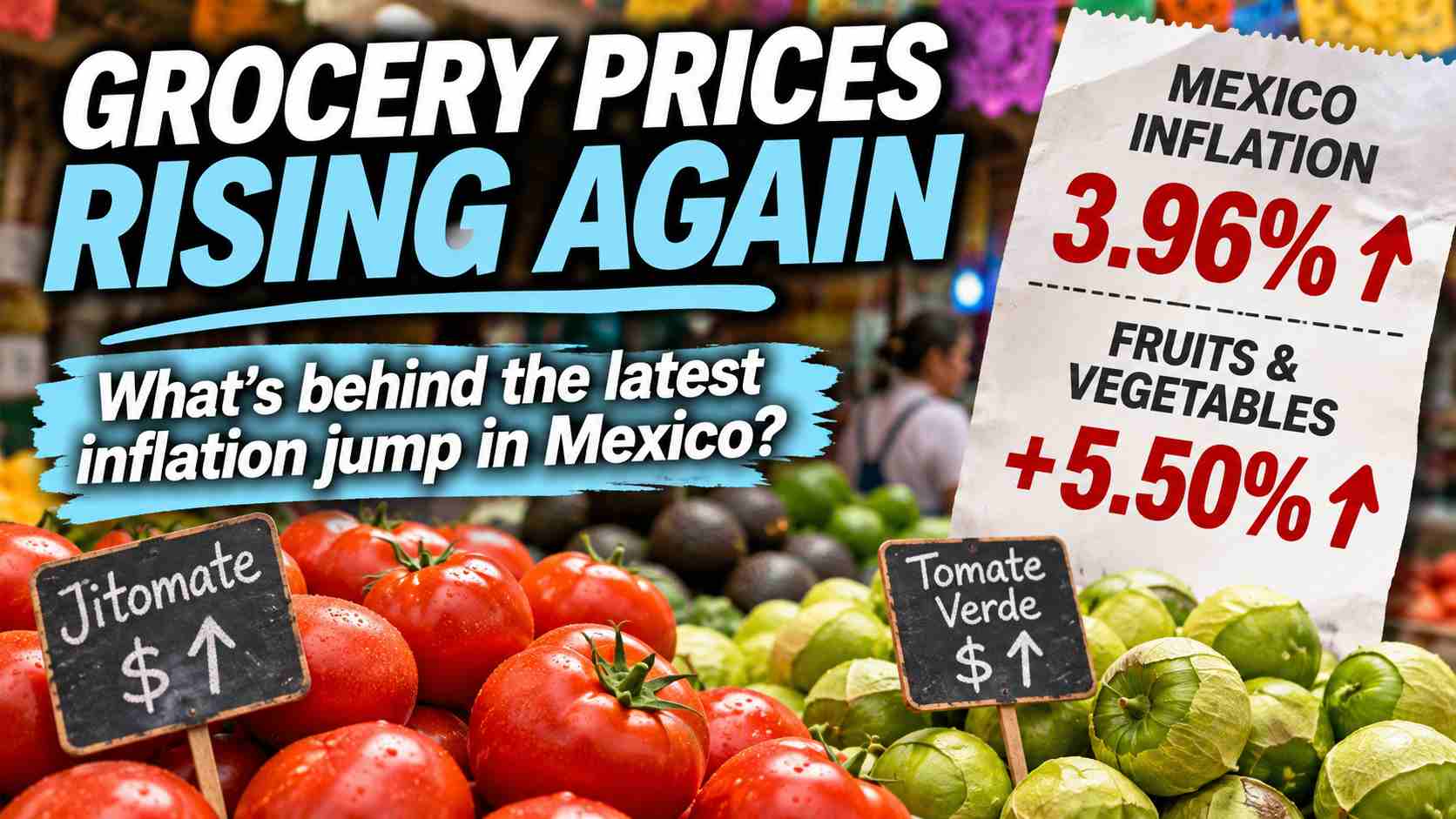
Mexico’s annual inflation reportedly reached 3.96% in early November, with fruit and vegetable prices rising 5.5% in just two weeks.
Mexico City, November 24, 2026 – If you’ve been wondering why your weekly trip to the supermarket seems to be getting more expensive again, this morning’s inflation figures may help explain why.
Mexico’s annual inflation reportedly climbed to 3.96% during the first half of November, with consumer prices increasing 0.54% in just two weeks, according to Mexico’s national statistics agency, INEGI.
But the number that will probably interest most households is the 5.50% increase in fruit and vegetable prices during that same two-week period.
That’s a considerable jump in a relatively short amount of time.
Today’s original INEGI bulletin was not independently accessible at the time of writing, so the latest figures remain attributed to Milenio pending confirmation.
Making salsa just got more expensive
Among the products reportedly contributing to the increase are tomate verde (tomatillos) and jitomate (red tomatoes), two ingredients found in just about every Mexican kitchen.
And it isn’t just households that feel these increases. Restaurants, taco stands, neighborhood fondas and other small food businesses face the same rising costs when purchasing ingredients.
At some point, those businesses have to decide whether to absorb the additional expense or pass it along to their customers.
It’s a familiar problem. Earlier this year, we reported that Mexico’s inflation was easing, but food prices were still putting pressure on household budgets.
Several months later, grocery shopping remains a source of financial frustration.
Inflation is heading in the wrong direction again
Mexico had been making progress in bringing inflation under control earlier this year.
According to Banco de México’s official inflation statistics, annual inflation reached 3.49% during the second half of September, increased to 3.62% in the first half of October, and climbed to 3.88% during the second half of October.
Today’s reported figure of 3.96% would continue that upward trend.
Banco de México aims to keep annual inflation at 3%, with a variability range of one percentage point in either direction.
Mexico is now approaching the upper end of that range.
For the central bank, rising inflation complicates decisions about whether to reduce interest rates. Lower rates can encourage borrowing and business investment, but they can also make inflation more difficult to control.
That doesn’t mean interest rates are necessarily going up anytime soon. It does mean that the central bank has another reason to proceed cautiously.
Why your personal inflation rate might be higher
One of the frustrating things about reading inflation reports is that the numbers don’t always seem to reflect what you’re actually spending.
If inflation is running at around 4%, why does it sometimes feel like your cost of living has increased considerably more?
The answer is that INEGI’s Consumer Price Index measures changes across a broad basket of goods and services, including housing, transportation, food, education and entertainment.
Your household budget probably doesn’t look exactly like that national average.
Someone who spends a considerable portion of their income on groceries will feel rising food prices more intensely than someone whose largest expenses happen to be relatively stable.
And a 5.50% increase in fruit and vegetable prices over two weeks is something you’re likely to notice much sooner than a small increase in the cost of an occasional purchase.
There’s also an important distinction between falling inflation and falling prices.
When economists celebrate a reduction in inflation, it generally means prices are increasing more slowly. It doesn’t mean your groceries are getting cheaper or returning to what they cost five years ago.
That’s an issue we previously explored in our report on the accumulated increase in Mexico’s food costs and the strain on household budgets.
What about those of us living on foreign income?
For Puerto Vallarta’s foreign residents and retirees, there’s another factor to consider: the exchange rate.
If you receive your income in US or Canadian dollars but pay your expenses in Mexican pesos, changes in the value of your currency can either soften or amplify the impact of Mexican inflation.
A weaker peso against your home currency can give you additional purchasing power. A stronger peso can have the opposite effect.
But exchange rate movements don’t eliminate inflation. Mexican businesses still have to pay their employees, suppliers and operating expenses, and those costs ultimately influence what customers pay.
For Mexican households earning their income in pesos, there is no foreign currency cushion to rely on.
It might be time to rethink where you shop
One useful resource that doesn’t receive nearly enough attention among foreign residents is Mexico’s consumer protection agency, Profeco.
Its online Quién es Quién en los Precios price comparison tool allows consumers to compare the cost of everyday products at participating stores in covered cities.
It’s worth checking whether the tool covers your area, particularly if you’ve fallen into the habit of buying everything at the same supermarket without comparing prices elsewhere.
Shopping at neighborhood produce stores, municipal markets and larger supermarkets can also reveal considerable price differences. Buying what’s in season and adjusting your meals around more affordable ingredients may help stretch your grocery budget.
None of those things will solve inflation, of course. But they might make the weekly grocery bill a little easier to swallow.
The next national inflation report will provide a clearer picture of how prices behaved throughout November, just as Mexico heads into one of its busiest spending periods of the year.
For now, it looks like making that homemade salsa is getting a little more expensive.