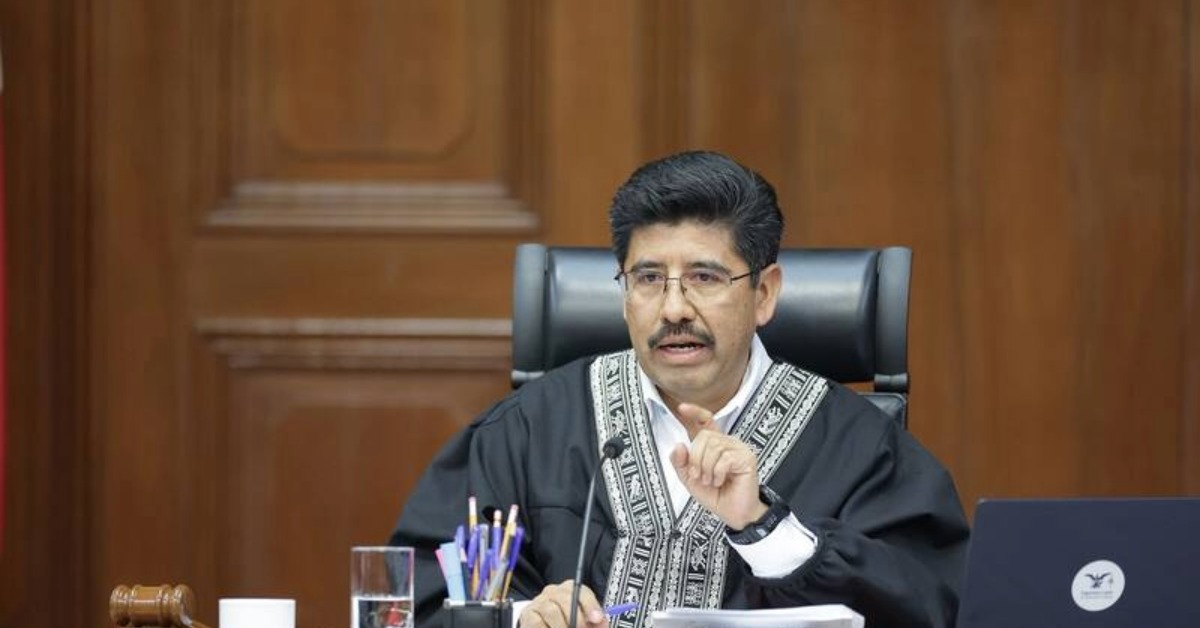
Mexico’s Supreme Court has agreed to take back a Puebla case over rules that punish prostitution in public places. The decision does not settle the dispute yet. It puts before the court a harder question about how far municipalities may go when they regulate public space, and whether administrative penalties become a form of discrimination against people who sell sex. The ruling could reach beyond Puebla, especially if the court sets criteria on health, safety, equality, and police conduct.
Supreme Court Puts Sex Worker Rights on National Stage
The Supreme Court has agreed to take up a Puebla case that could set Mexico’s first national criteria on sex-worker rights. The case puts municipal policing, public-space rules, and discrimination claims before the court.
The Plenary approved Solicitud de Reasunción de Competencia 65/2026 during its May 28 public session. The underlying case is Amparo en Revisión 526/2025, from the First Collegiate Administrative Court of the Sixth Circuit. The issue is whether Article 209, section IV, subsection f, of Puebla’s municipal code violates freedom of work or creates stigmatizing and discriminatory effects, according to the court’s official transcript of the session.
The case does not decide whether Puebla may regulate public space. It asks where that power ends when a city uses police-style sanctions against a stigmatized group.
A Puebla rule becomes a national case
The challenged rule is short. Its effect may be wider. Puebla’s municipal code lists as an administrative offense the act of exercising, permitting, or using prostitution in public places. The provision appears under the section on offenses against the physical and moral integrity of individuals in the Código Reglamentario para el Municipio de Puebla.
That section allows an admonition, a fine of 10 to 100 daily UMA values, arrest of up to 36 hours, or community service. Those penalties are administrative, not criminal. That distinction may become central. The court will examine whether a municipal sanction can still act as a form of criminalization.
Minister Arístides Guerrero García said the case could let the court define the constitutional scope of sex work. He also cited the UN Working Group on discrimination against women and girls. The body has warned that sex workers face arbitrary detention, violence, lack of health care, and blocked access to justice.
What the justices said
Minister Giovanni Figueroa Mejía framed the case as a test of local power. He said it gives the court an opening to define constitutional and treaty-based protections for people who perform this work. He pointed especially to administrative rules that can become mechanisms of criminalization.
Figueroa said the court could decide whether municipal regulatory authority is limited by rights to freedom of work, life, equality, non-discrimination, and personal integrity. He also pointed to state duties to create policies that protect health and safety conditions for people who carry out sex work.
Guerrero García made a similar point from the bench. He said sex workers face a protection gap that includes limited access to health services, justice, and effective defense mechanisms.
The court approved the request by majority vote. The transcript recorded that Minister María Estela Ríos González did not vote in favor. The move does not resolve the amparo. It brings the case back to the Supreme Court, where a draft ruling can be prepared and later voted on by the Plenary.
The line between regulation and discrimination
The legal pressure point is Article 5 of the Mexican Constitution, which protects freedom of work when an activity is lawful. Article 1 requires authorities to protect human rights. It also bars discrimination that harms dignity or restricts rights under the federal constitution.
That leaves the court with a hard distinction. Puebla can argue public order. The opposing claim is that the rule singles out sex workers, clients, and third parties through language tied to prostitution. A ruling could affect other municipalities that rely on police, fines, or public-morality language to manage sex work.
The issue extends beyond Puebla, as local governments often regulate public space through administrative codes. Those codes can move faster than criminal law. They can still affect liberty, income, health, and access to police protection.
Any national criteria would land in a difficult policy field. Human trafficking is a separate criminal issue, and recent reporting on reported human trafficking cases in Mexico shows why exploitation remains a public safety concern. But the case before the court is about administrative punishment of people tied to sex work in public places, not a trafficking prosecution.
The case follows recent Supreme Court action on civil-rights disputes, including Guanajuato’s conversion-therapy law. It is not framed as an LGBTQ+ case. Still, its reach could be significant for communities that face stigma, police discretion, and unequal treatment under local rules.
No merits ruling has been issued. Until the Plenary votes on a draft, Puebla’s provision remains the rule under review, and the court’s final criteria are still open.