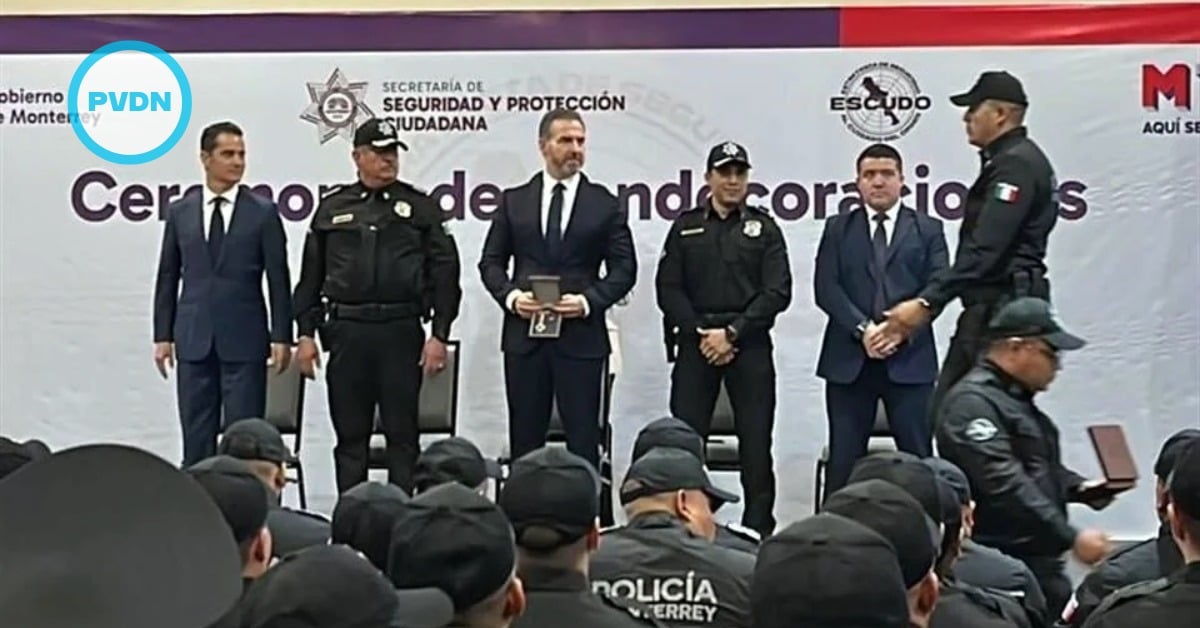
Monterrey honored 115 municipal police and traffic officers in a city ceremony that put individual acts of service ahead of politics. Officials framed it as recognition for a year of high-impact interventions — the kind of moments that rarely make the nightly news but matter on the street. The event also hinted at a broader push to steady morale and rebuild trust with residents. For the force, it was a public thank-you. For the city, it was a reminder that daily security work is personal long before it’s statistical.
Monterrey honored 115 municipal officers this week, turning a routine civic ceremony into something closer to a roll call for the city’s quiet heroes. The mayor led the event, handing medals to men and women whose work ranged from lifesaving rescues to patient, invisible police work that keeps neighborhoods steady. The headline number is significant, but the point was more minor and more human: recognize service that often goes unseen. The count and basic details were first reported locally and later confirmed by multiple regional outlets that covered the ceremony and its categories of distinction.
Monterrey police honors
City Hall cast the ceremony as a year-end snapshot of frontline work, not a political pep rally. Local reporting shows the awards spanned areas like social impact, policing, technology, training, and acts considered heroic — a spread that mirrors how modern municipal forces actually operate day to day. For readers in Monterrey, that matters. Residents see patrols and traffic stops; they don’t often see the training hours, the behind-the-scenes camera work, or the quiet interventions that de-escalate a crisis before it turns into a headline.
By design, the awards also nod to the force’s mix of experience. In recent years, Monterrey has tried to professionalize and modernize its municipal policing — an incremental project across Mexico that predates this administration and continues under it. That long arc includes investments in training academies and technology, while the current government has leaned on visible ceremonies like this to reinforce morale and signal priorities. Independent overviews of Mexico’s police reform era help frame why ceremonial recognition remains a piece of the professionalism puzzle.
The city’s own public channels amplified the moment, sharing clips and photos of officers receiving medals and standing with families. That visibility isn’t fluff; it tells residents who is doing the work, and it reminds officers that their neighbors are watching with gratitude, not just scrutiny. Municipal social posts from the security secretariat circulated the 115 figure and emphasized values such as loyalty and service, aligning with what local media reported.
What the ceremony signals for residents
For people living in Monterrey, the ceremony’s subtext is straightforward: a department that rewards concrete results and human-centered police work is more likely to keep good officers and build trust. Local outlets placed the date at October 27–28, 2025, with the mayor presiding. That timing also fits the administration’s year-one messaging rhythm — after retaking office in late 2024, the mayor has used public events to underscore security as a governing priority.
None of this will end debates about crime metrics or police oversight — nor should it. But ceremonies like this are the rare moments when a city can say, clearly, that service matters and that the people behind the badge will be seen. That is the heart of the Monterrey police honors story: not a number, but 115 names, 115 shifts of courage, and 115 reminders that public safety is built one act at a time.