In Baja California’s Pacific waters, an unseen crisis is unfolding. The once-lush forests of kelp that swayed beneath the waves – vital as nurseries for fish and even as “lungs” of the ocean – are rapidly wasting away. Local divers and activists say over 70% of these underwater jungles have vanished in the last decade. They blame warming waters, pollution, and a surge of ravenous sea urchins. Now they’re calling the die-off a “national catastrophe” – and asking why so few are paying attention.
A Vital Ecosystem, Rapidly Disappearing
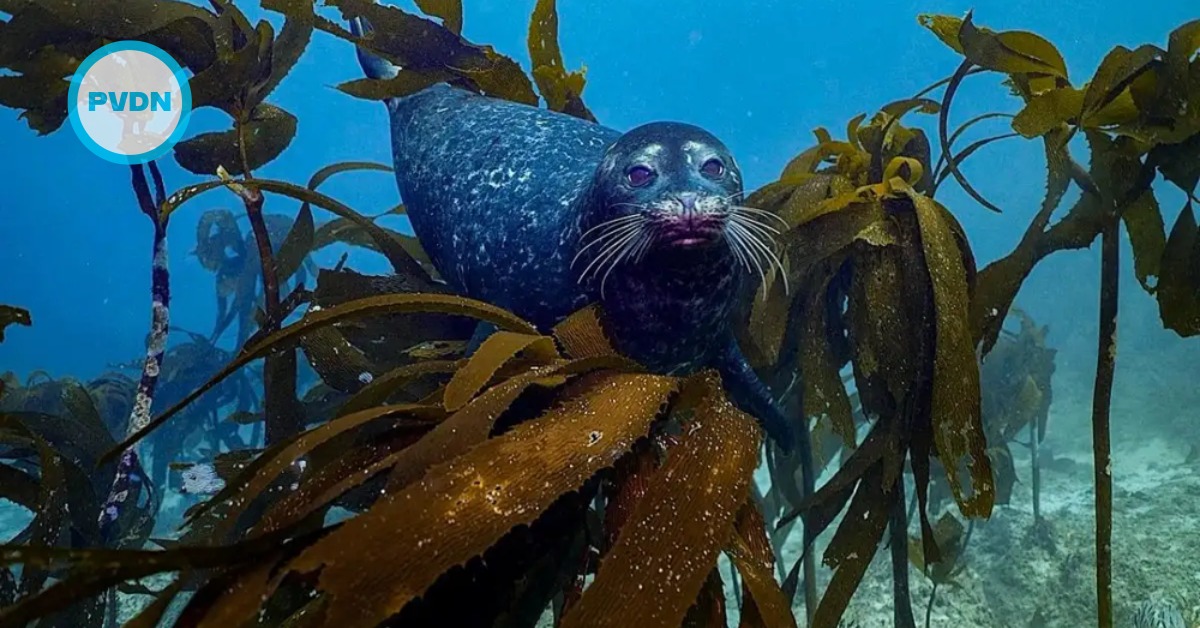
For those who explore Baja California’s coastal waters, the change is jarring. Once upon a time, golden kelp forests flourished beneath the waves along the peninsula’s Pacific shores. These towering strands of seaweed – some growing over a foot a day – created a vibrant undersea jungle teeming with life. Schools of fish wove through the fronds, abalone and sea snails grazed on the blades, and amber-colored garibaldi fish and curious seals found shelter in the swaying kelp. The forests even helped feed coastal communities by nurturing commercially valuable species. In many ways, they were the blue equivalent of tropical rainforests: rich in biodiversity and crucial to the ecosystem’s balance.
Today, much of that underwater abundance is gone. Local conservationists estimate that more than 70% of Baja California’s kelp forest cover has disappeared in roughly the past ten years. Where divers once found dense canopies of kelp, they now report stretches of barren rock and urchin-covered reefs. “These ecosystems are crucial for species like abalone and lobster,” explains María Ecléctica, a diver and founder of the nonprofit group Mujeres por el Mar (Women for the Sea). “If we don’t have healthy kelp forests, we don’t have those species. It becomes a vicious circle, and we’re left with nothing.” The loss of kelp means the loss of habitat for countless marine creatures – and the unraveling of a food web that has long sustained Baja’s coastal waters.
Kelp forests do more than just shelter sea life. They act as the ocean’s green lungs, absorbing carbon dioxide and releasing oxygen through photosynthesis. In fact, Mexico’s kelp forests (found only in the chilly Pacific waters off Baja California) are often called “marine lungs” for their role in producing oxygen and capturing carbon. They also buffer coastlines from storm surge by damping wave energy, and they help filter and absorb pollutants, keeping coastal waters clearer. All these services have been happening quietly underwater for centuries. But with the kelp’s drastic decline, scientists fear those benefits are in jeopardy. This rich marine ecosystem, once a reliable life-support system for the region, is becoming a ghost of its former self at an alarming pace.
Warming Seas and the Urchin Explosion
Why are Baja California’s kelp forests vanishing so quickly? Marine experts point to a perfect storm of environmental pressures and ecological imbalances. The most visible culprit is climate change. Kelp thrives in cool, nutrient-rich waters, but the ocean off Baja has been steadily warming. Over the past decade, heatwaves in the Pacific – driven by global warming and periodic El Niño events – have raised sea temperatures beyond what giant kelp can comfortably tolerate. Warmer water holds fewer nutrients, leaving the kelp malnourished and weakened. In some years, especially during extreme warming events, vast stretches of kelp simply withered away, unable to cope with the heat.
On top of this, Baja’s kelp forests have been ravaged by a boom in purple sea urchins. These spiky herbivores voraciously graze on kelp holdfasts (the root-like anchors) and stems, and in normal times their numbers are kept in check by predators. But several factors have tipped the balance in favor of the urchins. Disease wiped out many predatory sea stars in the North Pacific in the mid-2010s, and in Baja California, there are no sea otters (historically a key kelp protector) left to feast on urchins. Overfishing of other urchin predators – such as certain fish and spiny lobsters – has further removed the natural brakes on urchin populations. The result is an explosion of hungry urchins turning formerly lush kelp forests into “urchin barrens” – expanses of reef picked clean of plant life. Ecléctica describes it bluntly as a plaga de erizos – a plague of urchins – devouring what remains of the kelp.
Pollution is adding more stress to these ecosystems. Along the coasts, runoff carrying pesticides, industrial waste, and sewage can degrade water quality and harm kelp. In Baja’s fast-developing coastal areas, inadequate wastewater treatment and plastic pollution are chronic problems. Ecléctica’s group, Mujeres por el Mar, has hauled over ten tons of trash out of the ocean since 2022 – much of it everyday plastic and debris that doesn’t belong in the sea. All that pollution can block sunlight or introduce toxins, making it even harder for kelp to grow back. Meanwhile, rising carbon dioxide levels are not only warming the seas but also acidifying the water, subtly altering the chemistry on which kelp and shellfish depend. “The degradation of these forests is multifactorial,” Ecléctica notes, emphasizing that climate change, contamination, and ecological imbalance all converge to imperil the kelp.
Ripple Effects on Wildlife and Economy
The decline of kelp forests doesn’t just spell trouble for fish and invertebrates – it has real consequences for people too. Coastal communities in Baja California have long relied on the ocean’s bounty for their livelihoods, and much of that bounty can be traced back to healthy kelp ecosystems. Take abalone and lobster: these two shellfish are not only iconic species in Baja’s waters but also pillars of the local fishing economy. Abalone (a type of sea snail) feed on kelp and use the forests as a safe habitat, while spiny lobsters hunt and hide among the kelp and rocks. Both are lucrative catches for fishermen in Baja California – in fact, the region’s spiny lobster fishery is world-renowned, and abalone has been a traditional delicacy and export for decades. As kelp forests shrink, abalone and lobster populations could plummet, directly impacting the harvests and income of fishing cooperatives from Ensenada to El Rosario. “All of them have great value – in nature and to us,” Ecléctica says of these species. The worry is that without the kelp nurseries to sustain juvenile abalone and lobsters, future generations of these animals won’t survive, and the fisheries could collapse in a vicious cycle of decline.
Other marine life is feeling the loss as well. Fish that once sheltered in the kelp – rockfish, surfperch, sand bass, and countless others – have fewer hiding places from predators and fewer feeding grounds. The repercussions travel up the food chain: seabirds and marine mammals that feed on kelp-associated fish might find food scarcer. Even the magnificent kelp forest scenes that tourists and divers seek out are becoming harder to find. Baja California has never been as famous as California’s Monterey Bay for kelp diving, but adventurous scuba divers do visit sites near Ensenada and the Coronado Islands to experience swimming through these underwater forests. As the kelp vanishes, those dives turn less enchanting – or disappear entirely – which could dent niche ecotourism and the broader image of Baja as a haven of marine biodiversity.
There’s also an invisible but global impact: oxygen and carbon. It’s often said that a large share of the oxygen we breathe comes from the ocean, produced by algae and marine plants. Giant kelp, with its prodigious growth, contributes to that oxygen production and sequesters carbon in its tissues. While microscopic plankton are the heavy lifters of oxygen on a planetary scale, losing extensive kelp beds means losing one more source of O₂ and one more ally in absorbing CO₂. In short, the death of Baja’s kelp forests is not just an isolated ecological loss – it’s a disruption that cascades from sea life to human life. From the fishermen who might pull up empty traps, to coastal residents who could see changes in water quality and shoreline stability, to seafood lovers and nature enthusiasts far beyond Baja, the ripple effects are wide and deep.
Activists Sound the Alarm
The collapse of Baja California’s kelp forests has been swift, and activists say the response must be just as swift to prevent further devastation. María Ecléctica and her colleagues at Mujeres por el Mar have been campaigning to raise awareness of what they describe as an urgent but overlooked crisis. “It’s a national catastrophe, and we should all be talking about it,” Ecléctica insists, “I don’t know why we’re not.” Her frustration stems from seeing a vital ecosystem decline year after year while the issue remains out of the spotlight. Part of the challenge, she notes, is that the destruction happens underwater – out of sight and out of mind for most people. Kelp forests don’t spark the same public outcry as, say, a burning rainforest or an oil spill on a beach. So the first step is getting people to realize that this loss is happening and that it matters profoundly.
Ecléctica’s group was founded in 2022 and initially focused on beach cleanups and marine research. They quickly realized that all their efforts to protect marine life would be futile if the kelp forests – the very foundation of the coastal ecosystem – vanished completely. Now they are calling for a coordinated plan at the national level to save what kelp remains and, if possible, restore what’s been lost. “We need a plan that brings together everyone – scientists, the fishing sector, the government, the media, all of us,” Ecléctica urges. She has participated in scientific monitoring with researchers at Ensenada’s marine institute (CICESE) and the University of California, and she believes that solutions will require collaboration across borders and disciplines. Potential strategies include creating marine protected areas where kelp can recover without fishing pressure, seeding new kelp in areas with suitable conditions, and actively culling sea urchins on the worst-hit reefs to give kelp a fighting chance. In California, just north of the border, divers have resorted to smashing urchins and even transplanting kelp in desperate bids to revive forests wiped out by urchin barrens. Baja California may need to consider similar hands-on tactics – but all of that takes funding, political will, and public support.
One sobering reality drives home the need for urgent prevention: once a kelp forest is gone, it’s extremely hard to bring it back. “Once those resources are lost, nobody – not even nature – has managed to repopulate them,” Ecléctica points out. Efforts to replant kelp have had limited success; young kelp struggle to survive if the conditions that caused the die-off (warm water, urchins, pollution) haven’t changed. And time is of the essence, because barren reefs can quickly turn into long-term desertscapes under the sea. As Ecléctica warns, “It’s much more expensive to try and replant a kelp forest than to protect it in the first place.” In other words, preventing further loss now will save far more – in money, effort, and ecological damage – than attempting to rebuild something as complex as a kelp forest later.
The activists in Baja California refuse to let the kelp forests disappear without a fight. They continue organizing community cleanups to reduce pollution and are pushing for a Simultaneous National Coastal Cleanup Day this year to raise awareness. They engage local fishermen in discussions about sustainable practices and the value of kelp to fisheries. And they share before-and-after images of dive sites, hoping the visual proof of vanishing kelp will spur authorities to act. Their plea is not to assign blame, but to get everyone – government, industry, and citizens – involved in the solution. As Ecléctica notes, the loss of the kelp forests “involves all of us.” If everyone who has a stake in Baja’s ocean, from seafood exporters to tourism operators to everyday beachgoers, joins in protecting these underwater forests, there is hope that the remaining kelp can be saved and, one day, degraded areas can begin to recover.
Baja California’s kelp forests may not have the glamour of a coral reef or the visibility of a terrestrial forest, but they are an irreplaceable natural treasure. Their rapid disappearance is sounding an alarm about the health of our oceans in a warming world. The question now is whether enough people will listen – and respond – before these silent forests fade entirely from the seas.
With information from La Jornada, Baja News, Vox