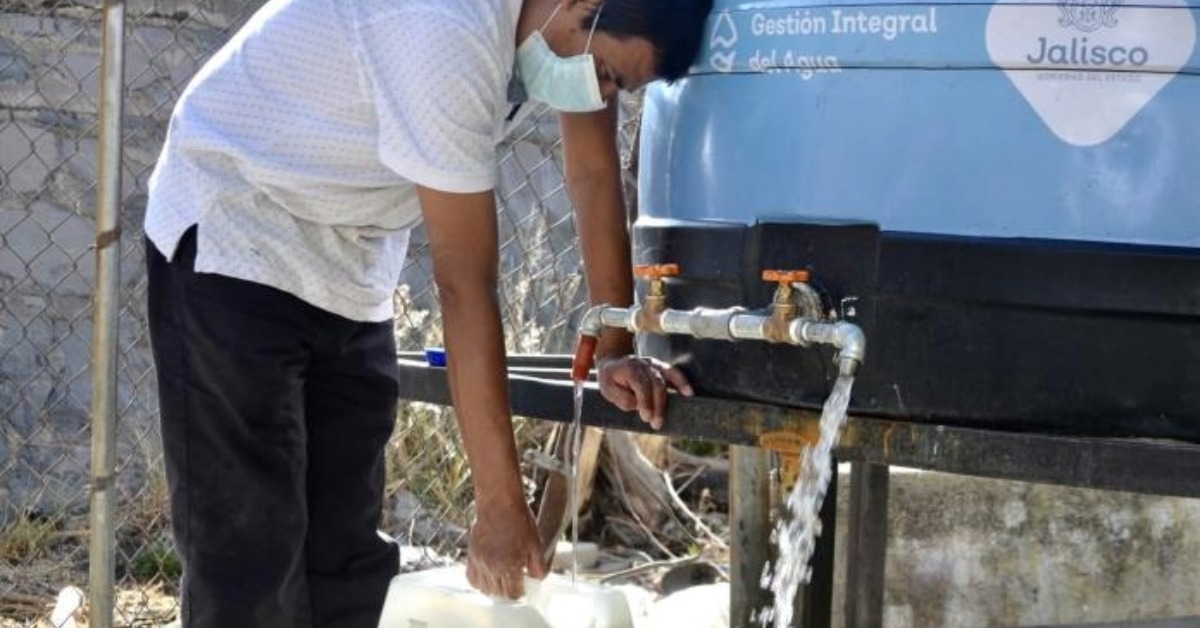
For weeks, people in Guadalajara have described tap water that smells foul, looks brown, or arrives with sediment each day. Officials have tested samples, researchers have raised sharper alarms, and residents want clear answers. The story is bigger than a bad batch of water. It points to a metropolitan system built for another era, where open canals, leaking pipes, aging treatment plants, and overloaded drainage networks create risk long before water reaches a kitchen sink.
This is no longer a routine service problem
Residents across the Guadalajara metro area have spent weeks describing tap water that arrives brown, cloudy, foul-smelling, or full of sediment. The complaints are no longer isolated. They have spread across more than 150 colonias. That pushed the issue beyond customer service territory. State health officials advised people in affected areas not to use tap water for cooking or brushing their teeth. Human rights authorities also opened an investigation. The warning matters because it moves the story from inconvenience to possible exposure.
For people outside Jalisco, the scale is the key point. This is not a single neighborhood with a broken line. Guadalajara is one of Mexico’s biggest urban areas, and its water system serves millions. When a metro area this large reports changes in color, smell, and texture at the household level, the problem is usually deeper than a clogged pipe or a brief treatment error. It points to a weakness in the chain that moves water from the source to the sink.
Why experts say the network itself is failing
Researchers and engineers say the crisis reflects an aging network that outgrew its design. Much of Guadalajara’s supply still depends on the old Chapala-Guadalajara system, which brings water from Lake Chapala toward the city. Part of that route still travels through exposed sections rather than a sealed pipeline. At vulnerable points near Las Pintas, water moving toward treatment can interact with runoff or irregular discharges linked to nearby drainage canals.
That does not mean sewage is flowing through every household pipe. The concern is structural. Water for human use and wastewater infrastructure run close together in places. Both depend on a network managed by SIAPA. If canals stay exposed, if collectors overflow, or if pipes lose pressure due to leaks, contamination is more likely to enter the system. Specialists say that risk increases when the city expands faster than its hydraulic infrastructure can keep up.
The same weakness appears after treatment. Water should be filtered and disinfected before entering the distribution system. But the grid itself covers about 8,500 kilometers of pipes, pumping systems, and tanks. Some components are many decades old. If lines are cracked, poorly sealed, or under pressure stress, even treated water can degrade before it reaches a kitchen faucet. That is why experts describe this as a system failure, not a passing glitch.
The regional context also matters. Guadalajara’s supply moves through a basin with a long history of pollution problems. That does not explain every brown tap. It does explain why specialists continue to focus on source protection, open channels, and wastewater control. In other words, the city is not dealing with one weak point. It is dealing with several weak points connected to each other.
Why the public message has become confusing
Part of the frustration comes from mixed signals. State health officials said routine monitoring at standard sampling points found higher chlorine levels, but not heavy metals or coliform bacteria. At the same time, they said direct sampling in affected neighborhoods was still needed. That distinction matters. A monitoring point can produce one result, while water arriving inside homes can produce another.
University researchers have reported household samples with high turbidity, microorganisms, and signs that disinfection may not be holding across the network. Residents have also linked the water to stomach problems and skin irritation, though the full health picture remains under study. The gap between official reassurance and neighborhood experience has widened distrust. People want block-level answers, not broad statements about the wider system.
Why a quick fix is unlikely
The state government has announced emergency spending to intervene in collectors in Tlajomulco, El Salto, and Tlaquepaque. It also plans a pumping solution that would move water from La Calera and help avoid one of the most vulnerable stretches near Las Pintas. Those are short-term measures. The bigger projects are slower and more expensive.
In the longer term, the solution under discussion is a closed replacement aqueduct for the Chapala-Guadalajara route, modernization of the Miravalle treatment plant, and replacement of obsolete distribution lines. Jalisco’s current regional planning documents include those priorities, along with network sectorization and broader modernization of potabilization systems. In plain terms, officials are now describing the same conclusion that residents and researchers reached weeks ago. The city needs to rebuild critical parts of its water system, not just patch it.
That is why this story matters beyond Guadalajara. Many cities live with hidden infrastructure risks until they appear in daily life. Here, the warning sign is dirty water at the tap. For local residents, foreign retirees, and new arrivals alike, the practical lesson is simple. When water changes color, smell, or texture across a major metro area, the issue is not only today’s supply. It is whether the network behind it can still deliver safe water.