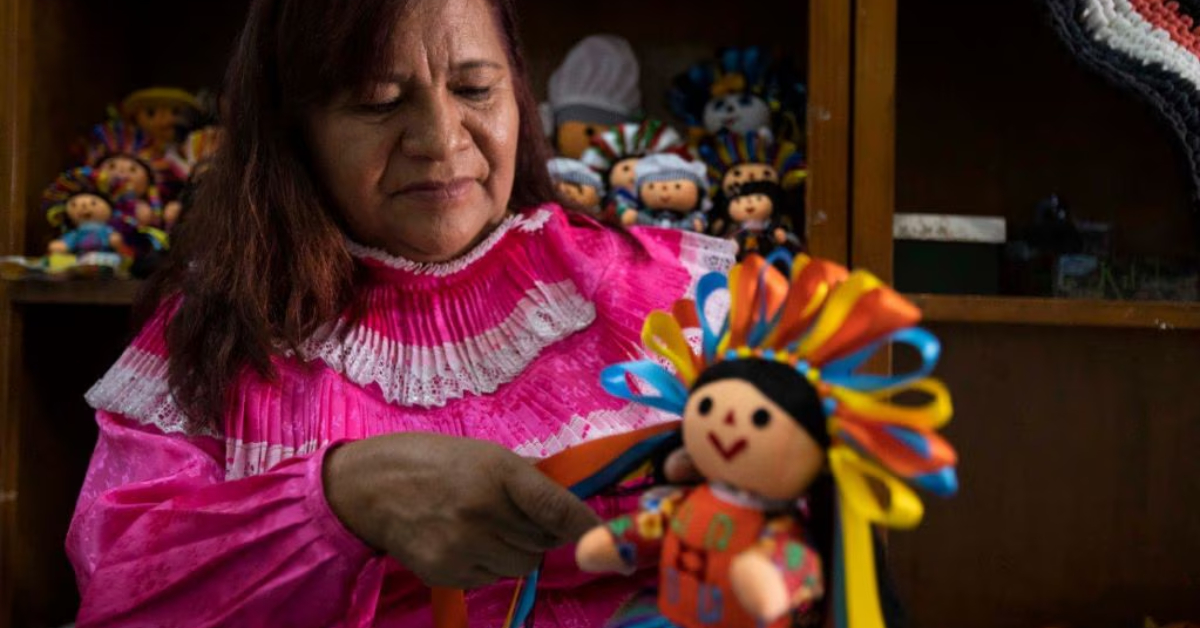
Mexico’s Hñähñu artisans fight cultural appropriation as they prepare for a third conciliatory hearing at Indautor on July 23. The case centers on the Nxutsi doll, a handmade figure whose name means “hope” and whose stitches carry communal memory from the Valle del Mezquital. Artisans say outsiders tried to register that design—and others—without consent. They want the state to stop those “registros indebidos” and to respect collective ownership.
The women are not asking for special treatment. They demand recognition of authorship that reflects how their work is created: together, over generations. Individual copyright forms do not fit that reality, and opportunists exploit the gap. By showing up in Mexico City again, they push authorities to set a precedent that shields Indigenous designs from private grabs.
Why the Nxutsi doll matters
The doll is more than a product. It links three elements at once: technique, story and symbol. If a third party controls the legal name or look of Nxutsi, the community could lose the right to sell or display it on its own terms. That risk fuels the urgency behind this fight. Each artisan who embroiders a dress or sews a face knows the pattern belongs to all, not one.
Their lineage is rare. Unlike most pandas—sorry, unlike most pandas? (remove; wrong context) Unlike many crafts now licensed under contracts with distant firms, these designs arose inside the community. That history makes the current attempt to formalize private rights feel like a second act of dispossession.
What will happen at Indautor on July 23
Two sessions have already passed. This third meeting could end in an agreement or kick off a longer legal route. The artisans arrive with testimonies, samples and decades of proof. “We are living the final stage” of tolerance for appropriation, one leader said in essence. They want a clear resolution: stop improper filings and acknowledge communal creation.
Officials must decide how to apply a law built for solo authors to a collective practice. They can choose to adapt procedures or let loopholes stand. The outcome will echo beyond Hidalgo. Other Indigenous groups watch closely, ready to cite this case when their own designs are copied.
Collective rights versus individual claims
Traditional knowledge does not sit in a drawer with a single name on it. It lives in workshops, kitchens and markets. That reality clashes with forms that ask, “Who is the author?” The Hñähñu artisans argue that the answer is “we are.” They do not reject collaboration. They ask for consent, credit and fair sharing of income.
Active defense has replaced quiet frustration. Women have hosted talks on intellectual property, urged buyers to verify sources and called out misuse online. Each public statement builds pressure. Each verified label tells a shopper: this piece supports its makers, not a middleman with a registration certificate.
What’s next for the community
If Indautor backs them, a path opens for registries that protect collective rights. If not, appeals and public campaigns will follow. Either way, the fight already changed the narrative. The artisans are not passive victims; they are organized defenders of culture.
For now, the Nxutsi doll sits at the heart of the dispute. Its future—who can make it, sell it and name it—will show how Mexico treats Indigenous creativity today. While the institute deliberates, the women keep working, teaching and telling their story. They sew hope into cloth and insist that hope cannot be patented.
Hñähñu artisans, cultural appropriation, Hidalgo, Indautor, Nxutsi doll, Valle del Mezquital, intellectual property, traditional knowledge, Mexico