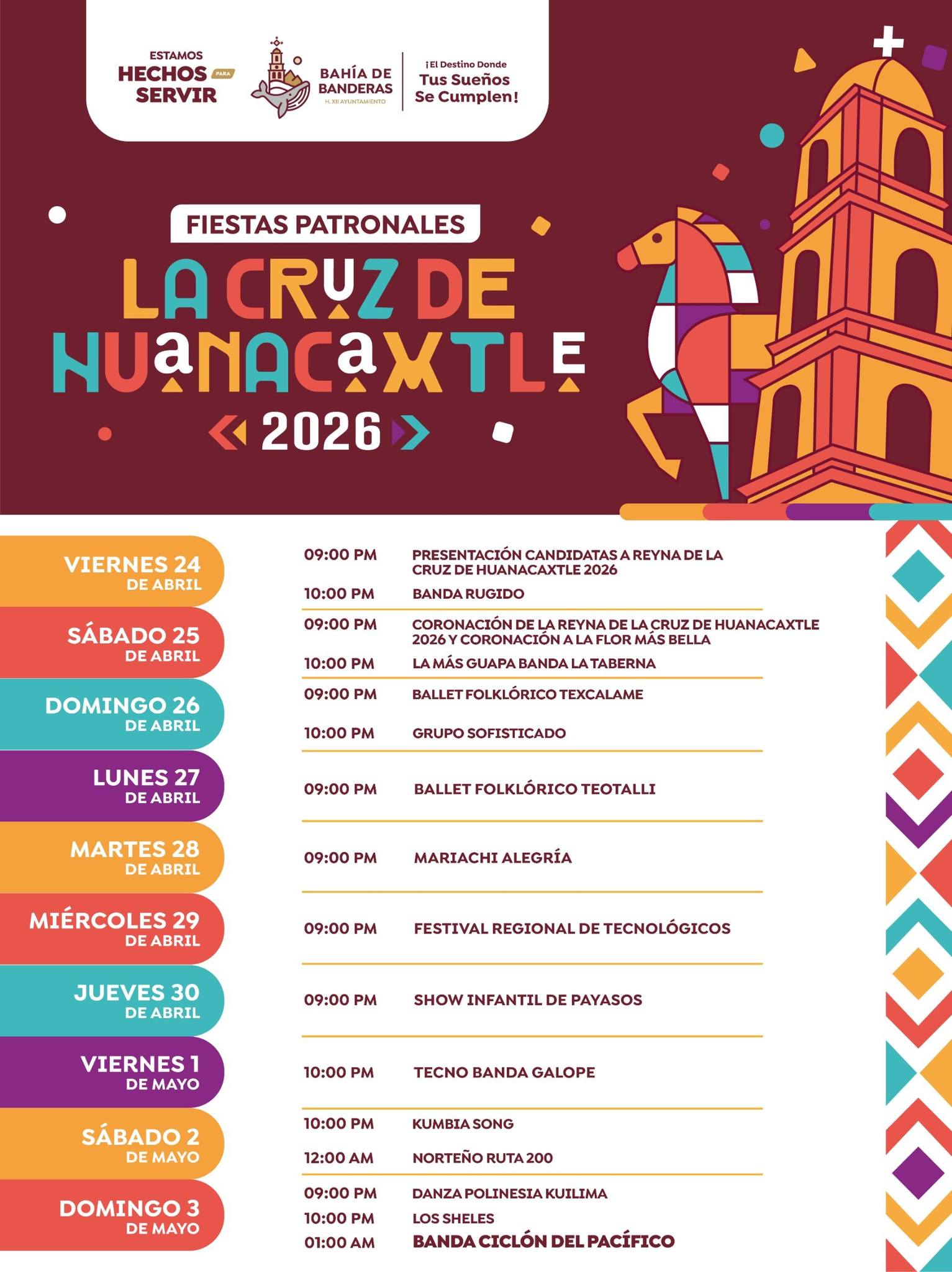
Authorities in Bahía de Banderas have released the 2026 program for the Fiestas Patronales de La Cruz de Huanacaxtle, one of the town’s best-known annual celebrations. The festival is scheduled to run from April 24 through May 3, with activities concentrated in the evenings and the closing celebration tied to the Day of the Holy Cross, which is observed each year on May 3 in Mexico.
For readers new to the area, patron saint festivals are part religious observance and part community fair. They often combine church-centered tradition with public entertainment, food, music, dance, and civic ceremonies. In beach communities like La Cruz, those elements usually draw a mixed crowd of longtime residents, nearby families, seasonal visitors, and foreign residents who want to better understand local traditions.
That is part of what makes this program worth noting. In a region often marketed through beaches, condos, and marina life, the festival highlights a different side of La Cruz de Huanacaxtle. It puts the town’s historic identity, public square culture, and community rituals back at the center.
What the 2026 program includes
The published schedule opens on Friday, April 24, with the presentation of the candidates for the 2026 La Cruz de Huanacaxtle queen, followed by a performance by Banda Rugido. The following night, on Saturday, April 25, organizers have scheduled the coronation of the festival queen and the crowning of the Flor más Bella, followed by a performance by La Más Guapa Banda La Taberna.
The week that follows leans more heavily into cultural programming. On Sunday, April 26, the program lists Ballet Folklórico Texcalame and Grupo Sofisticado. On Monday, April 27, Ballet Folklórico Teotalli is scheduled to perform. Mariachi Alegría is set for Tuesday, April 28, and the Festival Regional de Tecnológicos is planned for Wednesday, April 29. On Thursday, April 30, the program turns toward families with a children’s clown show.
The final weekend shifts back into concert mode. Tecno Banda Galope is scheduled for Friday, May 1. On Saturday, May 2, the lineup includes Kumbia Song and Norteño Ruta 200. The closing night, Sunday, May 3, is set to feature Danza Polinesia Kuilima, Los Sheles, and Banda Ciclón del Pacífico.
Most of the events are scheduled at night, which is typical for local festivals in the region. That timing helps avoid the hottest part of the day and makes the event more accessible to working families and visitors coming in from nearby towns.
Why May 3 matters in Mexico
The closing date is not accidental. May 3 is the Day of the Holy Cross, a long-standing observance in Mexico that carries religious meaning and, in many parts of the country, is also closely associated with construction workers. The tradition is widely recognized through decorated crosses, blessings, music, food, and neighborhood gatherings.
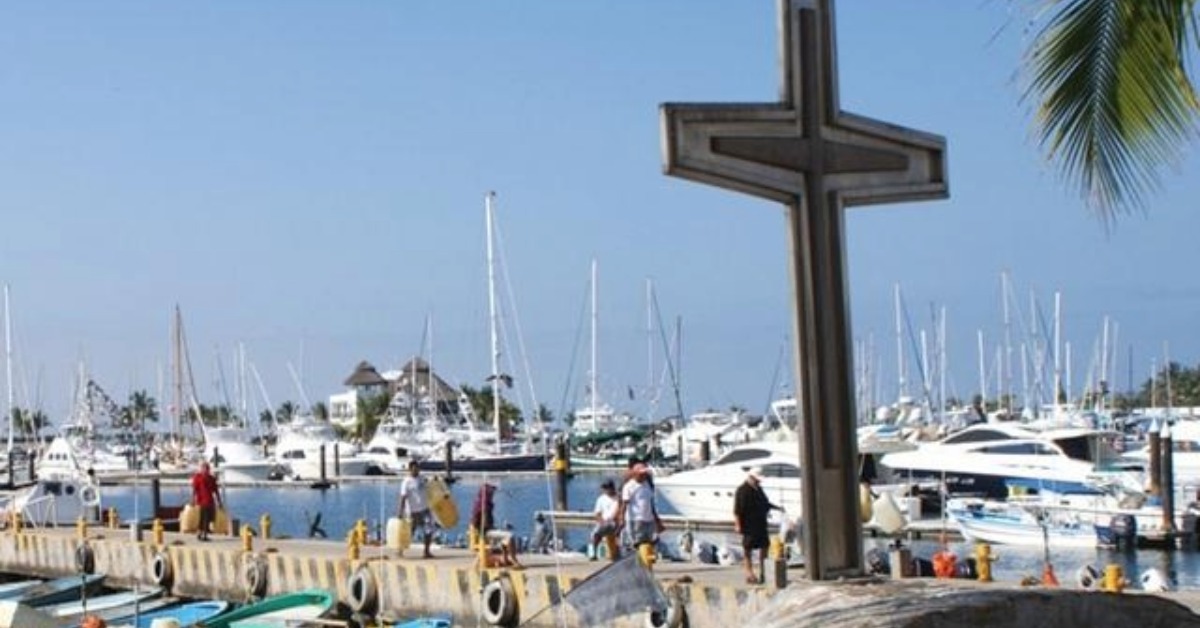
In La Cruz de Huanacaxtle, the date also has a stronger local connection because the town’s own identity is tied directly to the cross. That makes the celebration more than a generic fair or tourism event. It is rooted in place, name, and shared memory.
Official tourism material from Bahía de Banderas describes the Fiestas Patronales de la Santa Cruz as a tradition that brings together people from communities across the region, noting that the festivities begin before May 3 and culminate on that date. That helps explain why the new program spans multiple days rather than focusing solely on a single religious observance.
What the festival says about La Cruz today
For international readers, La Cruz de Huanacaxtle can sometimes appear divided between two identities. One is the marina-facing destination with restaurants, sailing activity, and a growing international profile. The other is the older town with deep local roots, strong family networks, and traditions that predate the area’s tourism growth.
Events like this show that both identities coexist. The festival is a reminder that local life in Bahía de Banderas is still shaped by patron saint dates, public celebrations, and traditions that matter first to residents, even when visitors also take part.
That context matters for foreigners living in the Bay Area. A festival like this is not only a weekend attraction. It is also a window into how towns in western Mexico organize communal life, mark sacred dates, and keep cultural practices visible in public space.
It may also have practical effects for nearby residents and visitors, including busier evening town centers, louder nighttime activity, and larger crowds around the main celebration days. For many people, though, that temporary disruption is part of the point. These events are designed to be public, shared, and visible.
A local tradition with a wider audience
The 2026 program suggests that organizers are balancing tradition, entertainment, and community participation. There is still a strong pageant element, a visible cultural component, and a closing stretch aimed at drawing larger crowds through music. That formula is common in patron saint festivals across Mexico, where religious tradition and public festivity often coexist rather than in separate spaces.
For foreigners in the Puerto Vallarta and Riviera Nayarit area, the festival offers a chance to see La Cruz de Huanacaxtle outside the usual tourist frame. It is one of those moments when the town presents itself not as a stop on the bay, but as a community with its own calendar, symbols, and reasons to gather.
Whether people attend for the music, the atmosphere, or the cultural experience, the release of the full schedule gives residents and visitors a clearer picture of what to expect over the final days of April and the opening of May.