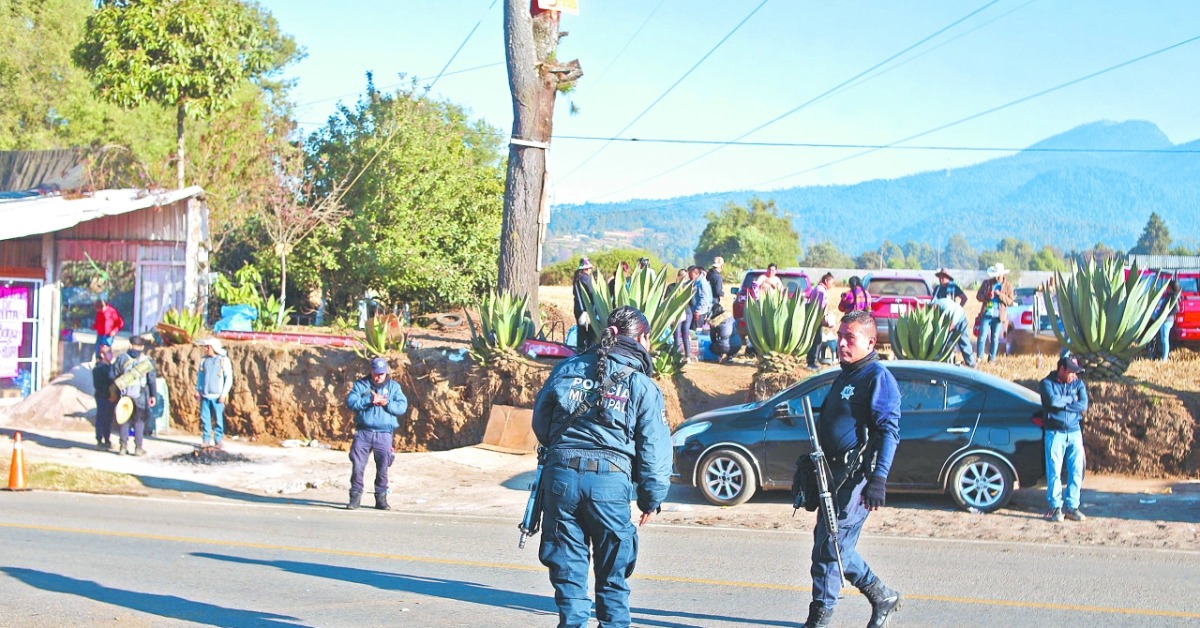
Mexico has averaged roughly one police killing a day in 2026, but the headline number only tells part of the story. A new tally puts Jalisco at the top, yet much of that lead comes from one extraordinary burst of violence in February. The broader picture is more unsettling. The victims include municipal officers, state police, and National Guard members, raising harder questions about how exposed Mexico’s security forces remain, why some states spike suddenly, and what this means for daily life far beyond the front lines.
A grim benchmark early in the year
Mexico has recorded at least 101 killings of public security officers in 2026, a figure that keeps the country near the pace of one officer killed per day. The total covers the period through early April and includes municipal, state, and National Guard personnel. It is not presented as a final or exhaustive official government count. It comes from a long-running media-based registry that tracks reported cases nationwide.
That detail matters. For international readers, the number is best understood as a minimum confirmed tally, not a complete census of every case. Even so, it is large enough to show that attacks on security personnel remain a central part of Mexico’s violence problem. The total is lower than at the same point in 2025, when the count reached 126, but the decline does not alter the broader pattern. Officers are still being killed at a pace that would alarm any country.
Why Jalisco is leading the country
The state drawing the most attention is Jalisco, which has 29 cases in the current tally. It is followed by Sinaloa, Morelos, the State of Mexico, and Guanajuato. At first glance, that may suggest a steady and broad rise in violence against police inside Jalisco across the whole year. The reality is more concentrated.
Much of Jalisco’s total was shaped by a single episode on February 22, when a federal operation in the Tapalpa area triggered violent retaliation. In the attacks that followed, 25 National Guard members were killed, along with a custodial officer and an investigator from the Jalisco prosecutor’s office. That one day reshaped the national ranking. It helps explain why Jalisco sits at the top, even though the wider national problem extends well beyond one state.
For readers in Puerto Vallarta and elsewhere in western Mexico, that background is important. Jalisco’s ranking is not only about one city or one corridor. It reflects how quickly a high-impact security operation can escalate into a broader regional crisis. In February, the unrest reached multiple parts of the state and disrupted movement in areas far from the original operation.
What the count says about Mexico’s policing problem
The breakdown of victims adds another layer. Of the 101 officers counted so far this year, 46 were municipal police, 23 were state police, and 32 were National Guard members. That mix is revealing. Municipal officers remain the most exposed because they work closest to street-level conflicts, local patrols, and day-to-day enforcement. They are often the first uniformed presence that residents encounter, and in many parts of Mexico, they operate with fewer resources and weaker institutional support.
At the same time, the large number of National Guard deaths shows that federal deployments do not remove the danger. They can intensify it. When the federal government hits organized crime structures, retaliation can be swift, concentrated, and deadly. That is one reason police killings in Mexico do not always move in a straight line. A state can jump in the rankings because of a single large attack, while another accumulates losses through smaller incidents spread across weeks.
This is also where the story becomes bigger than a single tally. Civil society researchers who monitor policing in Mexico have argued for years that local forces face institutional abandonment, budget stagnation, and the continued advance of militarization. In plain terms, many local police departments remain fragile, while federal forces are increasingly used to confront more powerful criminal groups. That combination leaves officers highly exposed at both levels.
Why the number still matters even if it is lower than 2025
A lower figure than last year may sound like an improvement, but the longer view is less reassuring. The same registry recorded 348 police killings in 2025 and 320 in 2024. That means the current year is unfolding inside a much larger pattern of sustained violence against the people tasked with maintaining public order. The problem is not new, and it has not been confined to one administration or one state.
What changes from year to year is the map. In 2025, the most dangerous states for police were Sinaloa, Guerrero, Guanajuato, Michoacán, and Veracruz. In 2026, Jalisco jumped to the front, largely due to a major burst of violence. That shift is important because it shows how quickly the geography of risk can change when criminal groups respond to a federal operation or a local conflict intensifies.
What this means for foreigners living in Mexico
For expats, the headline is not only a national security statistic. It also speaks to the strength, reach, and vulnerability of the institutions that handle emergencies, patrol roads, and respond when violence erupts. That does not mean daily life is equally dangerous across Mexico, or that every place with a high-profile incident becomes uniformly unsafe. Risk in Mexico remains uneven and local. A tourist city can look calm while a state-level security struggle is unfolding elsewhere in the same region.
Still, attacks on police matter because they test the state’s ability to keep order when pressure rises. They also show how organized crime can target the very institutions meant to contain it. When officers themselves become recurring victims, the effect reaches beyond the families and agencies directly involved. It affects public confidence, emergency response, road safety, and the sense of how resilient the local authority really is.
The clearest takeaway is simple. Mexico’s police forces remain under intense pressure, and the cost is not abstract. This year’s toll is lower than last year’s, but it remains high enough to show that the country has not solved one of its most persistent security failures. Jalisco may lead the count today, but the deeper story is national. The people asked to confront violence are still being killed with alarming regularity.
Deep Dive:
In Mexico, cartels are hunting down police at their homes
While not a hotbed of violence, Puerto Vallarta keeps getting pulled into cartel wars
CJNG paid police unit created by Jalisco Governor
Puerto Vallarta Government Urges Residents to Take Shelter After Violent Attack