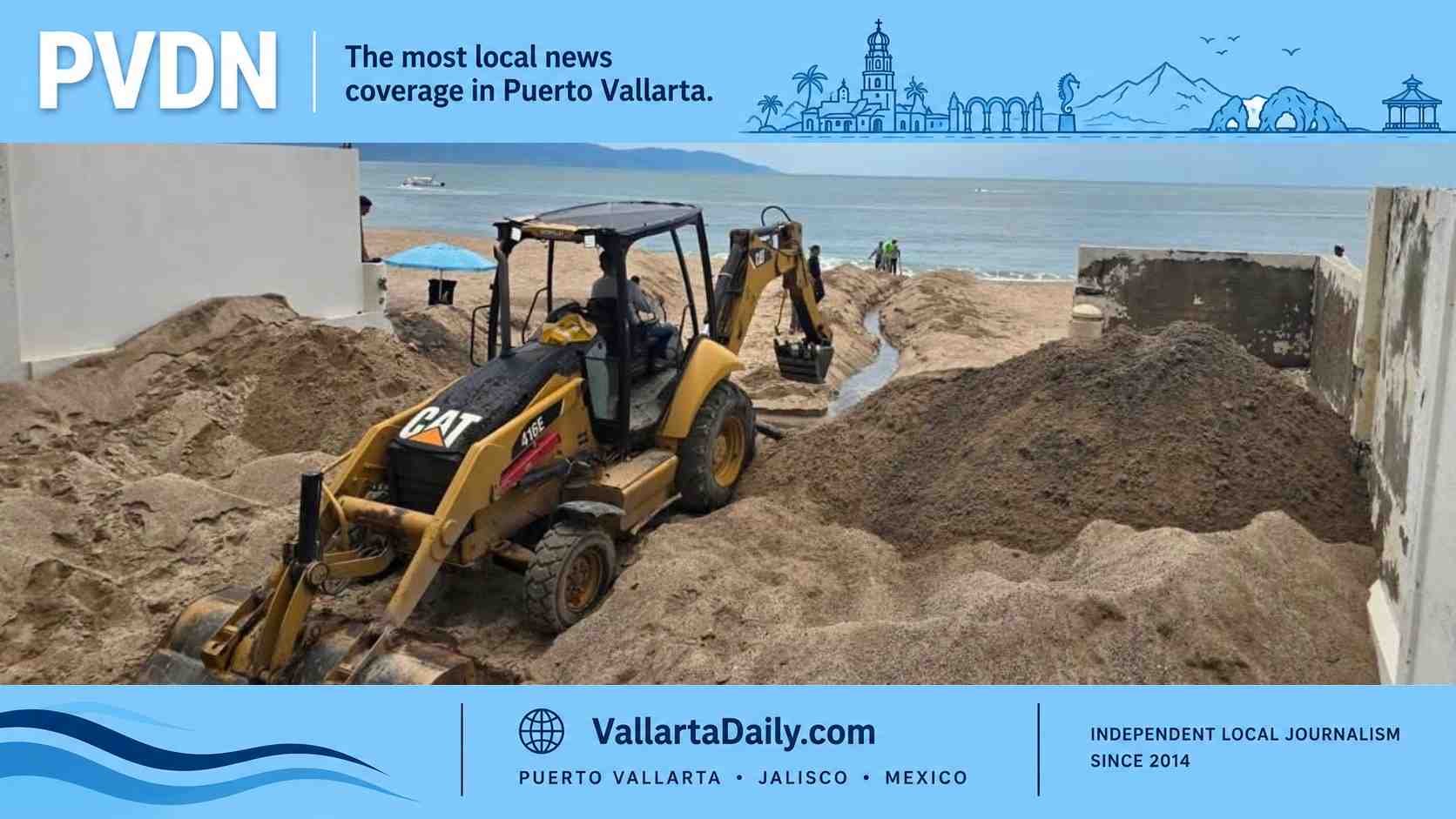
Puerto Vallarta, Jalisco, July 10, 2026 – One beach in Puerto Vallarta should be avoided for swimming and other activities involving direct contact with the water after federal testing found it exceeded Mexico’s microbiological limit during the summer vacation period.
Cuale Beach beside the mouth of the Río Cuale was the only monitored site in Jalisco classified as unsuitable for recreational use in the latest Cofepris summer water-quality report.
The warning applies specifically to Playa del Cuale, between Centro and the Romantic Zone. It does not refer to Playa Oasis, also known locally as Playa Holi, farther north in the Hotel Zone.
Cofepris collected 2,279 water samples between June 15 and July 1 at 393 monitoring points across Mexico. Of the 289 beaches evaluated, 284 passed, and five failed, giving the country a compliance rate of 98.3%.
Along with Cuale Beach, the beaches classified as unsuitable were Playa de Tijuana in Baja California, Playa Principal in Puerto Escondido, and the José Martí and Tumbao beaches in Veracruz.
The federal announcement did not disclose the exact bacteria count recorded at Cuale. It confirmed only that the result exceeded 200 enterococci per 100 milliliters of water, the maximum used by Mexican health authorities to classify a beach as suitable for direct-contact recreation.
Enterococci are used as indicators of fecal contamination in marine water. They do not identify the specific source of the pollution or prove that every person entering the water will become ill, but elevated readings indicate a greater possibility that disease-causing organisms are present. The U.S. Environmental Protection Agency also uses enterococci as a primary indicator when evaluating health risks in saltwater recreation areas.
The result marks a sharp change from the monitoring conducted before Easter. Puerto Vallarta and the southern Jalisco coast passed the federal water-quality review in March, when all beaches tested in the area remained below the federal limit.
Cuale also failed the summer review in 2025, when it was one of three Puerto Vallarta beaches classified as unsuitable, along with Mismaloya and Camarones. The city later organized a river and stream cleanup campaign intended to prevent garbage and other material from being carried into the bay.
Its return to the federal warning list shows how quickly conditions can change around a river mouth, particularly after the rainy season begins. Stormwater can carry sediment, animal waste, garbage and contaminants from streets and upstream communities into coastal water.
Cofepris has not identified a specific source responsible for the latest reading. The agency said Jalisco health authorities and the local Clean Beaches Committee would conduct sanitation work, investigate potential sources of contamination, and install preventive signs.
SEAPAL separately reported this week that crews repaired a damaged sanitary sewer pipe at the intersection of Morelos and Aldama streets in Centro. The repair announcement was made after the federal sampling period had ended, and neither SEAPAL nor Cofepris has linked the pipe problem to the Cuale result.
The classification concerns swimming, wading and other direct contact with the water. It does not, by itself, prohibit access to the beach, the river island, or surrounding businesses.
Water-quality classifications should also not be confused with Puerto Vallarta’s daily beach flags. Red, yellow and purple flags address immediate conditions such as surf, rip currents and wildlife, while the Cofepris warning concerns bacteria detected through laboratory testing. Several city beaches have faced separate surf and wildlife restrictions this month.
Cofepris did not announce when Cuale Beach will be sampled again. Until a follow-up result returns the beach to suitable status, swimmers should choose another monitored beach and continue checking local flag conditions before entering the water.