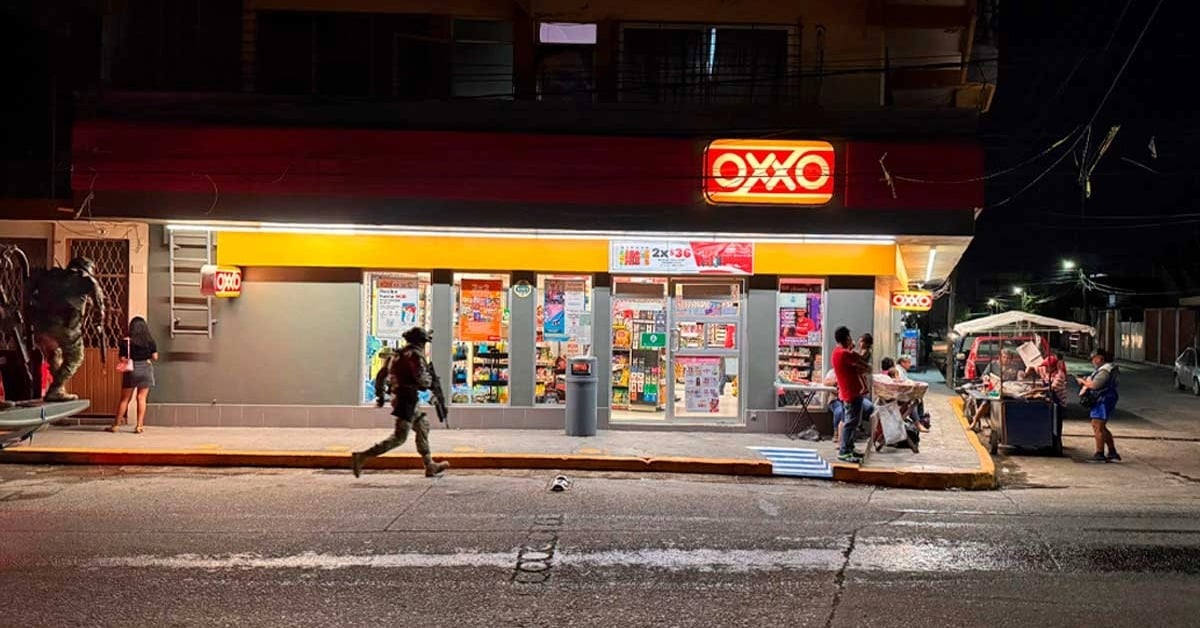
At noon outside a busy Oxxo, the lot runs like a small station. A man in a faded cap steps off the curb and points you toward an opening. He pats the fender with two quick taps, holds the door while you collect your bag, then keeps one eye on the lane so you can back out without a horn battle. His work is not on any receipt. It is a service you feel in minutes saved and dents avoided. People call him many things—viene-viene, acomodador, simply “joven”—but his business is attention. He turns the friction of short stops into something smooth enough to tip. He does it for hours, in the sun that bakes the paint and rain that turns the ramp slick, because the volume here is steady and the math, when the block is hot, can rival formal jobs.
Ask a handful of these helpers what a good month looks like, and you’ll hear a range that sounds like a rumor until you run the numbers. Ten cars an hour, most offering five to ten pesos, eight hours on the curb, twenty-six days if the weather holds. On paper, that lands between roughly 10,400 and 20,800 pesos. The real total swings with payday Fridays, school schedules, and whether construction a block away chokes the flow. One man outside a store on a commuter corridor told us he sometimes doubles back for a second shift when nighttime soccer fills the street. Another said rain kills his tips more than heat; drivers white-knuckle the wheel and stare past him. What remains constant is the principle: speed and calm have value, and this is one of the few corners where you can sell both without a lease.
No one writes down rules for these lots, but everyone acts like there are rules. Helpers stay off the prime stall, wave cars in from the edge, and surrender space when a delivery truck noses in. They do not camp at the doorway because the cashier and the guard don’t like a crowd between the door and the cigarette rack. They don’t argue with the customer who says “no gracias” because the next car might be worth the smile. Guards enforce all of this without a whistle. They care about flow and complaints, not titles and licenses. In the words of one guard in Mexico City who asked not to be named, “If they keep the lot calm and don’t leave trash, they can work. If someone shouts or blocks a stall, I fix it.” Fixing it might be a look, a tap on a window, or a quiet request to move three meters down. “Three meters” is not a law. It is the distance that keeps the scene from boiling over.
Municipal codes exist, and they matter in the background. Some corners require vending permits; others don’t. Enforcement shifts with elections, neighborhood politics, and who complains the loudest. The helpers know this better than any lawyer because their office is the curb. They tune themselves to what the block will allow. If a school sits across the street, they avoid the noon crush and return for the late afternoon rush. If a new manager at the store wants a cleaner frame on the security cameras, they drift to the hedge line and wave from there. If an inspector shows up with a clipboard, they fade for a day and let the dust settle. It is not a loophole so much as a living truce, and the truce—like all truces—depends on behavior.
Sundown on the Oxxo economy
By late afternoon, the shadows get longer and the economics tilt. The helpers finish their last runs, count the day’s coins, and hand the stage to a different cast. The glow under the canopy deepens, the hum picks up, and the lot becomes a porch for people who work odd hours or stitch income together from three different apps. The store is still selling coffee and airtime, but the valuable thing has changed. After dark, the lot sells proximity.
Stand there at one in the morning and let your eyes adjust. The first thing you notice is that it’s never empty. Motorbikes angle into a row near the shrubs, delivery boxes strapped down with elastic that has seen too many nights. A sedan idles with hazards blinking, a driver scrolling between rides and group chats, using the lot as a private dispatch. A woman wheels a cargo tricycle to a patch of steady light and starts warming tamales inside a Styrofoam cooler. None of them has a contract with Oxxo. All of them will buy a bottle of water, ask to use the bathroom, and move along if the guard lifts his chin. The choreography looks improvised. Watch long enough and you’ll realize it’s a routine.
Different City – Different Vibe
Monterrey’s version feels industrial. The neighborhoods that ring the city’s logistics corridors spin up a side channel after midnight. Vans pull in nose-to-nose and shuffle boxes between crews. A man with a tool roll checks a loose battery terminal with a twist and fixes a squealing wiper blade, charging just enough to be cheaper than a morning appointment. He parks on the far edge and keeps his light low. His work is speed, and speed is money for people who cannot afford to waste an hour in daylight. From time to time, ride-share drivers form a loose line just to talk. They refresh water bottles, compare airport waits, and swap the kind of real-time gossip apps don’t tell you—where the police are waving people through, why a sudden pause near the stadium usually means a private event is emptying.
Mérida runs on food. The night air clings to your shirt, and nobody wants a meal inside. After ten, small kitchens on wheels appear where the curb is widest and the light reaches without blinding. Salbutes sizzle; a thermos of horchata sweats under a towel. Moto-couriers time their routes to pass through here because it’s a place to eat in under three minutes, with a trash can close by and a bathroom not far. The guard does not measure the menu. He measures the noise and the line. If the queue backs into the lane or the speaker gets bold, he raises a hand and the griddle shifts a meter. Families come, a few at a time, and the lot feels like a porch borrowed from a house that doesn’t exist on this block anymore.
Mexico City multiplies all of this. Scale pulls the lot in a dozen directions at once. In dense neighborhoods, the stalls become short-term stands for taxis between trips. A delivery biker plugs a phone into a power bank and watches his screen like a heart monitor. A driver ends an app trip and—if he knows the guard and the passenger—negotiates the next ride in cash to cover the dead time between surges. Security matters more here, not because the lot is dangerous but because everything near it is a little closer to the edge. The guard is not a bouncer. He is a conductor. He will wave away knock-off accessory sellers who shout at customers because shouting starts complaints. He will ignore the woman who hands out atole to drivers because the line she creates is quiet and brief, and nobody litters. The test is simple: do you add order or chaos? Add order, and you become part of the furniture. Add chaos, and you move.
Parking lot services
A catalog of services reveals itself over a week of watching. There is always someone with jumper cables, and he appears out of nowhere the moment a headlight goes dim with the engine off. Someone can open a locked car without scratching the paint; he does it in under a minute and vanishes like a stagehand, because bragging invites attention. Heat waves bring a brisk, unadvertised trade in bagged ice and fans that fit in a cup holder. Storm nights sell umbrellas, trash bags, and plastic ponchos. None of this runs through the Oxxo till. Yet the store benefits from constant feet on the ground, and the neighborhood gets a 24-hour valve it cannot find elsewhere. The lot is infrastructure, and people who need money know how to use infrastructure.
It would be easy to frame this as a romantic fix for city problems or, on the other end, as a nuisance that siphons money from formal shops. Neither picture is honest on its own. Formal businesses pay rent and taxes and watch potential customers peel off to curbside stands; that is a real loss. But the alternative to a late-night jump-start is not a tax-paying midnight auto shop. The alternative is a stranded motorist. Very few formal businesses want to build their day around five-minute favors at two in the morning. These lots fill a gap because the cost of entry is low and the demand never fully sleeps.
Taking risks
Risk sits in the middle of the story, and it cuts in uneven slices. Vendors risk a complaint or a sweep; a white-and-blue pickup and a clipboard can flip a good night into a warning and a loss. Drivers risk platform terms when they stitch cash rides into their app routes, and some choose not to risk it at all. Guards risk a scolding if a supervisor wants a cleaner scene on camera or if a neighbor calls City Hall. Everyone calibrates. Work small. Keep it tidy. Move when you’re asked. Trust builds in a language of glances, and once it’s there, the block regulates itself more often than not.
The money is hard to measure by design. A tamalera who sells fifty plates after the bars close might bring home more than an early shift at a chain restaurant, but only if the weather holds and the guard is friendly and the taxi stand across the street doesn’t pick a fight about where the line should be. A helper on the day shift may hit 20,000 pesos in December and struggle to reach half of that in March when school holidays gut the morning rush. A fixer with a battery pack might make nothing for an hour and then land three jobs in ten minutes. This is not a salary. It is a margin, and margins live or die on volume and timing.
When rules tighten—and they do—the lot changes flavor more than function. Food moves to a side street, and service trades rise in the gap. Drivers scatter to the shadow of a tree a block away. People still meet under the light because the light is predictable, and predictability is the scarcest thing after midnight. The only durable way to erase this economy would be to make formal, low-cost, late-hour services, easy and close, in every neighborhood. Cities talk about it. Budgets rarely match the talk. Until they do, the rectangle of asphalt under a red-and-yellow sign will keep doing what it already does: carrying needs from one hour to the next without a headline or a receipt.
The connecting threads
The thread between day and night is etiquette. The daytime helper who reads the lane and waves you clear is selling exactly what the midnight jumper-cable guy sells: calm. The difference is light and soundtrack. One works to the beat of delivery trucks and school bells, the other to a cycle of phone pings and quiet music from a tricycle speaker that never gets loud enough to draw a complaint. Both rely on the same two passcodes—be useful, be brief—and both disappear the moment those codes stop working.
If you want to learn a lot about a neighborhood without asking a question, spend an evening at its Oxxo and pay attention to what happens at the edges. Watch who greets the guard with a first-name nod. Notice the far stall that always seems empty; that is the staging ground for drivers between runs. See where people cluster just outside the cone of the camera; that is the shadow counter where small trades take place. Count how often someone arrives with a problem and leaves with it solved in less time than it would take to dial a hotline. None of this is on the official city map. But if you erased it, you’d notice the holes in the map before morning.