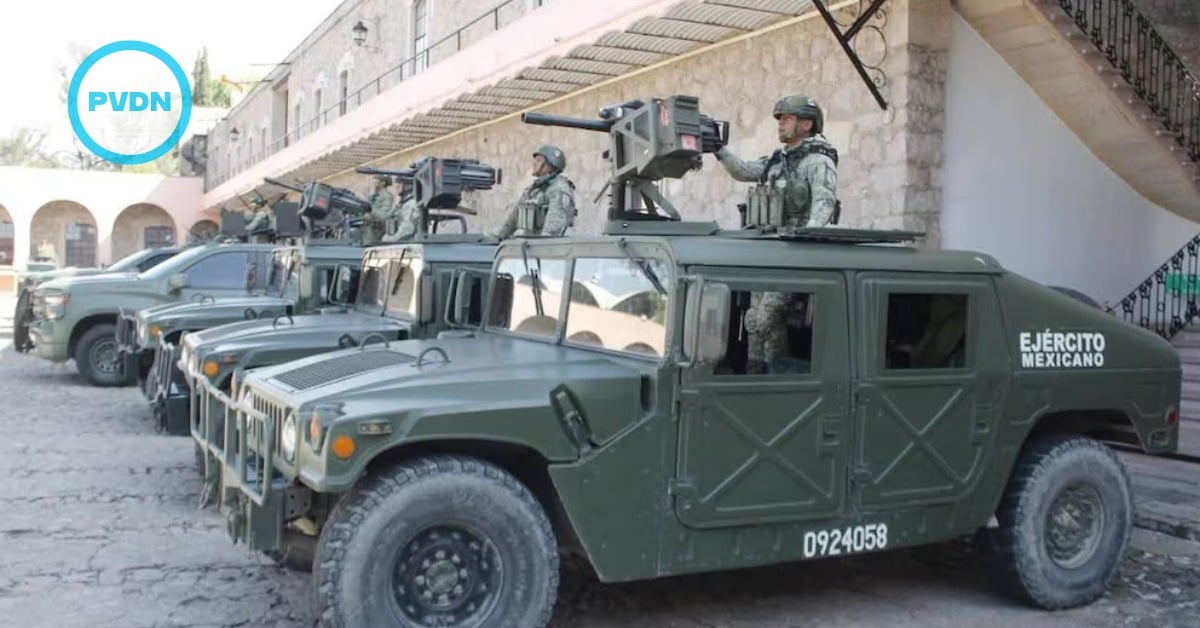
The convoys started arriving before noon on Monday, November 10, 2025. Army and National Guard units fanned out from Morelia’s 21st Military Zone toward violence-stung corridors in Tierra Caliente and the Pacific coast. Federal officials say more than 10,500 personnel make up the first wave, the muscle of a broader plan to pull Michoacán back from a long, bruising war with organized crime.
The deployment follows a grim trigger: the November 1 assassination of Uruapan Mayor Carlos Manzo, whose killing intensified pressure on the new administration to act. The government responded with the “Plan Michoacán for Peace and Justice,” pairing a large security operation with public works and social spending meant to stabilize daily life.
Plan Paricutin Michoacan
Inside that umbrella sits the military’s operational push, known as Plan Paricutín, led by Defense Secretary Ricardo Trevilla. The mission set is explicit—“seal” the state’s borders and choke off the movement of armed groups, while targeting labs, training camps, and extortion rackets that have bled farmers and businesses for years. Officials describe five helicopters, dozens of drones, anti-drone systems, and more than a thousand vehicles assigned to support the first phase.
By the numbers, Defense says 10,506 soldiers and Guard members are on task, with nearly 1,800 Navy personnel reinforcing port security at Lázaro Cárdenas and coastal municipalities. The early arrivals staged through Morelia on Monday and then pushed toward hot spots where extortion and road blockades have become routine. Authorities argue that closing those arteries—rather than chasing every gunman—will quickly cut the oxygen that cartels rely on.
*** More Mexico News on PVDN ***
The strategy is about more than patrols. The federal plan carries a headline figure of 57 billion pesos, mixing road building with support for health, education, and jobs—an effort to address why criminal economies recruit so easily. The package, presented at the National Palace, lays out a dozen policy “axes” and more than a hundred actions, from infrastructure to social programs, aimed at one and a half million residents.
Context matters. Michoacán’s growers—especially in the lime belt—have faced years of extortion and cargo theft, and many now demand sustained protection, not short spurts. Recent murders, including Manzo and agribusiness leader Bernardo Bravo, underscored the stakes and the reach of groups linked by authorities to the Jalisco New Generation Cartel. The government says the new plan is built with local input from indigenous communities and producers who know the terrain.
Residents have heard promises before. Michoacán has cycled through major security resets since 2006, each framed as the one that would bend the curve. Advocates warn that any surge that leans too hard on militarization risks repeating past outcomes unless prosecutors build cases, judges can withstand pressure, and victims see real repair. A prominent critique published Tuesday argued the plan should add clearer paths for restorative justice, mental-health support, and guarantees of non-repetition for communities battered by displacement.
On the ground, the first test is whether the “seal” holds. That means fewer roadblocks, safer harvests, and the confidence to move goods after dark. It also means dismantling the extortion networks that have become a shadow tax on local life—from packing houses to buses to corner stores. The military’s presence can open space. But prosecutors will have to fill it with arrests that stick, while state and municipal police regain credibility they have often lost.
The administration pitches accountability as a core promise. Officials emphasized that progress would be tracked from the center, and that both the security surge and the social investments would be measured against crime trends and community feedback. The president has pledged to follow the operation personally, a signal that Michoacán will stay on the front burner in the weeks ahead.
If the plan lands, readers in Uruapan and Apatzingán should feel it quickly: fewer shakedowns, faster highway trips, a harvest that doesn’t carry a toll. If it doesn’t, Michoacán risks another turn of the cycle—short-term quiet, then a familiar return to sirens. For now, the troops are here, the helicopters are in the air, and the state waits to see whether this version of a long-running promise finally holds.