Whale watching is part of winter life in Puerto Vallarta and Riviera Nayarit, but the rules are not optional. Profepa has launched stepped-up patrols in the Bay of Banderas and is boarding boats to confirm permits and safe operating practices. Inspectors are focusing on the small details that change the experience on the water: how close vessels get, how fast they move, and how long they linger around a pod. For tour-goers, the message is simple: choose authorized operators and expect stricter oversight.
Profepa patrols begin on the water
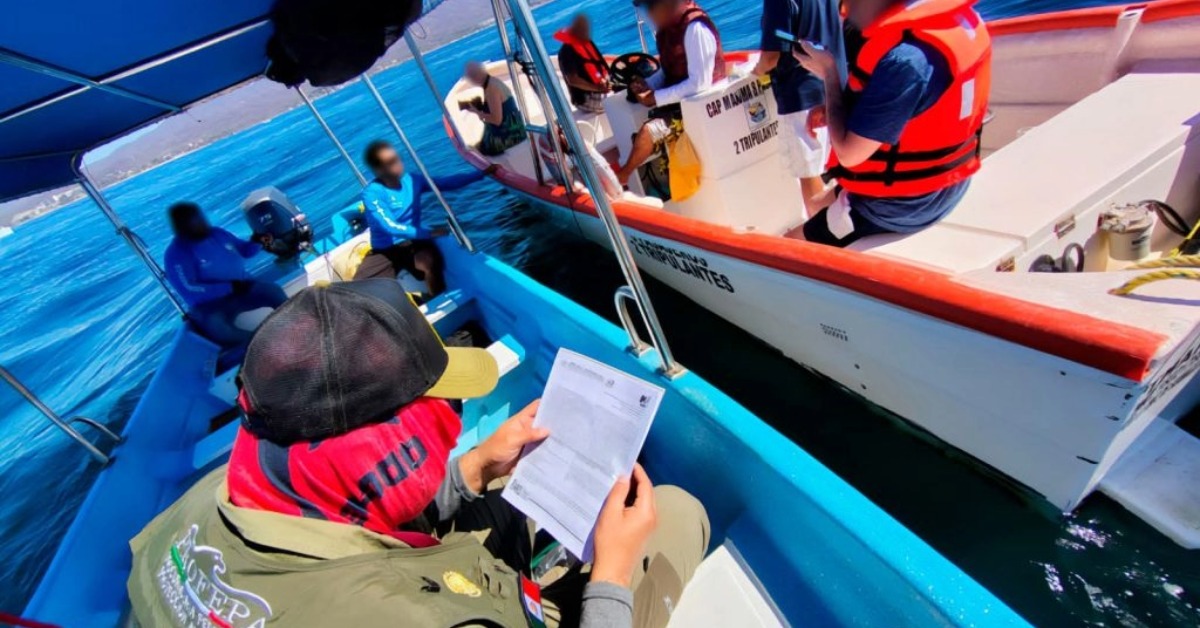
Profepa has begun a special inspection and patrol operation in Bahía de Banderas. The aim is simple: keep whale-watching boats inside Mexico’s rules during peak season. Inspectors are stopping vessels at sea. They review permits and watch how captains maneuver when whales surface nearby. In the first sweep, officials inspected 17 vessels. The group included tour boats and private craft operating inside the bay. Inspectors checked for a current authorization issued by Semarnat’s wildlife office. They also assessed compliance with the standard’s technical requirements. Officers gave on-the-spot reminders about distance and speed limits. Profepa describes the operation as part of ongoing protection for cetaceans and their habitat. Authorities say the focus is on preventing stress, harassment, and injury. That risk rises during breeding, nursing, and feeding. For the region, the patrols matter on both coasts of the bay. Tours depart from Puerto Vallarta and from Riviera Nayarit almost every day. Profepa says the patrols will continue through the season.
What the whale-watching standard requires
The rules come from NOM-131-SEMARNAT-2010. It governs whale observation in federal waters. The standard sets limits that inspectors can verify quickly. When whales are present, boats must travel at less than 5 knots. On entry to the observation zone, they must slow to 2 knots. Crews must avoid sudden acceleration or hard turns. Boats should keep engines in neutral when whales stop moving. Only four boats may stay with the same whale or group. Any additional vessel must wait at 240 meters. Minimum observation distance depends on boat size and species. For many whales in the bay, the standard sets 60 meters for small craft. It sets 80 meters as the limit for larger vessels. Captains should approach from the rear-side on a diagonal. Head-on approaches are not allowed. A boat may remain with the same animals for 30 minutes. Operators should brief passengers on conduct before each trip. If whales show evasive swimming or longer dives, boats should back off.
What visitors can expect on tours
These patrols can affect the feel of a tour. Boats may be stopped for quick checks. A compliant operator should carry the original Semarnat authorization. It should also display the required banderola during the trip. Passengers should hear a short safety and conduct briefing. That expectation is built into the standard. If inspectors board mid-trip, delays are possible. It is usually a routine stop. For visitors, the best filter is how an operator describes the experience. Responsible companies avoid promises of “up close” encounters. They explain that whales set the pace. They also manage expectations when the bay is crowded. A captain who chases repeated breaches may be pushing limits. The same is true for boats that box in a whale’s route. Crowding a mother and calf is another warning sign. If you notice that pattern, ask the crew to increase the distance. You can also choose another operator next time.
Bahía de Banderas draws thousands of visitors each winter. The main attraction is the humpback whales that migrate here to mate and calve. More boats can mean more noise and tighter approaches. That can disrupt resting and nursing behavior. It can also increase collision risk in busy lanes. The standard aims to keep encounters predictable. It sets a ceiling on speed, time, and crowding. Enforcement also protects tourists. A slower approach reduces the chance of sudden turns or hard stops. For local businesses, consistent checks can level the competition. Operators who follow NOM-131 are not penalized for playing by the rules. For residents and expats, the stakes are practical too. If noncompliance grows, regulators can tighten access or shorten seasons. Profepa says patrols will continue through the season. It says checks will cover private boats and tour operators alike. That matters for repeat visitors. It also supports the bay’s reputation as a regulated wildlife destination.
With information from Quadratín Jalisco, PROFEPA, NOM-131-SEMARNAT-2010 (PDF), Bahía de Banderas Turismo