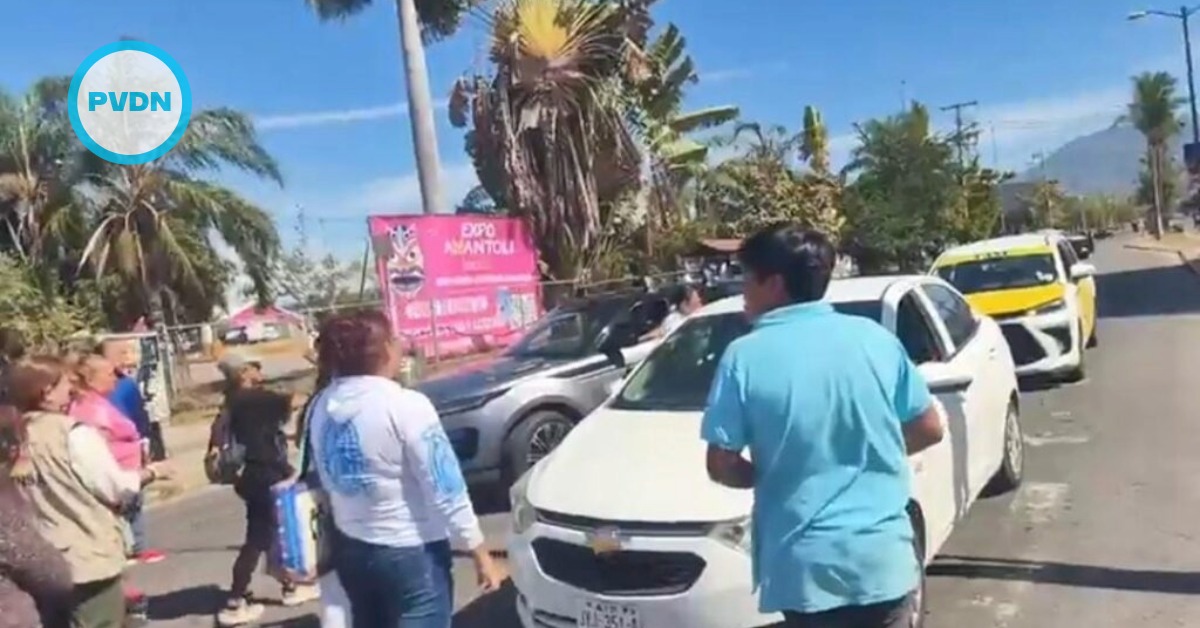
At first, it looked like a typical winter-season bottleneck. Then the cars stopped, and the north side of Puerto Vallarta became a maze of idling engines and people walking. Protesters blocked Francisco Medina Ascencio, and the spillover swallowed the side streets locals rely on to escape traffic. If you had errands, a shift change, or a flight to catch, the city suddenly felt much smaller. The blockade is tied to the case of Clarisa Rodríguez and is forcing officials to respond publicly.
Gridlock on the north side
Puerto Vallarta spent Friday morning in gridlock after protesters shut down Francisco Medina Ascencio Boulevard. It is the city’s main north–south artery, so the impact spread fast. Drivers reported a standstill through La Aurora, Fluvial Vallarta, and El Pitillal. Cars inched forward, then stopped again, for long stretches. Many tried to escape via side streets, but the usual back routes filled up too. Congestion spilled onto Avenida México, Avenida Universo, and Avenida Politécnico Nacional. Los Tules, María Montessori, and Grandes Lagos also turned into parking lots. Junctions near Puerto Mágico and the Sam’s Club intersection became tight choke points. Public buses, taxis and ride-hailing cars sat in the same lines. At several points, protesters let emergency vehicles pass, but regular traffic stayed frozen. People on foot weaved between idling cars to reach work or appointments. The protest began around 9 a.m. and, at times, blocked every lane. Some commuters turned back, while travelers walked luggage toward the airport and cruise terminal.
Why protesters took the boulevard
The demonstration centers on Clarisa Rodríguez, a young mother whose death shook the city. She was seriously injured in a crash on January 12 on Francisco Medina Ascencio. Her family says she was heading to work when another vehicle struck her. She spent nearly two weeks in the hospital and died on January 27. Relatives say they still have basic questions about the first response and the evidence trail. They want the driver held criminally responsible, and they want officials’ actions reviewed. A key complaint focuses on traffic officers who arrived at the scene. The family alleges that the driver was not immediately presented to prosecutors, as required by procedure. They fear that the delay gave room for stories to change and proof to fade. Friday’s march drew friends, neighbors, and other residents who see the case as a test. Many demanded to speak with municipal leaders and state investigators. Some also insisted that Mayor Luis Ernesto Munguía González appear in person.
What investigators say now
Officials say the criminal case and a review of official conduct are moving on parallel tracks. State prosecutors have said the suspected driver has been located in Puerto Vallarta. They say the case file has been judicialized, and a judge must set an imputation hearing. Authorities also say there was no arrest at the crash scene because the driver needed hospital care. Separately, the Jalisco anti-corruption prosecutor opened an investigation into possible misconduct by public servants. His focus includes municipal police and mobility personnel who responded that day. Gerardo Ignacio de la Cruz Tovar said his office received a complaint on January 22. He stressed that his unit is not investigating the crash itself, but possible irregular actions afterward. He urged witnesses to share testimony, video, or other evidence that can clarify what happened. Clarisa’s husband, Diego Guadiana Palomera, has also asked the public for recordings. He says they could help trace the vehicle’s route and support questions about intoxication.
What to know if you need to get around
For residents, the bigger story is how fragile Vallarta’s road network can be. When Medina Ascencio closes, a ten-minute trip can turn into an hour. That matters for expats who have appointments across town or deadlines to meet. Traffic can shift fast as marchers move, or allow brief passages. If you must travel, assume delays and check conditions before leaving home. Flights and cruise departures are the most time-sensitive, so build a buffer. In some cases, getting dropped off beyond the closure may be quicker than sitting in traffic. Public buses, taxis, and ride-hailing cars face the same jams, and routes may be rerouted. If you are hosting visitors, warn them in advance, as drivers may cancel or arrive late. Protesters have sometimes let emergency trips through, but access depends on the moment. By late morning, one direction reopened briefly, yet backups still covered the north side. Until the protest disperses, avoid crossing the boulevard unless it is truly necessary.
With information from Tribuna de la Bahía, Notigram, Telediario, Quadratín Jalisco