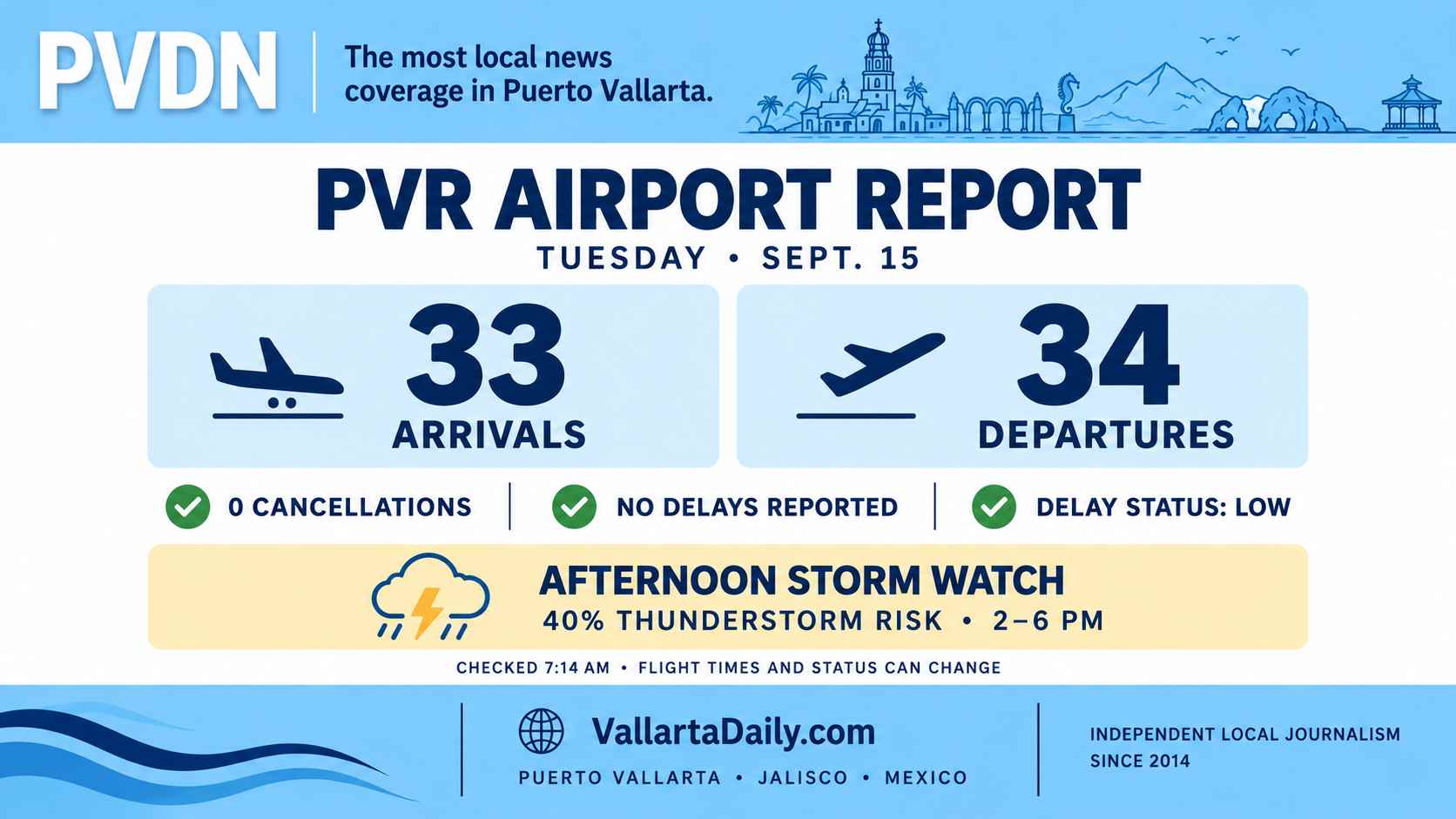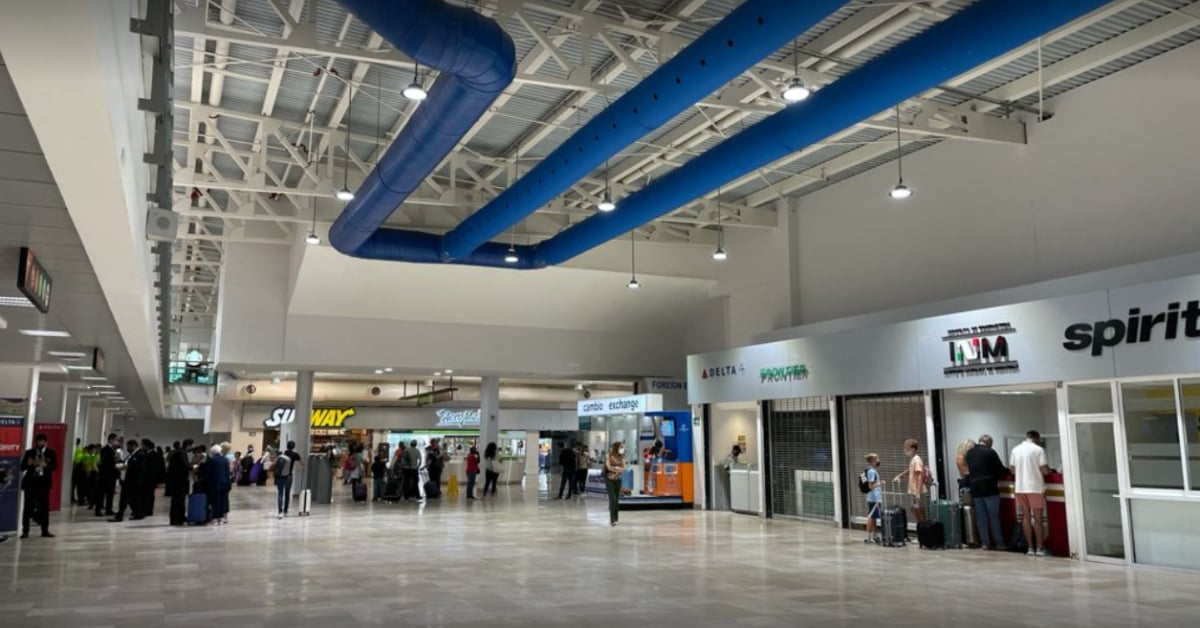
Passengers at Puerto Vallarta’s Gustavo Díaz Ordaz International Airport started the day with a real-world safety test. A full-scale drill moved people out of public areas and pushed the team to practice behind the scenes in the baggage system, while flights continued on schedule. Staff guided travelers and explained what was happening to minimize confusion. Airport leaders say exercises like this sharpen response times and coordination and help build a prevention culture for a terminal that now handles millions of passengers each year.
The airport is Puerto Vallarta’s front door. Our Airport Hub keeps the big picture, the latest changes, and our best reporting in one place.
A full-scale emergency simulation took place Thursday morning at Gustavo Díaz Ordaz International Airport. The airport temporarily cleared public zones, including the mezzanine and an outpatient clinic, while the core exercise unfolded inside an internal area known as BHS, which is closed to passengers. Operations continued, and staff informed travelers on site to avoid delays or confusion.
Airport officials thanked passengers for their patience and emphasized the importance of these run-throughs: they identify bottlenecks, enhance coordination across teams, and provide managers with fresh data on response times. Local outlets reported that no interruptions to flight schedules occurred during the exercise.
What the BHS focus tells us
The airport centered the drill in the BHS—the baggage handling system—where conveyor lines, scanners, and sorting equipment move checked bags between check-in, security, and aircraft. It is a high-risk, high-throughput environment that most travelers never see. Industry guidance describes BHS as the backbone of airport operations for routing and screening luggage end-to-end. Testing here helps teams practice alarms, access controls, and emergency stops without exposing passengers to hazards.
Required by global standards
The International Civil Aviation Organization rules require full-scale airport emergency exercises at least every two years, with partial drills in between to address any gaps. By running a live scenario, Puerto Vallarta aligns with those standards and gathers evidence of readiness for regulators and insurers. These exercises also validate communication lines with external responders and the command structure used during a real incident.
Why it matters for travelers and the region
Puerto Vallarta’s airport has grown into one of Mexico’s busiest gateways. It closed 2024 with a record of about 6.8 million passengers, according to reporting that cites Grupo Aeroportuario del Pacífico’s traffic figures. Growth raises the stakes for smooth evacuations, rapid triage areas, and clear wayfinding when alarms sound. Regular drills reassure travelers and give frontline staff the muscle memory to keep people moving and flights operating when every minute counts.
Communication on the day
The airport advised the public about a real-scale drill and reminded travelers that staff would be on hand to guide them. Transparent communication before and during an exercise reduces stress in terminals and keeps queues under control—an approach consistent with best practice at major Mexican airports during similar drills.
[vd_follow_combo category_slug=”puerto-vallarta-news” tag_slug=”puerto-vallarta-airport” label_follow=”Follow PVR Airport News”]