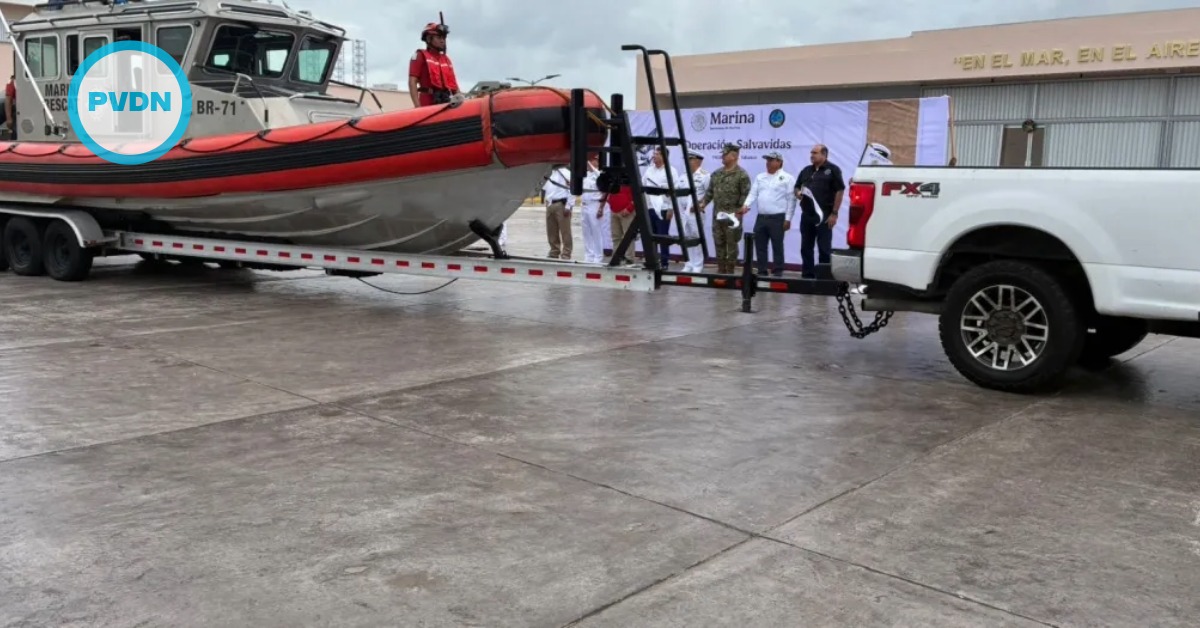
Mexico’s Navy launches Operativo Salvavidas Invierno 2025 for Vallarta, Cabo Corrientes, and Bahía de Banderas from Dec 19 to Jan 9.
You know the feeling. The sun’s out, the water looks harmless, and the beach is doing its best impression of a postcard.
Then someone gets pulled under, or swept sideways, or simply can’t find their footing. It happens fast. And when it happens, it’s not just “a scary moment.” It’s a whole chain reaction. Kids crying. Strangers sprinting. Someone yelling for help in a language nobody nearby speaks.
That’s why Vallarta beach safety gets treated like a real operation every winter, not a casual reminder.
Mexico’s Navy has launched its seasonal beach safety deployment for the Puerto Vallarta coast and nearby areas, timed for the busiest stretch of the holiday travel season. The kickoff was held on December 17, with the operation running from December 19, 2025, through January 9, 2026.
The stretch of coast this operation covers
This winter deployment focuses on a particular stretch of shoreline that functions as a single ecosystem, even though it crosses state lines.
On the Jalisco side, it covers Puerto Vallarta and Cabo Corrientes. On the Nayarit side, it includes Bahía de Banderas. It’s the wider Vallarta Bay area and the neighboring coast where visitors bounce between beaches, boat tours, and day trips without thinking twice about jurisdictional boundaries.
That cross-border piece matters. When an emergency happens on the water, the ocean doesn’t care what side you launched from. What you want, in that moment, is coordination that doesn’t stall because someone’s “not responsible” for that patch of sea.
Officials from various levels of government joined the launch, along with civil protection representatives from the municipalities within the coverage area. The message was simple. Work together, move faster, and keep people safe during the holiday rush.
What “winter patrols” actually means on the sand
If you’re picturing a dramatic rescue scene every day, that’s not the point. The best rescue is the one that never becomes necessary.
This kind of operation is built around prevention, visibility, and quick response. Expect to see more active monitoring along busy beaches and coastal zones. You may notice personnel posted in strategic spots, watching the water the way lifeguards do, but with broader coordination and support. You’ll also see more patrol movement along the shoreline, not because something is wrong, but because the presence itself changes behavior.
And if something does go wrong, the whole setup is designed to shorten the time between “someone noticed” and “someone trained is already moving.”
This deployment operates under the Navy’s broader civil support framework, which assists the public during emergencies and high-risk periods. In the context of a holiday beach season, that translates into surveillance, preventive guidance, and help when someone needs assistance in the water or on the shore.
The part most people ignore until it’s too late
Let’s talk about the flags.
If you’ve lived in Mexico for a while, you’ve probably seen this play out. A red flag goes up. A few people hesitate. Then someone shrugs and walks in anyway because the surface looks calm.
Here’s the uncomfortable truth. The most dangerous water often looks normal. The risk isn’t always the waves you can see. It’s the pull you can’t.
Beach warning flags are meant to simplify a complicated call about surf and currents. Green signals conditions are generally suitable for swimming. Yellow signals caution because currents may be stronger, conditions may be changing, or the weather could shift. Red means stay out of the water.
It’s not a suggestion. It’s not a “locals only” test. It’s a safety system built around recurring patterns.
If you take one thing from this, make it this. Don’t bargain with the ocean because you’re on vacation.
Why this matters even if you feel like a Vallarta veteran
Expats tend to fall into two camps. Either you’re extra cautious because you’ve seen too much, or you’re relaxed because you’ve been here long enough to feel at home.
Both mindsets can get you in trouble.
Familiarity is tricky. You start treating the beach like your neighborhood park. You assume you’ll “feel it out” once you’re in the water. You tell visiting friends, “It’s fine,” because it was fine last weekend.
But winter on the Pacific can shift quickly. Holiday crowds also change the math. More swimmers means more chances for someone to misjudge the water, panic, or try to help in a way that puts two people at risk instead of one.
This operation isn’t just for tourists who don’t know better. It’s also for the people who think they do.
And if you’ve got visitors in town, this is your moment to be the calm, slightly annoying voice of reason. The one who says, “Let’s stay where we can stand,” or “Let’s wait and see what the flag does,” or “Let’s pick a beach day when the sea isn’t trying to prove a point.”
What a “safe” beach day looks like in real life
A safe beach day isn’t the one where nothing happens. It’s the one where you never give the day a chance to turn.
It looks like watching the water for a few minutes before you go in, not just the first wave. It looks like keeping alcohol and deep water separated, even if that’s not the vibe you came for. It looks like staying close enough to the shore that you can stand up if you need to, and keeping kids within arm’s reach, not “somewhere over there.”
It also looks like accepting help when it’s offered. If personnel tell you to move, to get out, or to stop doing the thing you’re doing, they’re not trying to ruin your afternoon. They’re trying to keep you from being the story everyone talks about later.
Between December 19 and January 9, beachgoers along Puerto Vallarta, Cabo Corrientes, and Bahía de Banderas should expect a more active safety presence designed to prevent accidents and respond fast when prevention isn’t enough.