Puerto Vallarta crocodile sighting saw a 3.7‑meter reptile swim near vacationers, leading lifeguards and wildlife teams to act fast and move the animal to a safe habitat.
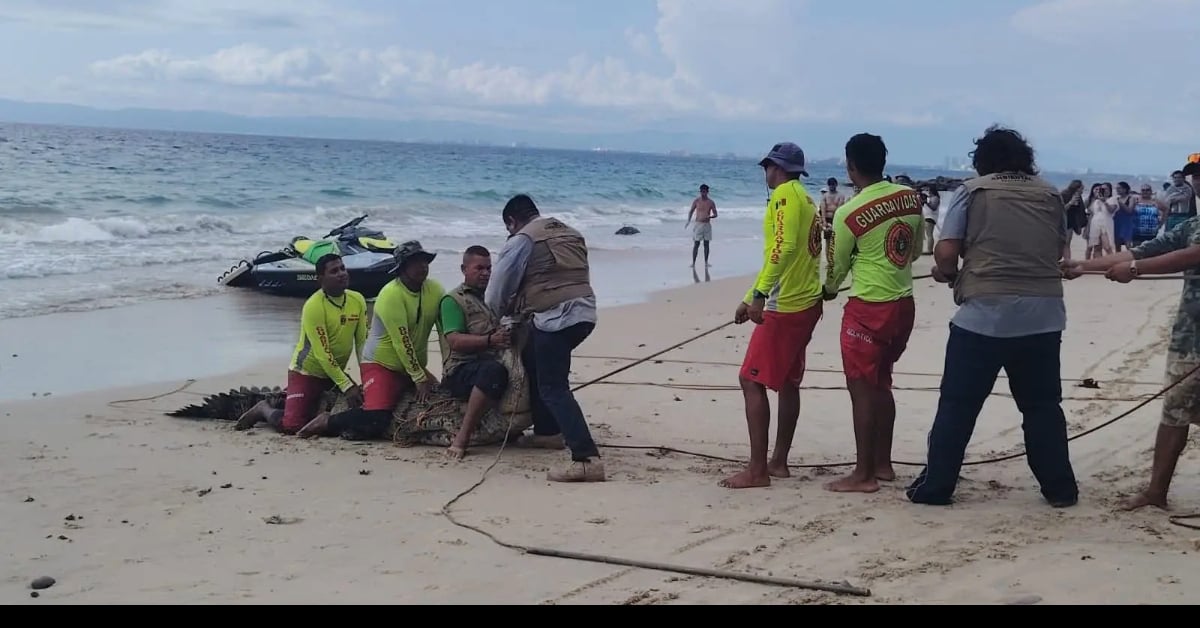
Puerto Vallarta, Jalisco – On Monday, July 14, 2025, beachgoers on Puerto Vallarta’s southern shore spotted a large crocodile swimming just meters from the sand. The 3.7‑meter reptile glided through clear water at a busy tourist spot, and visitors watched in shock as it passed close to swimmers and sunbathers. Although no one got hurt, the sight raised alarm and people hurried to alert local staff.
Within minutes, six lifeguards from the city’s water rescue unit launched their response. They boarded the B43 marine vessel and used the ZF128 jet ski to approach the crocodile carefully. Working in unison, they guided the animal toward a shallow cove where they could secure it safely. By acting fast, they prevented any risk to the public.
The crew used wildlife‑capture nets and soft restraints. At no point did they harm the crocodile. After securing its jaws with gentle wraps, they lifted it onto a flat platform on the boat. Onlookers applauded as the team completed the operation without incident.
Puerto Vallarta lies at the meeting point of rivers, estuaries, and the Pacific Ocean. Rivers such as the Cuale and Horcones feed the city’s mangrove flats, creating ideal homes for the American crocodile. The Municipal Department of Environmental Sustainability runs regular patrols to monitor animal movements. Each patrol involves drone surveys at dawn and dusk to spot reptiles before they reach tourist zones. These efforts helped teams prepare for Monday’s encounter.
The city also launched a campaign called “Safe Seas and Shores” this season. It places bilingual signs in English and Spanish near river outlets featuring images of common wildlife and advice on keeping a safe distance. Lifeguards hand out flyers at beach entrances to remind visitors of local rules and reporting numbers.
Puerto Vallarta crocodile sighting
The rescued reptile, an American crocodile (Crocodylus acutus), measures over 12 feet long. Officials transferred it to the Green Patrol team and the Municipal Department of Environmental Sustainability. These groups coordinate habitat relocations for wildlife that wander into city areas. On July 15, they moved the crocodile to a protected estuary north of the city, where it can live away from busy beaches.
Environmental experts say summer brings more wildlife to shore. As temperatures rise, crocodiles venture out of rivers and mangroves in search of food and cooler spots. Increased tourist traffic and coastal growth can make these visits more common. “Sightings like this happen most often from June to August,” said a Green Patrol officer. “Our teams stay ready to keep both people and animals safe.”
Local lifeguard coordinator Ana Morales urged beach visitors to swim in marked zones and watch for warning signs near river mouths. “We work all year to protect wildlife and showcase our beaches,” Morales said. “Please respect posted notices and give animals space.”
Residents and tourists praised the lifeguards for their fast action. Social media feeds lit up with photos and short videos of the capture. Many thanked the team for handling the situation smoothly and without harm.
Coastal areas in Mexico have seen more wildlife interactions this season. Experts link the change to higher tides, river floods, and new construction near mangroves. Authorities remind the public not to approach or feed wild animals. Anyone who spots a crocodile or other large species should call 911 or local emergency lines immediately.
As Puerto Vallarta gears up for peak vacation season, officials maintain a 24‑hour watch on major beaches. The city blends vibrant tourism with rich ecosystems. By working together, residents, visitors, and wildlife teams help keep this balance and ensure everyone can enjoy sun and sea safely.