Electronic music took over one of Puerto Vallarta’s most visible public spaces, but this story is about more than a crowd on the waterfront. The seventh DJ’s Day Festival brought together local and regional performers, drew residents and tourists, and tied the event to youth outreach and addiction-prevention messaging. For many readers, that makes the festival worth watching not just as entertainment, but as a sign of how Puerto Vallarta is using public culture to shape its identity.
DJ’s Day Festival shows a different side of Puerto Vallarta
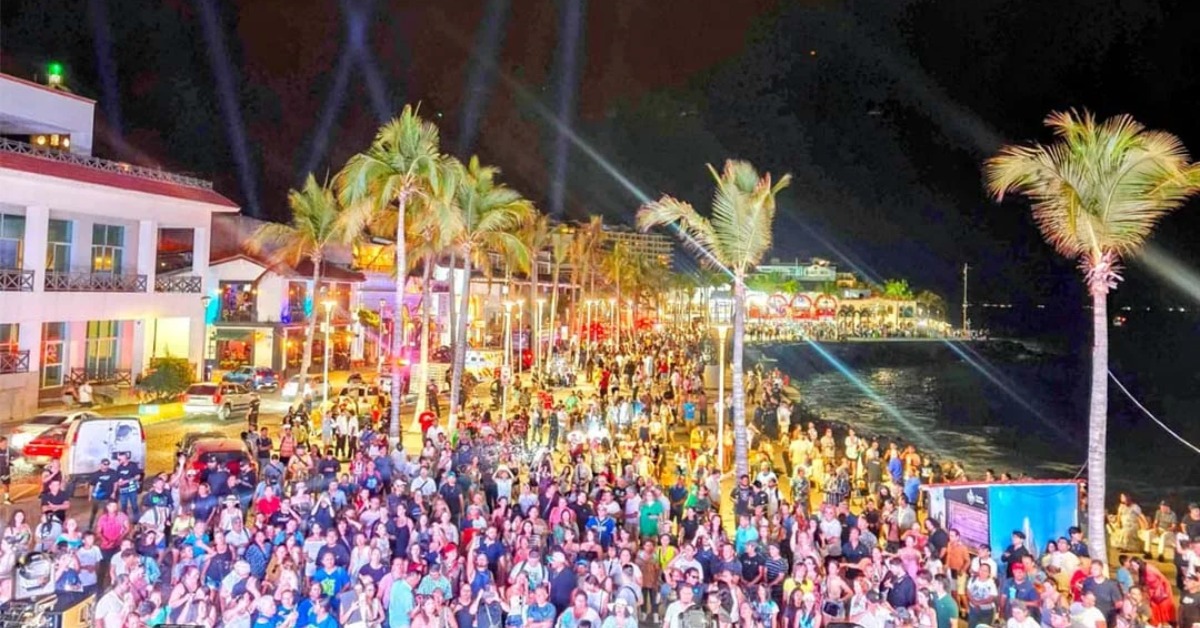
The seventh DJ’s Day Festival turned El Faro del Malecón into a public stage, drawing hundreds of people for an afternoon of electronic music, youth talent, and civic messaging. According to local reports, the event brought together 22 local and regional DJs and attracted residents and tourists alike. That matters because the festival was not framed as a nightclub event or a private party. It was presented as a family-friendly public gathering in one of Puerto Vallarta’s most visible and symbolic spaces.
That distinction is important for international readers. Puerto Vallarta is often understood through its beaches, nightlife, and tourism economy. Those are real parts of the city, but they are not the whole picture. Events like this show how the city is also trying to build a broader public identity through open-air culture, youth programming, and community events that are in plain view of locals and visitors alike. In that sense, the festival worked as entertainment, but also as a statement about who gets to use public space and what kind of culture belongs there.
Why the Malecón setting matters
The Malecón is more than a boardwalk. It is one of Puerto Vallarta’s best-known public spaces, a waterfront promenade that functions as a social corridor, tourist showcase, and civic gathering point. When an event is placed there, it gains visibility that a bar, club, or private venue cannot match. People who came on purpose mixed with people who were simply walking by, which likely helped explain the broad turnout described in coverage of the festival.
That setting also changes the meaning of the event. Electronic music is sometimes treated as nightlife culture, aimed at a narrow audience. By staging the festival on the Malecón, organizers moved it into the center of public life. The result was a different kind of message. This was not electronic music hidden indoors after dark. It was electronic music presented in daylight, in a central public space, and tied to a broader idea of community recreation. That choice gave local DJs a larger platform and gave the city a chance to present music culture as something accessible, civic, and open to all ages.
More than music was built into the event
Local coverage says the organizing committee was led by Diego Hurtado, Alonso Curiel, and Marco Rojas, with support from the municipal government through the Subdirection of Addiction Prevention, the Youth Directorate, and the Vallarta Institute of Culture. That mix of partners helps explain why the event carried a message beyond entertainment. This was not only a festival about performance. It was also designed to align with public efforts around youth development and prevention.
One of the clearest examples was the inclusion of a substance-abuse prevention message during the event. Reports say a young rapper took part in that awareness effort, using the stage to speak about healthy choices. That may seem unusual to readers expecting a straightforward festival story, but it fits a pattern seen in many local government-backed events in Mexico. Music, sports, and cultural programming are often used as part of broader prevention strategies. In Puerto Vallarta, that approach gave the event a dual purpose. It celebrated local talent while also giving officials a practical reason to publicly support it.
A local scene trying to grow up in public
The festival also appears to have balanced new talent with recognition for established names. Coverage highlighted awards for veteran DJs, including Memo Zarr, Marco Rojas, Hoolio Kmacho, and Lupe Barragán. That matters because local music scenes do not grow only through one-off performances. They grow when organizers create continuity, honor those who built the scene, and make room for younger artists to step into the public eye. The festival seems to have tried to do all three.
That helps explain why the event deserves more than a brief entertainment write-up. Puerto Vallarta has no shortage of music in bars, beach clubs, and private venues. What is different here is the effort to place electronic music culture into the city’s public narrative. The festival treated DJs not as background entertainment, but as cultural participants with local value. For a city that competes for attention in tourism, that can matter. Public events like this help shape how Puerto Vallarta sees itself, not just how it markets itself.
What readers should take from it
For expats and other international readers, the most useful takeaway is that this was a city-facing event, not only a tourism-facing one. Tourists were clearly part of the crowd, but the festival’s underlying logic was local. It promoted young artists, used a civic landmark as its stage, and folded in a prevention message aimed at community well-being. That combination says something about the current direction of Puerto Vallarta’s public culture.
The DJ’s Day Festival may not be the city’s largest event, but it points to a larger trend. Puerto Vallarta is using public festivals to diversify what the city center represents. The Malecón is still a postcard setting, but it is also becoming a stage for local identity, youth outreach, and cultural experimentation. That is why this festival matters beyond a good turnout. It shows a city trying to make public space feel active, contemporary, and locally rooted at once.