A tourist died in the water at Playa El Paredon after entering from a boat. Paramedics worked for minutes, but he was pronounced dead.
A drowning reported at Playa El Paredon on Sunday, December 14, 2025, left a family in shock and beachgoers shaken along Puerto Vallarta’s southern shoreline. Early information described the victim as an adult tourist traveling with family and participating in ocean activities aboard a boat. At some point, he entered the water without a life jacket. People nearby later noticed him floating and called for emergency help.
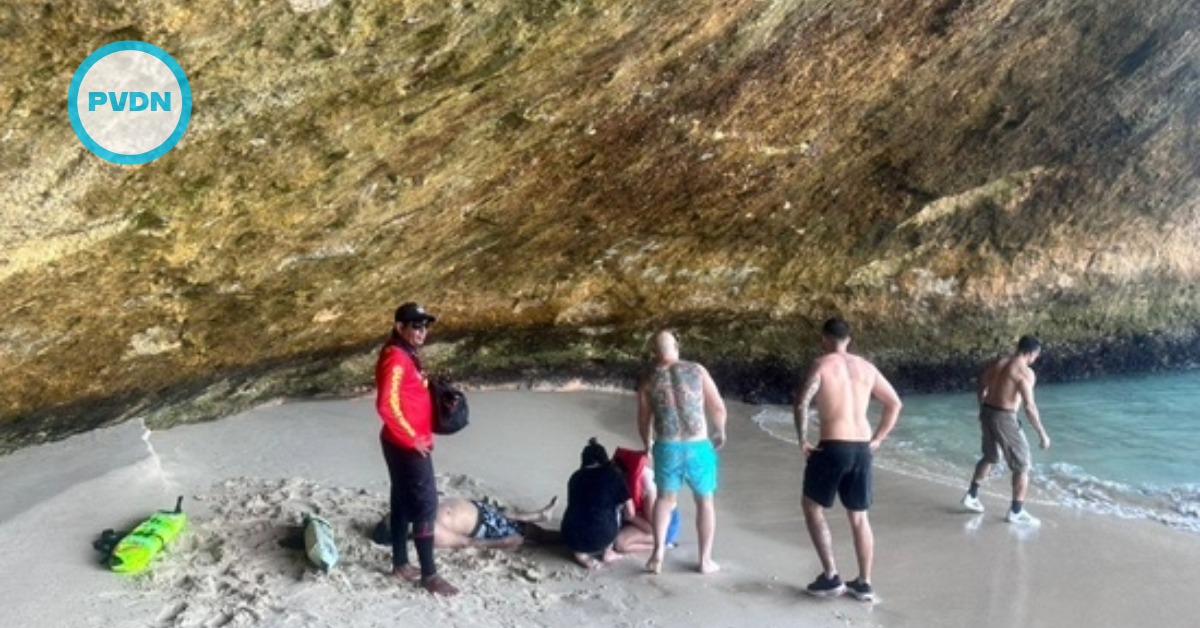
Paramedics rushed to the scene after a 911 call. They attempted resuscitation for several minutes. Those efforts did not succeed, and the man was declared dead at the beach. Authorities began the standard process that follows a sudden death, including documenting the scene and reviewing what happened in the moments before the victim was pulled from the water.
Initial details about the man’s age varied across early reports. Some accounts described him as around 40. Others, tied to incident documentation, described an older man. Officials have not publicly clarified the discrepancy in a single statement. What is clear is that the death unfolded quickly, in front of family members and others enjoying what began as a routine day on the coast.
El Paredon drowning
What makes this incident especially painful is how familiar the setup sounds to anyone who has spent time on Vallarta’s beaches. A short stop near shore. A quick swim. A decision made in seconds. Then a rapid shift from recreation to rescue.
Witness descriptions say the man entered the sea from a vessel while his family was nearby. When he was later seen floating, the response was immediate. People signaled for help and contacted emergency services. Paramedics arrived and began life-saving measures. They continued for several minutes, working against the clock in the open air, with sand underfoot and onlookers watching.
In situations like this, investigators typically work to establish a clear sequence. They look at where the swimmer entered, how far offshore he was, how long he was in the water before he was noticed, and what conditions were like at the time. They also look for medical factors that could have contributed, because not every “drowning” begins as a struggle with waves. Sometimes a medical emergency happens first, and the water becomes the final hazard.
That distinction matters for families and for public safety messaging. It also matters for accountability. If a boat excursion includes swim stops, investigators may review how safety guidance was delivered, what flotation equipment was available, and whether the risks were clearly explained. That process can take time, and it often unfolds quietly through routine reporting and forensic review.
For visitors, the emotional takeaway is simpler. The ocean here is beautiful, but it is not gentle on demand. A calm-looking surface can hide a strong pull. A confident swimmer can tire fast in moving water. And without a flotation device, even a short swim can turn into a fight.
Why the Pacific can turn fast
Along Mexico’s Pacific coast, ocean conditions can change without much warning. Even when the sky is clear, swell patterns can build, and currents can strengthen near rocky edges, points, and pockets of sand that create channels. Local authorities frequently warn about high surf and rip currents during “mar de fondo” conditions, which can push powerful waves toward shore and create strong outward-flowing currents.
Rip currents are especially dangerous because they are hard to spot. They can look like a calmer patch between breaking waves. They can also feel like the sea suddenly “grabs” your legs and pulls you away from the beach. Many drowning deaths begin with panic and exhaustion, not a dramatic crash of water.
Safety experts stress a few core ideas that can save lives. If you feel yourself being pulled out, fighting straight back toward shore can burn your energy fast. Staying calm, floating when possible, and signaling for help can keep you alive long enough for rescue. If you can swim, moving parallel to the beach can help you exit the strongest part of the current before angling back toward shore. These are simple concepts, but in the moment, people often do the opposite. They sprint into the water to help. They chase someone straight out. They end up in trouble too.
That is why lifeguards and civil protection teams keep repeating the same message. Swim near guarded areas when possible. Pay attention to flags and warnings. Ask what conditions are like before entering the water. If you are on a boat, treat a swim stop like any other higher-risk activity. Wear a life jacket if you are not a strong swimmer, and even if you are, consider wearing one anyway. Pride is not flotation.
The death at Playa El Paredon is now part of a grim pattern seen in coastal destinations worldwide. Visitors arrive relaxed and distracted. They underestimate a coastline they do not know. They step into conditions locals respect, sometimes fear, and often warn about. One small choice can decide the day.
For now, the official work continues. Authorities will document what they can and deliver answers where possible. For everyone else, the lesson is immediate and human. When locals say the sea is “heavy,” believe them. When a captain offers a swim stop, pause and assess. And when the shoreline looks calm, remember that calm water can still kill.