Puerto Vallarta Gaza protest
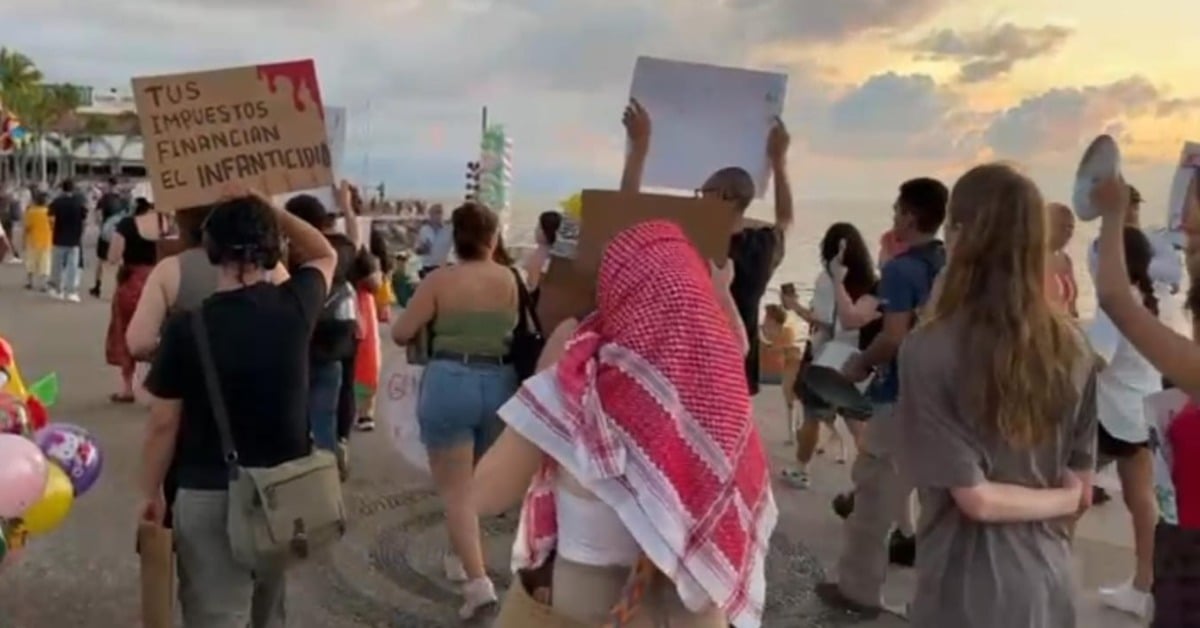
A group of roughly twenty to twenty-five people gathered on the seawall for what organizers call a “cacerolada,” or saucepan-banging demonstration. The march traced the waterfront toward the Cuale River bridge, a short but symbolic stretch that cuts through one of the city’s busiest public spaces. Shoppers and beachgoers paused as the sound of metal on metal rose above the surf and weekend music.
Participants described the action as part of a global call for an immediate halt to Israel’s military campaign in Gaza. They framed the war as a humanitarian emergency and, in their words, a genocide, language that has appeared in protests across many cities. In Puerto Vallarta, the emphasis stayed local and tactile: neighbors with cookware, a steady beat, and hand-painted banners.
Chants, cookware, and a clear message
The group’s chants centered on protecting children and the press. “Children in Gaza are not a threat,” marchers repeated, along with, “Journalists in Gaza are not a threat.” The callouts referenced reports of children killed and journalists slain while covering the conflict. The slogans were tight and repetitive by design, carrying across the Malecón and into the open-air cafés and storefronts that line the route.
Noise was the point. The clatter of spoons on pots is both a signal and a strategy—simple tools that turn private kitchens into public instruments. Each strike punctuated the marchers’ demand for a stop to the fighting and for accountability from those who wield power far from this Pacific coast city.
A local scene in a global moment
Organizers said the Puerto Vallarta action aligned with similar demonstrations held the same day in other cities, meant to create a shared wave of visibility. In practice, that meant neighbors, not buses of activists. Turnout stayed small. The tone stayed peaceful. Pedestrians stepped in and out of the stream, some filming on their phones, others asking what the noise meant.
Scale was not the measure that marchers cared about. They aimed for presence, not spectacle. The signs and chants foregrounded children’s safety and journalists’ work—two themes meant to humanize a war often reduced to maps and military briefings. The banners blended Spanish and English, a nod to a city that hosts both locals and visitors on any given weekend.
Framing, language, and the limits of distance
The word “genocide” appeared on posters and in interviews with attendees, reflecting how many protesters have chosen to describe the campaign in Gaza. Those claims are theirs; the demonstrators wanted that framing heard and considered. They also placed the march in a wider stream of solidarity actions, arguing that even a small coastal city can add to global pressure for a cease-fire.
Distance, of course, cuts both ways. Puerto Vallarta is far from the Strip. Yet the marchers insisted that distance should not mute empathy for civilians or numb the city to risks faced by reporters in conflict zones. By spotlighting children and journalists, they tried to keep the focus on human stakes rather than political abstractions.
A brief march that asked for attention, not permission
The route was short and familiar: the Malecón’s walkway, the Cuale River bridge, the open plaza where street performers gather. The cookware’s clatter slowed near the bridge, then faded as participants dispersed. No arrests were reported by the group, and the gathering remained calm throughout.
For many passersby, the memory will be the sound—pots and pans ringing against the Pacific, a syncopated plea in a city built for leisure. For the people who carried that beat, the goal was to be heard at all, to make a war feel close enough to name, and to fold Puerto Vallarta into a day of global noise for the living.