As Jalisco praises citizen councils, Puerto Vallarta quietly blocks an HIV body, exposing a gap between official rhetoric and lived reality.
The official story in Jalisco is clear. Citizen participation is framed as a human right and a cornerstone of modern governance. State authorities speak of councils and public consultations as tools to bring government closer to the people, and laws passed in recent years spell out that promise in legal language.
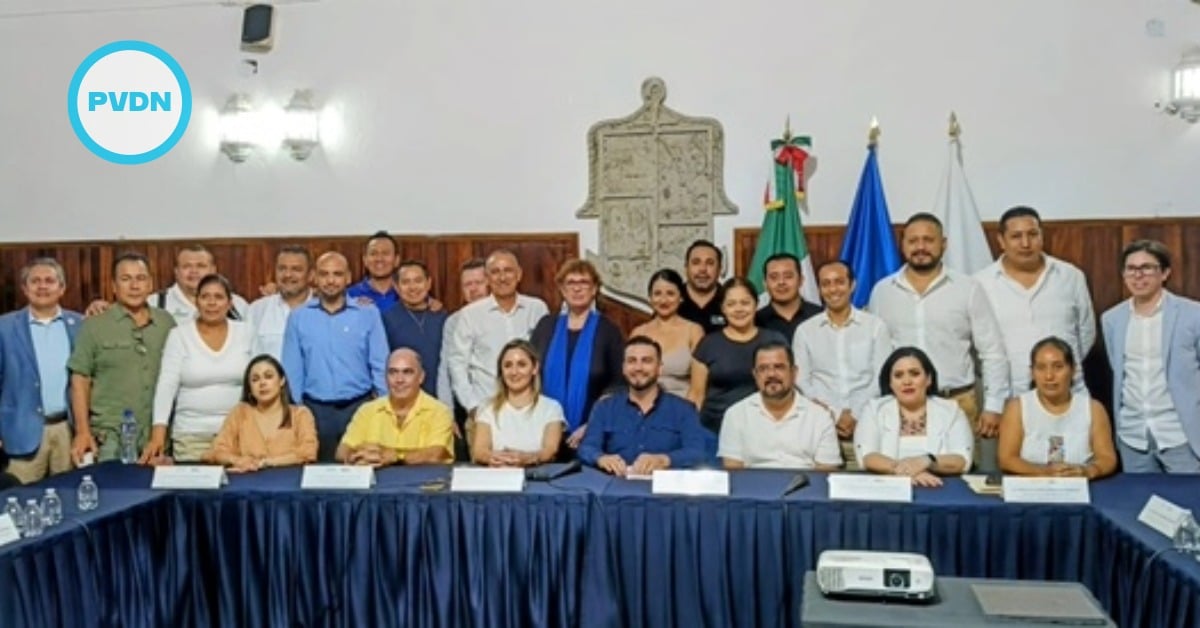
In Puerto Vallarta, that discourse has been on full display. The city just installed a new Municipal Council for Citizen Participation, a body meant to link residents, business groups, academics, and neighborhood leaders with decision-makers at City Hall. The message from the podium was hopeful: councils would help move away from top-down politics toward shared decisions built on trust and open information.
Only days earlier, however, another story had quietly unfolded in the same building. A proposal to create the Puerto Vallarta HIV council – formally, a Municipal Council for the Prevention and Response to HIV and AIDS – was voted down in the city’s regulations commission. The initiative had been drafted with civil society groups who work every day with people living with HIV, and it was designed as a collegiate body that would bring together health authorities, specialists, activists, and community representatives.
The contrast is hard to ignore. On the one hand, City Hall celebrates the launch of a new citizen participation council, required by state law and backed by the Jalisco Secretariat of Planning and Citizen Participation. On the other hand, it closes the door on a council focused on a public health issue that still carries deep stigma, despite decades of awareness campaigns and medical advances.
A promise of participation meets a hard limit
For activists and community organizations, the proposed HIV council was not a symbolic gesture. It aimed to coordinate prevention campaigns between municipal departments and health institutions, improve access to testing and treatment information, and give people living with HIV a formal voice in how local policy is designed and evaluated. In other words, it was built around the same logic the state promotes in its citizen participation system: coordinated action, transparency, and shared responsibility.
The timing of the rejection matters. Puerto Vallarta is still dealing with the fallout from a serious breach of trust earlier this year, when personal data of people living with HIV was leaked from the local municipal AIDS committee to staff at an educational institution. Four months on, the investigation has not led to clear public sanctions, and the former head of that committee was reassigned within the municipal structure rather than removed from public service. For many in the HIV community, this felt less like accountability and more like a reshuffle.
In that context, a council with citizen and expert participation could have helped rebuild trust. It would have created a space where civil society could monitor follow-up to the data leak, demand safeguards for sensitive information, and review how prevention and care programs are working on the ground. Instead, the commission’s message was that such a space is not welcome for now.
At the same time, Mexico as a whole is trying to strengthen its HIV response. Recent national data show record numbers of newly diagnosed cases, and the federal government has launched a digital network to coordinate information, services, and community initiatives across the country. These efforts are built on a global consensus: without active participation from communities most affected by HIV, countries will not reach the 95-95-95 treatment targets set for 2025 and beyond.
That is where the local decision in Puerto Vallarta clashes with the broader public discourse. International strategies led by United Nations agencies repeatedly underline that people living with HIV, and the organizations that support them, must have a seat at the table when policies are designed, monitored, and corrected. They are not just beneficiaries of programs; they are supposed to be partners who help guide the response.
Puerto Vallarta HIV council and the credibility gap
The new Municipal Council for Citizen Participation in Puerto Vallarta is supposed to embody that vision of shared power. It brings together city officials with representatives from business, academia, neighborhoods, and other sectors. It exists because Jalisco’s participation law obliges every municipality to install such a body and recognizes that public decisions should be shaped with direct citizen involvement.
For residents who follow local politics, the question is whether that commitment will apply evenly, especially in areas that are uncomfortable or politically sensitive. HIV is one of those areas. It touches on sexuality, discrimination, poverty, migration, and tourism. It also forces authorities to confront uncomfortable numbers about who is being reached by services and who is left behind.
When the city embraces consultation on issues like traffic on the Malecón, new delegations or a participatory budget, it shows one face: a government willing to ask and listen. When it blocks a council designed to confront a long-running epidemic, after a high-profile leak of sensitive medical data, it shows another.
This does not mean the door is closed forever. Commissions can revisit their decisions, and the full City Council could choose to take up the proposal again with changes. State authorities who champion citizen participation also have legal and political tools to encourage a more consistent approach at the municipal level. And civil society organizations in Puerto Vallarta have a long history of filling gaps left by the government, whether through prevention campaigns, rapid testing, or support networks for people living with HIV.
Still, each decision sends a signal. Installing a general citizen participation council while rejecting an HIV-focused one tells people which voices are seen as safe to include and which are easier to keep on the margins. For a city that markets itself as open, diverse, and welcoming, and for a state that has written citizen participation into law as a human right, that signal carries real weight.
The challenge now is whether Puerto Vallarta’s authorities are willing to align their actions with their own language. If participation really cannot be “decreed” and must be built with trust and real spaces for dialogue. In that case, that principle should apply even – and especially – when citizens ask for a seat at the table to talk about HIV. Until that happens, the gap between speech and practice will remain a very public part of the city’s record.